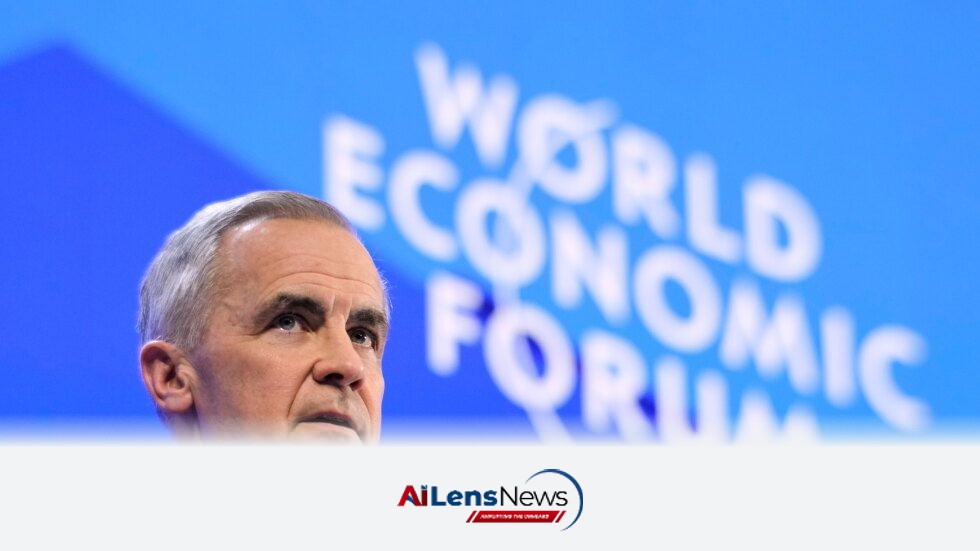



Canadian Prime Minister Mark Carney's recent warnings about economic coercion are being put to the test as Donald Trump takes a confrontational stance.
Washington DC, United States Aug 24, 2026 ALN: In a significant development in international relations, Canadian Prime Minister Mark Carney's earlier warnings about the need for middle powers like Canada to resist economic coercion are now being tested. This comes as former U.S. President Donald Trump adopts a confrontational approach towards Canada, raising concerns about the implications for trade and diplomatic relations.
Earlier this year, Mark Carney highlighted the vulnerabilities faced by middle powers in the global economy, particularly in the context of rising economic coercion from larger nations. His remarks emphasized the importance of resilience and strategic partnerships to safeguard national interests. Carney, who previously served as the Governor of the Bank of England and the Governor of the Bank of Canada, has a deep understanding of both economic and geopolitical dynamics. He has argued that middle powers, which include countries like Canada, Australia, and South Korea, must develop robust frameworks to protect themselves from the economic strategies employed by larger nations, particularly those that may seek to exert influence through coercion.
Economic coercion can take many forms, including trade restrictions, sanctions, and the use of tariffs to manipulate economic conditions in favor of one nation over another. Carney's warnings resonate in a global landscape increasingly characterized by protectionism and unilateralism, where large economies can leverage their market power against smaller nations. He advocates for greater collaboration among middle powers, suggesting that they can create a united front to counterbalance the pressures imposed by more dominant economies.
Trump's recent actions have sparked debates about the future of U.S.-Canada relations. His administration's policies, which include tariffs and trade restrictions, pose a direct challenge to Carney's vision of a collaborative economic framework. During his presidency, Trump implemented various tariffs on Canadian goods, particularly in the steel and aluminum sectors, which he justified on national security grounds. These measures not only strained trade relations but also raised concerns in Canada about the potential for retaliatory actions and the long-term implications for bilateral trade agreements.
Analysts are closely monitoring how these developments will impact bilateral trade agreements and economic stability. The United States remains Canada's largest trading partner, accounting for a significant portion of Canadian exports. Disruptions in this relationship could have cascading effects on the Canadian economy, impacting everything from job creation to investment flows. The potential for a trade war, reminiscent of the tensions seen during Trump's presidency, looms large in discussions about future U.S.-Canada relations.
As Trump tests the waters with aggressive trade policies, Canada faces critical decisions regarding its economic strategy. The Canadian government must navigate these challenges while maintaining its commitment to free trade and international cooperation. Experts suggest that a robust response is necessary to counter any potential economic fallout. This may involve seeking alternative markets for Canadian goods, strengthening trade relations with other countries, and investing in domestic industries to reduce dependency on the U.S. market.
Furthermore, Canada's approach to climate change and environmental policies may also influence its trade relationships. As the U.S. moves towards a more isolationist stance under Trump's influence, Canada could leverage its commitment to sustainability as a means to attract investment and foster partnerships with nations that prioritize environmental stewardship. This strategy could help mitigate the risks posed by economic coercion by diversifying Canada's economic ties beyond its immediate neighbors.
The ongoing situation underscores the delicate balance that middle powers must maintain in a rapidly changing geopolitical landscape. Carney's warnings serve as a timely reminder of the need for vigilance and adaptability in the face of economic coercion. As global power dynamics shift, middle powers like Canada must be proactive in advocating for their interests while also fostering alliances that can provide mutual benefits.
In conclusion, as the dynamics between Canada and the U.S. evolve, the effectiveness of Carney's strategies will be put to the test. The coming months will be crucial in determining how Canada positions itself in response to external pressures and the broader implications for international trade. The ability of Canada to navigate these challenges will not only affect its economic stability but also its role on the global stage as a proactive middle power capable of influencing international norms and policies.
To learn more about the latest developments in Political Controversies, stay updated with our exclusive reports and analyses on AILensNews.

