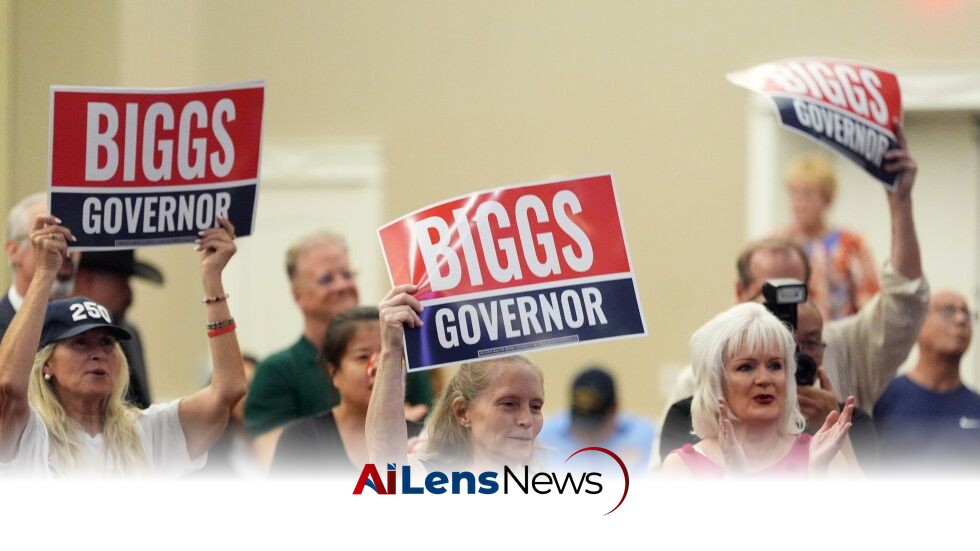


In the Arizona Republican primary, Rep. Andy Biggs and Rep. David Schweikert present starkly different visions for the party's future, engaging in heated debates and rallies.
Phoenix, United States Jul 20, 2026 ALN: The Arizona Republican primary is heating up as two prominent figures, Rep. Andy Biggs and Rep. David Schweikert, vie for the party's nomination for governor. Their campaigns are marked by contrasting visions for the future of the Republican Party in Arizona, reflecting broader national trends within the GOP. As the primary approaches, the stakes are high, not just for the candidates themselves but also for the direction of the party in a state that has seen significant political shifts in recent years.
Arizona has historically been a Republican stronghold, but recent elections have shown a trend towards increasing competitiveness, with Democrats making significant inroads. The state voted for Joe Biden in the 2020 presidential election, marking a pivotal moment in its political history. This shift has prompted a reevaluation within the Republican Party, as candidates like Biggs and Schweikert seek to define their positions in a rapidly changing political environment. The primary election is not just about who will represent the party in the governor's race; it is also about how the GOP will adapt to maintain its relevance in Arizona.
Rep. Andy Biggs, a staunch conservative, has positioned himself as a champion of traditional Republican values. His campaign emphasizes a return to core principles such as limited government, fiscal responsibility, and strong border security. Biggs has garnered significant support from the party's right wing, appealing to voters who prioritize a hardline stance on immigration and a reduction in government spending. His alignment with the more conservative factions of the party is evident in his policy proposals, which often resonate with the more ideologically driven segments of the electorate.
Biggs has been a vocal critic of federal government overreach and has consistently advocated for policies that he believes would empower states and localities. He argues that a conservative approach is essential to counteract what he describes as a growing liberal agenda that threatens the foundational values of the state and the nation. His supporters often cite his unwavering commitment to conservative principles as a key reason for their backing.
In contrast, Rep. David Schweikert advocates for a more pragmatic approach to governance. He focuses on economic growth, job creation, and bipartisan cooperation. Schweikert argues that the party must evolve to attract a broader base, including moderates and independents, to remain competitive in future elections. His campaign highlights his experience in Congress and his ability to work across the aisle to achieve legislative goals, a stance that he believes is crucial for addressing the complex issues facing Arizona.
Schweikert emphasizes that the challenges of the modern political landscape require innovative solutions that may not always align with strict ideological lines. He posits that to effectively tackle pressing issues such as education reform, healthcare access, and economic disparities, collaboration with Democrats and other stakeholders is essential. This approach has garnered him support from more moderate Republicans and independents who are looking for practical solutions rather than partisan rhetoric.
Both candidates have been actively engaging with voters through a series of campaign events across Arizona. Biggs recently held a rally in Gilbert, where he energized supporters with his vision for a more conservative state government. "We need to stand firm against the liberal agenda that threatens our values," he declared to a crowd of enthusiastic supporters. His rallies often focus on galvanizing the base, encouraging active participation in the political process, and reinforcing the importance of conservative values in governance.
Schweikert, on the other hand, has focused on town hall meetings, where he emphasizes listening to constituents' concerns. At a recent event, he stated, "We must unite as a party to address the real issues facing Arizonans, from the economy to education. We cannot afford to be divided." His approach aims to foster dialogue and build a coalition that transcends traditional party lines, appealing to voters who prioritize practical governance over ideological purity.
The candidates faced off in a recent debate, where their differences were on full display. Biggs criticized Schweikert for his willingness to compromise, suggesting that it undermines conservative principles. "We cannot afford to be wishy-washy; we need leaders who will stand up for our beliefs," he asserted. This statement reflects a broader sentiment within the party that prioritizes ideological consistency over compromise, a theme that resonates with many of Biggs' supporters.
Schweikert countered by arguing that effective governance requires collaboration. "It's not about compromising our values; it's about finding solutions that work for all Arizonans," he responded, emphasizing the need for practical policies over ideological purity. His argument speaks to a growing faction within the Republican Party that recognizes the necessity of appealing to a wider electorate, particularly in a state that has shown a willingness to swing between parties in recent elections.
As the primary approaches, polls indicate a competitive race. Voter sentiment appears divided, with Biggs appealing to the party's base while Schweikert seeks to attract undecided voters. Political analysts suggest that turnout will be crucial in determining the outcome, as both candidates have passionate supporters. The engagement levels of their respective bases may play a significant role in the primary's outcome, with Biggs likely to benefit from higher turnout among conservative voters who are energized by his hardline stance.
Additionally, the ability of both candidates to sway independent voters could be pivotal. In a state where independents make up a significant portion of the electorate, their preferences could tip the scales in favor of one candidate over the other. This dynamic adds an extra layer of complexity to the primary, as both candidates must navigate their messaging to appeal to this crucial demographic.
The Arizona Republican primary is shaping up to be a pivotal moment for the party, with Biggs and Schweikert representing two distinct paths forward. As they continue to campaign and engage with voters, the outcome will not only impact the gubernatorial race but also set the tone for the Republican Party's future in Arizona and beyond. The primary serves as a microcosm of the broader ideological battles within the GOP, as candidates grapple with how best to position themselves in a changing political landscape. The implications of this primary extend beyond Arizona, as the outcomes may influence Republican strategies in other states facing similar challenges.
To learn more about the latest developments in Elections, stay updated with our exclusive reports and analyses on AiLensNews.

