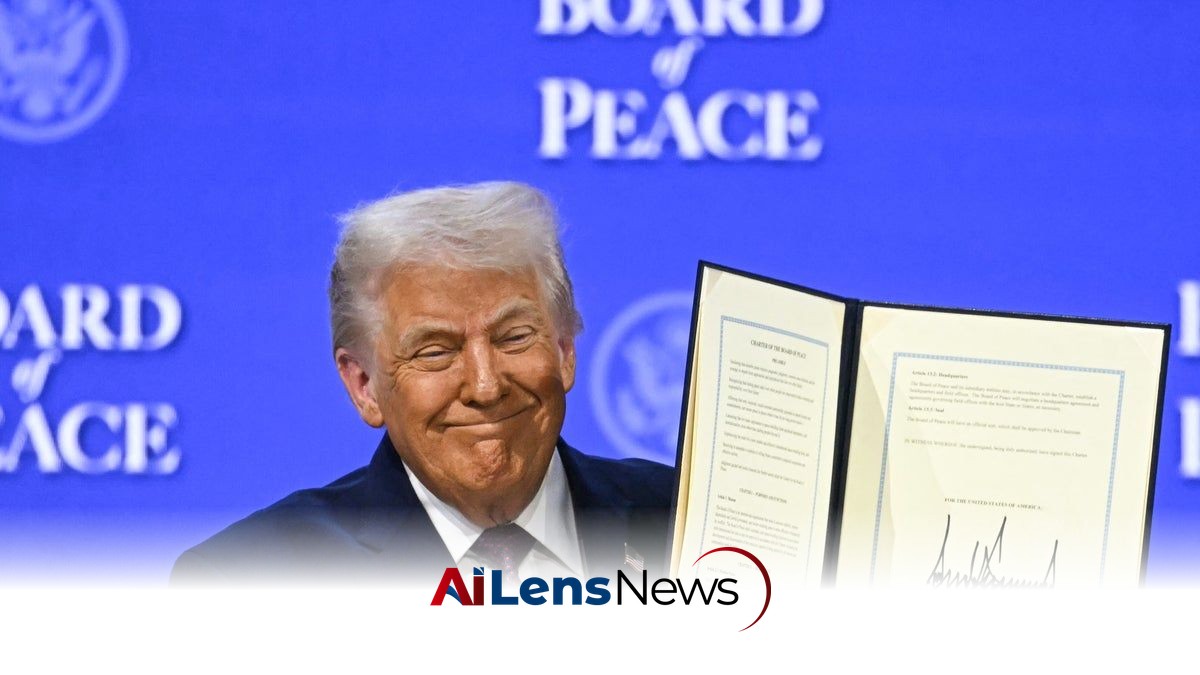


Six months after unveiling a grand vision for Gaza's reconstruction, Trump's peace initiative has faltered, leaving behind a pilot scheme and unmet promises.
London, United Kingdom Jul 17, 2026 ALN: President Donald Trump’s ambitious vision for peace and reconstruction in Gaza was initially met with high hopes and grand promises. He described the board of peace for Gaza as the “Greatest and Most Prestigious Board ever assembled at any time, any place,” positioning it as a cornerstone of his foreign policy and a potential pathway to winning a Nobel Peace Prize. This initiative aimed to create a new future for the war-torn enclave, which has faced decades of conflict, humanitarian crises, and political instability.
In January, during the World Economic Forum in Davos, Trump's son-in-law and senior advisor Jared Kushner unveiled the so-called “board of peace master plan.” This presentation featured an elaborate slideshow that painted a futuristic utopia for Gaza, boasting luxury apartments, over 100,000 housing units, 75 medical facilities, a data center, and a vision for “coastal tourism.” Kushner's depiction of Gaza was one of hope and prosperity, where essential services such as water, sewage, hospitals, and bakeries would be restored within a mere 100 days, and humanitarian and medical aid would flow freely to the population.
However, this ambitious dream has since been overshadowed by a stark reality. Just six months later, the initial grand plan has been significantly scaled down to a small pilot scheme involving portable cabins intended for a fraction of the Palestinian population. This limited initiative is focused on the buffer zone along a ceasefire line near Rafah in southern Gaza, as reported by The Guardian. The new plan lacks the extensive infrastructure and development initially promised and instead aims to provide temporary housing solutions under the oversight of an international security force and a newly trained group of Palestinian police officers. Unfortunately, even this scaled-back plan is not expected to begin until the end of the year, leaving many in Gaza in continued uncertainty.
The unraveling of Trump's Gaza peace initiative can be traced back to various complex factors. In October 2025, Trump announced a ceasefire between Israel and Hamas, celebrating it as a “GREAT Day for the Arab and Muslim World, Israel, all surrounding Nations, and the United States of America.” He framed this ceasefire as a historic and unprecedented event, a critical step towards peace in the region. A key element of the 20-point peace plan was the establishment of a board of peace tasked with overseeing the reconstruction of Gaza.
On January 16, the president revealed the first members of this board, with Kushner presenting the master plan shortly thereafter. US special envoy Steve Witkoff outlined phase two of the plan, which included the establishment of a technocratic Palestinian government, aiming to transition from a state of ceasefire to demilitarization, technocratic governance, and eventual reconstruction. However, this ambitious framework was contingent upon the disarmament of Hamas and other militant groups. Despite Hamas dissolving its longstanding government earlier this year, the group has remained resistant to disarmament, complicating the peace process.
Another significant hurdle in the peace initiative is the proposed withdrawal of Israeli troops from Gaza. The plan suggested that while a limited contingent of Israeli forces would remain, a broader withdrawal was essential for peace and reconstruction efforts to take root. However, violations of the ceasefire by Israeli forces have persisted, leading to a tragic toll of over 1,000 deaths since the agreement was made. Reports indicate that a “yellow line” demarcating areas of occupation by the Israeli military has continued to expand deeper into Gaza, exacerbating tensions and undermining the peace initiative.
The first meeting of the board of peace occurred in February, but progress has been slow. The focus of the United States shifted toward its military engagements in Iran and other geopolitical concerns after March, further stalling the momentum of the peace process. In an effort to revive discussions, officials convened in Cyprus in June, where there were growing concerns that the original aims of the peace initiative might prove unrealistic. Recent reports suggest that a new plan was developed two weeks ago with input from advisers associated with the Tony Blair Institute and members of the National Committee for the Administration of Gaza.
Among the many challenges faced by the peace initiative is the restriction on humanitarian aid entering Gaza. The Trump administration's lead negotiator, Aryeh Livingstone, has advocated for the lifting of certain restrictions on “dual-use” items, which include essential materials such as water pipes and solar panels. However, Israel has not approved these requests, further complicating the humanitarian situation in Gaza.
Funding for the pilot scheme remains uncertain, despite the original pledge of $17 billion for the broader reconstruction efforts. The European Union’s Palestine Donor Group recently confirmed that it has raised €883 million (approximately £751 million) intended for the restoration of basic infrastructure in Gaza, including water and sanitation services. This funding is expected to supplement the board’s projects, but the overall financial framework for the ambitious plans remains tenuous.
Additionally, the board is reportedly in negotiations to release some of the $11 billion in Palestinian tax revenue and frozen assets to be allocated towards these reconstruction efforts. However, the dire humanitarian situation in Gaza continues to worsen, with reports indicating that at least 73,250 Palestinians have lost their lives, nearly 200,000 have been injured, and thousands more await medical assistance. Negotiators have expressed a sense of urgency, stating that they feel compelled to accept whatever is offered, given the dire circumstances.
As one diplomat noted, the primary aim is to keep the peace process alive, stating, “The aim is just to keep something going, keep the ball in play, because if you stop there are others with a more extreme agenda just waiting to jump in and take over, and they are talking about wholesale population transfer and colonization.” This statement underscores the precarious nature of the situation and the potential consequences of a stalled peace process in Gaza.
The evolution of Trump's Gaza peace initiative—from a grand vision of reconstruction and prosperity to a limited pilot scheme—highlights the complexities and challenges inherent in the Israeli-Palestinian conflict. As the situation continues to unfold, the implications of these developments will resonate throughout the region and the broader international community, raising critical questions about the future of peace and stability in Gaza and beyond.
To learn more about the latest developments in Political Controversies, stay updated with our exclusive reports and analyses on AiLensNews.

