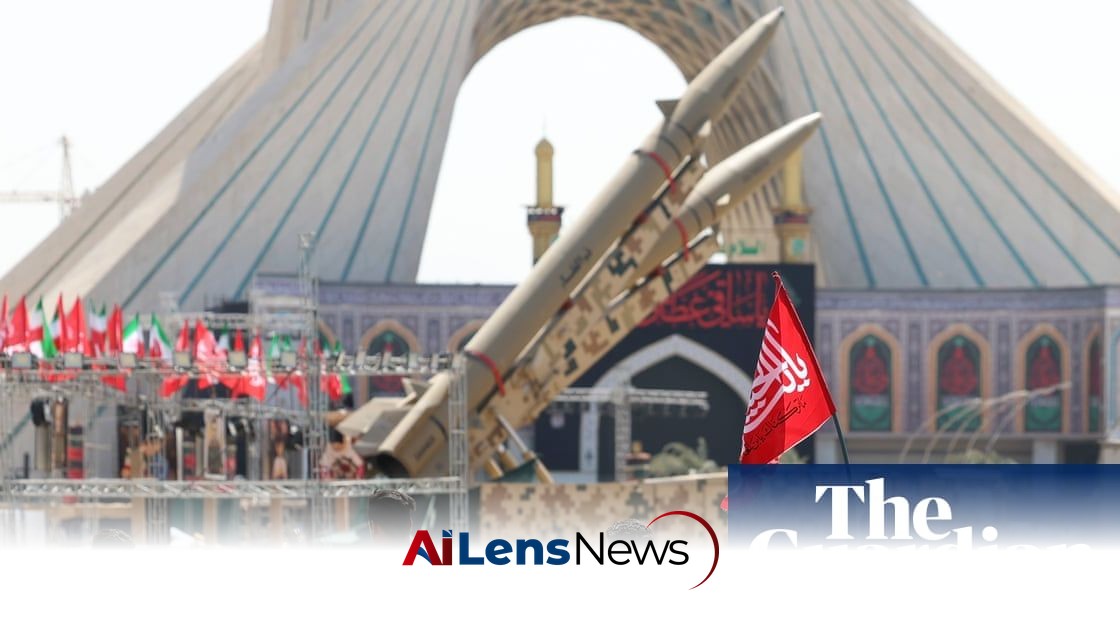


President Trump announces a hold on strikes against Iran, contingent on reaching a swift deal, after Saudi Crown Prince intervenes and Iran issues warnings.
London, United Kingdom Aug 2, 2026 ALN: Donald Trump stated on Saturday night that the United States would refrain from launching any new strikes on Iran, provided that a deal to resolve the ongoing conflict is swiftly negotiated. This announcement marks the latest in a series of retreats from Trump's previously aggressive posturing towards Tehran. The shifting tone of the U.S. administration reflects a complex interplay of geopolitical dynamics and regional security concerns that have evolved over the past few years.
Reports indicate that Saudi Crown Prince Mohammed bin Salman reached out to Trump on Saturday to express his concerns regarding the potential military actions against Iran. The Saudi leadership has been particularly wary of the repercussions that U.S. military actions could have on its own national security, given the close proximity of Iran and the historical tensions that have characterized their relationship. Trump's decision to delay strikes also follows threats from Iran to retaliate against its neighbors in the event of U.S. military action. Additionally, Kuwait reported drone attacks from Iran on Saturday, and two ships were targeted off the coast of Oman in the Strait of Hormuz, a vital waterway for global oil shipments.
According to sources familiar with the conversation between Trump and the Saudi crown prince, Mohammed urged Trump to de-escalate tensions and avoid military strikes. The Associated Press corroborated this, noting that Saudi Arabia is worried that U.S. attacks on Iran's energy infrastructure could provoke retaliatory strikes against the kingdom and other Gulf nations. The Saudi leadership has consistently advocated for a diplomatic resolution to tensions with Iran, emphasizing the need for stability in the region, which is crucial for its own economic and security interests.
During the call, the crown prince sought clarity from Trump regarding the nature of the military actions being considered against Iran, as reported by the Associated Press. This highlights the delicate balance Saudi Arabia is attempting to maintain in its foreign policy, as it navigates its alliance with the United States while also addressing its own security concerns regarding Iran's influence in the region.
Earlier in the week, Saudi Arabia had joined the U.S. in targeting logistics and weapon sites utilized by Iranian-backed militias in Iraq, but has been advocating for renewed negotiations between the U.S. and Iran. The Saudi position reflects a broader regional strategy to counter Iranian influence, which has been perceived as a destabilizing force in the Middle East. The U.S. and Saudi Arabia's military collaboration against Iranian proxies underscores the complexities of their alliance, where military actions are often accompanied by calls for diplomatic engagement.
According to CBS News, the U.S. and Israel were reportedly planning joint military strikes over the weekend, with potential targets including oil refineries and power plants. This potential escalation underscores the high stakes involved, as any military action could have significant ramifications not only for Iran but also for U.S. allies in the region. The collaboration between the U.S. and Israel has been a cornerstone of their strategy to counter Iran, but it also raises concerns about broader regional conflicts.
In response to the escalating tensions, Iran issued a warning against any U.S. “adventurous actions,” asserting that it would respond decisively. Iranian Foreign Minister Abbas Araqchi communicated this stance during phone calls with senior officials from Turkey, Pakistan, and Saudi Arabia, just hours after Kuwait's military announced the destruction of hostile drones launched by Iran. The Iranian leadership has consistently framed its military posture as defensive, emphasizing its right to respond to perceived threats from foreign powers.
Reports indicate that a government facility in northern Kuwait and civilian properties on Bubiyan Island were struck, resulting in material damage but no casualties, according to the Kuwaiti army. This incident highlights the increasing volatility in the region, where military engagements can quickly escalate and impact civilian populations. The Kuwaiti government's response underscores its own security concerns and the challenges it faces in navigating the tensions between Iran and the U.S.
The United Kingdom Maritime Trade Operations reported two maritime incidents off the coast of Oman, including one where a tanker was reportedly hit by an unidentified projectile, damaging its engine room. In another incident, the captain of a tanker reported hearing a large splash and an explosion nearby, although no damage was reported. These maritime incidents further illustrate the precarious security situation in the Strait of Hormuz, a critical chokepoint for global oil supplies, where tensions can have immediate implications for international trade and energy prices.
Iran's Araqchi warned regional counterparts that any U.S. or Israeli attacks, or participation by regional nations in such actions, would be met with a “proportionate response.” Nournews, a media outlet linked to Iran’s top security body, stated that U.S. strikes on Iranian energy infrastructure would lead to Iranian attacks on oilfields in Saudi Arabia and the United Arab Emirates, as well as gasfields in Qatar and Israel. This rhetoric underscores the potential for a broader conflict that could engulf multiple nations in the region, raising fears of a significant military confrontation.
These developments appear to have prompted Trump to reconsider his approach. He posted on Saturday night, using his characteristic grandiose language, that “the USA is locked and loaded” to strike Iran with “military terror, strength, and power not seen since World War II.” However, he added that he had been asked by Iran and other Middle Eastern countries to hold off any attack, stating that he would delay strikes “subject to being able to rapidly make a deal.” This deal would need to include the “immediate, complete and total opening of the Hormuz Strait, and an end to Iran’s nuclear threat.” Trump's emphasis on negotiation reflects a broader strategy of seeking diplomatic solutions, even amid heightened tensions.
Trump claimed that “the country of Israel joins me in this commitment.” However, the government of Benjamin Netanyahu has previously distanced itself from supposed agreements announced by Trump, such as the failed “memorandum of understanding,” and has been at odds with the Trump administration regarding strategies against Iran and its proxy Hezbollah operating in Lebanon. The complexities of U.S.-Israeli relations, particularly regarding Iran, illustrate the challenges of aligning national interests in a rapidly changing geopolitical landscape.
As the situation continues to evolve, the implications of Trump's decision to delay strikes on Iran could have far-reaching consequences for U.S. foreign policy in the Middle East. The interplay between military readiness and diplomatic negotiations will be crucial in determining the future trajectory of U.S.-Iran relations, as well as the stability of the region as a whole. The ongoing conflict underscores the need for careful consideration of the potential risks and benefits of military action versus diplomatic engagement in addressing the challenges posed by Iran's regional ambitions.
To learn more about the latest developments in Elections, stay updated with our exclusive reports and analyses on AiLensNews.

