

More
Checking your session
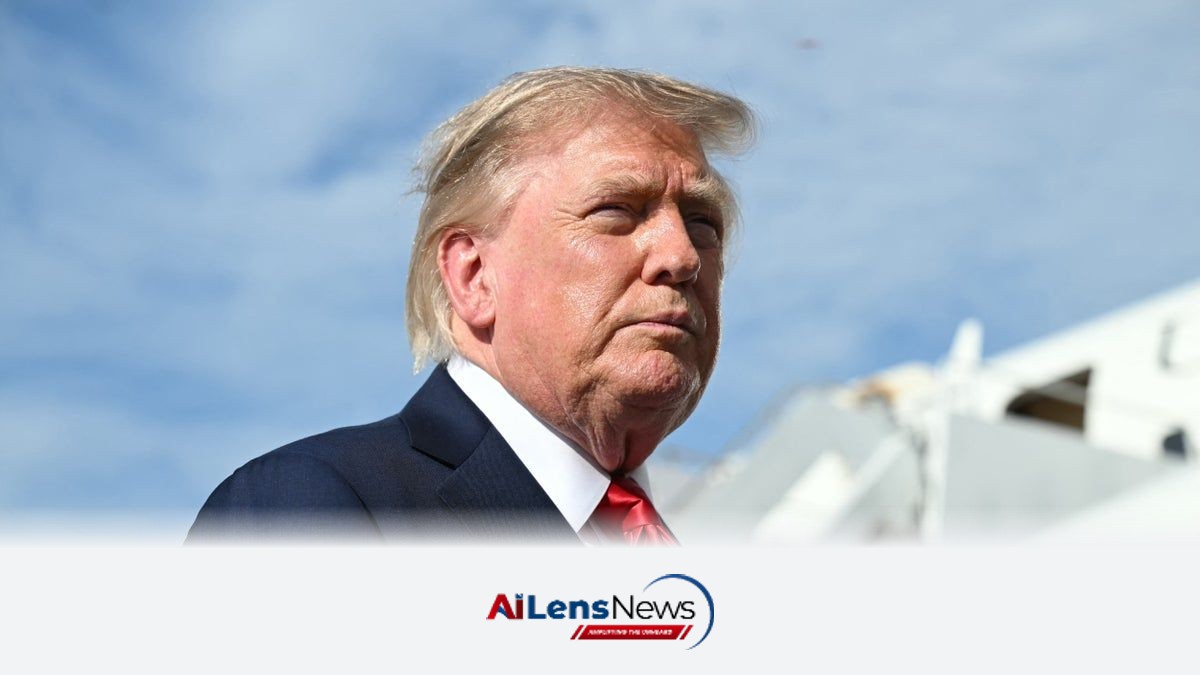



Donald Trump expresses hope for positive outcomes from CIA Director John Ratcliffe's recent visit to Russia, as tensions in Ukraine escalate.
London, United Kingdom Aug 27, 2026 ALN: Former US President Donald Trump has commented on CIA Director John Ratcliffe's recent visit to Moscow, suggesting that "something may come out of" the discussions held there. This visit comes amid ongoing tensions and conflict in Ukraine, where the US is actively seeking to mediate an end to the war. The situation in Ukraine has drawn significant international attention, with various nations, including the United States, taking a keen interest in the unfolding events and their implications for global security and stability.
During a press briefing, Trump described Ratcliffe as a "fantastic guy" and emphasized that the US is "working very hard" to bring the conflict in Ukraine to a resolution. He characterized the CIA director's trip to Russia as a "very semi-routine" visit, indicating that such meetings are not uncommon. The role of intelligence agencies in diplomatic negotiations is often critical, and the CIA's involvement underscores the seriousness with which the US is approaching the situation. Historically, intelligence agencies have facilitated back-channel communications that can lead to de-escalation and potential peace agreements, making Ratcliffe's visit a noteworthy development.
The Kremlin confirmed that Ratcliffe met with Russian intelligence officials but did not have a meeting with President Vladimir Putin. Kremlin spokesperson Dmitry Peskov described the communication between the two nations' intelligence agencies as positive, hinting at potential avenues for dialogue. This highlights a complex dynamic in US-Russia relations, particularly in the context of the ongoing conflict in Ukraine, which has strained ties between the two nations significantly since Russia's annexation of Crimea in 2014 and its support for separatists in eastern Ukraine.
As the situation evolves, sources close to the Kremlin have indicated that Russia is contemplating increasing its ballistic missile strikes on Kyiv, particularly targeting the city center and critical infrastructure. This decision appears to stem from a belief that negotiations for a peace deal have reached an impasse. The potential for escalated military action raises concerns about further civilian casualties and destruction, as Kyiv has already endured significant hardships due to the conflict. The implications of such military strategies extend beyond Ukraine, affecting regional stability and prompting responses from NATO and other international bodies.
In a related development, Ukrainian President Volodymyr Zelensky has appointed two prominent commanders to lead the defense of Donetsk, a region that has become a focal point in the ongoing conflict. The commanders, Andrii Biletskyi and Denys Prokopenko, are expected to enhance the defensive capabilities of Ukrainian forces in the area. The appointment of experienced military leaders reflects Ukraine's commitment to strengthening its defense amidst ongoing threats, as the Donetsk region has seen intense fighting and significant strategic importance in the broader context of the war.
Furthermore, EU countries are reportedly pushing to utilize frozen Russian assets to support Ukraine, with a coalition of states urging the European Commission to revive efforts in this direction. The use of frozen assets represents a significant financial strategy that could provide crucial support for Ukraine as it continues to defend itself against aggression. This approach not only aims to assist Ukraine but also serves as a punitive measure against Russia, signaling that the international community is willing to take concrete steps to hold the Kremlin accountable for its actions.
As tensions continue to escalate, the international community remains watchful of developments, particularly regarding the outcomes of Ratcliffe's meetings in Moscow and the potential for renewed military actions by Russia. The geopolitical landscape is highly fluid, with numerous factors at play, including the responses of NATO allies, the resilience of Ukrainian forces, and the broader implications of the conflict for global security. The ongoing situation in Ukraine is not just a regional issue; it has far-reaching consequences that could reshape international relations and security policies in the years to come.
In summary, the visit of CIA Director John Ratcliffe to Moscow amidst the ongoing Ukraine conflict is emblematic of the complex interplay of diplomacy and military strategy in a time of heightened tensions. As both sides navigate the challenges of negotiation and potential escalation, the outcomes of these discussions could significantly influence the trajectory of the conflict and the broader geopolitical landscape. The international community's response, particularly in terms of support for Ukraine and pressure on Russia, will be critical in shaping the future of the region and the global order.
To learn more about the latest developments in Political Controversies, stay updated with our exclusive reports and analyses on AILensNews.

Qatar has welcomed the U.S. decision to remove Syria from its list of State Spon…
Dr. Syed Naseer Hussain, AICC General Secretary for Jammu & Kashmir, states that…

As tensions rise over parade routes in Portadown, the focus shifts to the younge…

In a recent meeting in Tripoli, Libyan Presidential Council Chairman Dr. Mohamed…

A senior UAE diplomat discusses the complexities of resuming trade ties with Ira…