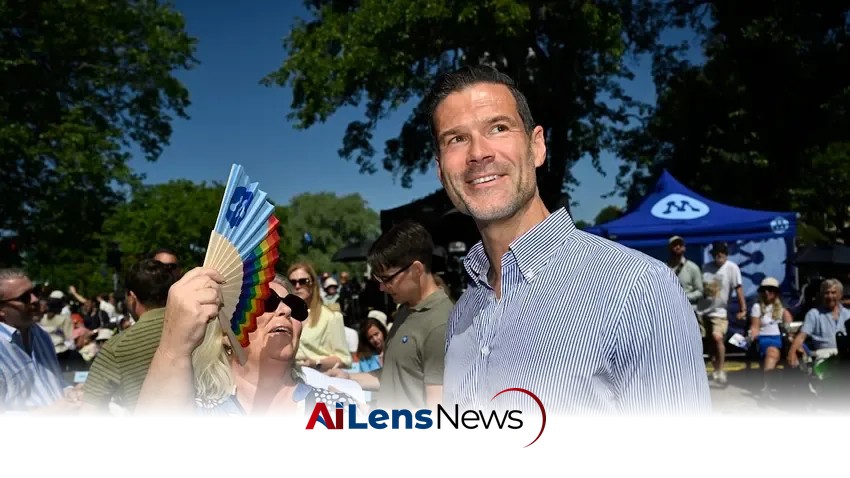


In an interview, Johan Forssell addresses the challenges of his role as Sweden's migration minister, including personal attacks and the impact of immigration on upcoming elections.
London, United Kingdom Jul 25, 2026 ALN: Swedish Migration Minister Johan Forssell has recently opened up about the personal attacks he has endured while managing the intricate landscape of immigration reform in Sweden. His reflections came during a meeting at the Almedalen political festival on Gotland, a notable venue that serves as a gathering point for politicians, activists, and citizens to discuss pressing national issues. Forssell's insights shed light on the intense workload and the political dynamics surrounding immigration as Sweden gears up for its forthcoming elections.
Forssell described the spring of this year as particularly grueling, noting that the pace of legislative work has been relentless. "This spring has been extremely intensive and still is intensive," he remarked during an informal discussion over coffee and cinnamon rolls. He pointed out that the government has successfully passed 12 bills, which is no small feat given the complexities involved. A significant challenge has emerged from a breakdown in the parliamentary pairing system, which has traditionally allowed for more balanced voting when members of parliament are absent. Forssell estimated that he and Justice Minister Gunnar Strömmer have been responsible for over 60 percent of the Tidö Agreement, a political program that was developed in collaboration with the far-right Sweden Democrats, a party that has gained prominence in recent years.
Despite the high-pressure environment, Forssell expressed a sense of pride in the reforms he has spearheaded, particularly those concerning citizenship. These reforms are aimed at tightening the requirements for immigrants seeking to become Swedish citizens, including the introduction of language requirements and civics tests. Forssell's commitment to these reforms reflects a broader trend seen across Europe, where many countries are reevaluating their immigration policies in response to rising public concern over integration and social cohesion.
However, the personal toll of his position has not gone unnoticed. Forssell candidly shared, "You have to put up with so many things and so many abusive remarks: one day you're a Nazi, the next a left-wing activist." This statement underscores the polarized nature of the immigration debate in Sweden, where political labels can be weaponized against officials advocating for reform. Forssell's resilience is noteworthy; he invoked the famous British motivational poster that reads, "Keep calm and carry on!" as a mantra to navigate the challenges he faces.
Forssell's ministry has encountered significant hurdles, not only from political adversaries but also from the sheer volume of legislative work. He emphasized the difficulty in finding qualified judges and lawyers who can handle the influx of new legislation, which has placed additional pressures on his office. This situation speaks to a broader issue within the Swedish legal system, where the demand for legal expertise often outstrips supply, particularly in specialized areas such as immigration law.
Amidst the political turbulence, Forssell remains unwavering in his commitment to the laws he has helped implement, despite facing criticism stemming from a recent scandal involving the parliamentary pairing system. The new citizenship laws he champions are designed to align Sweden with practices in other European nations, reflecting a shift towards more stringent immigration policies across the continent.
As the number of asylum seekers in Sweden reaches its lowest level since 1985, Forssell anticipates that this trend will continue. He believes that the new deportation laws, which are set to take effect in September, will position Sweden's migration policies among the strictest in Europe. This shift is significant, particularly as Sweden has historically been known for its relatively open immigration policies. The implications of these changes could reverberate throughout the European Union, as member states grapple with their own immigration challenges and public sentiments.
Looking ahead to the upcoming elections, Forssell predicts that immigration will remain a central issue. He noted a prevailing narrative suggesting that migration is no longer a priority for voters; however, he counters this by pointing to recent trends in European elections that indicate otherwise. "This election is going to contain a large element of migration – just look at all the other elections out in Europe. It usually does," he stated. His observation highlights the reality that immigration remains a contentious topic that can significantly influence electoral outcomes.
In conclusion, Forssell's tenure as migration minister has been characterized by intense scrutiny and personal attacks, yet he remains resolute in his commitment to reforming Sweden's immigration policies. As the political landscape continues to evolve, he is prepared for the challenges that lie ahead. The implications of his reforms will not only affect the lives of countless individuals seeking to build a future in Sweden but will also shape the broader discourse on immigration within Europe. Forssell's experiences serve as a reminder of the complexities and emotional toll that accompany the pursuit of policy changes in a deeply divided political environment.
To understand the broader context of Forssell's comments, it is essential to consider Sweden's historical approach to immigration. For decades, Sweden has been known for its progressive stance on immigration and asylum, often viewed as a beacon of hope for refugees and migrants. The country has welcomed a significant number of asylum seekers, particularly during the refugee crises of 2015 and 2016, which saw an unprecedented influx of individuals fleeing war and persecution from countries like Syria, Afghanistan, and Iraq.
However, as public opinion began to shift, fueled by concerns over integration, social cohesion, and national security, the political landscape surrounding immigration has also changed. The rise of the Sweden Democrats, a party that has capitalized on anti-immigration sentiments, reflects this shift. Their increasing influence in parliament has prompted traditional parties to reevaluate their immigration policies, leading to a more restrictive approach that Forssell and his colleagues are now implementing.
In light of these changes, Forssell's reforms, particularly concerning citizenship, mark a significant departure from Sweden's previous policies. The introduction of language requirements and civics tests aims to ensure that immigrants not only integrate into Swedish society but also contribute positively to the nation. Critics argue that these measures may disproportionately affect vulnerable populations, particularly those who may struggle with language acquisition or have limited access to educational resources. The debate surrounding these reforms highlights the tension between the need for integration and the humanitarian principles that have traditionally guided Swedish immigration policy.
Moreover, the implications of Forssell's reforms extend beyond Sweden's borders. As the European Union grapples with its own immigration challenges, including the ongoing debate over burden-sharing among member states, Sweden's shift towards stricter immigration policies could influence other nations' approaches. Countries facing similar pressures to control immigration may look to Sweden as a model, potentially leading to a domino effect across the continent. This raises questions about the future of the EU's commitment to humanitarian principles and the protection of human rights for migrants and refugees.
As Forssell prepares for the upcoming elections, the stakes are high. Immigration will likely remain a polarizing issue, with various political factions vying for votes by either advocating for more open policies or pushing for stricter controls. The outcome of these elections could have lasting implications for Sweden's immigration landscape and its role within the European Union. Forssell's experiences and the challenges he faces as migration minister serve as a microcosm of the broader struggles that many countries are experiencing as they navigate the complexities of immigration in an increasingly interconnected world.
To learn more about the latest developments in Elections, stay updated with our exclusive reports and analyses on AiLensNews.

