

More
Checking your session
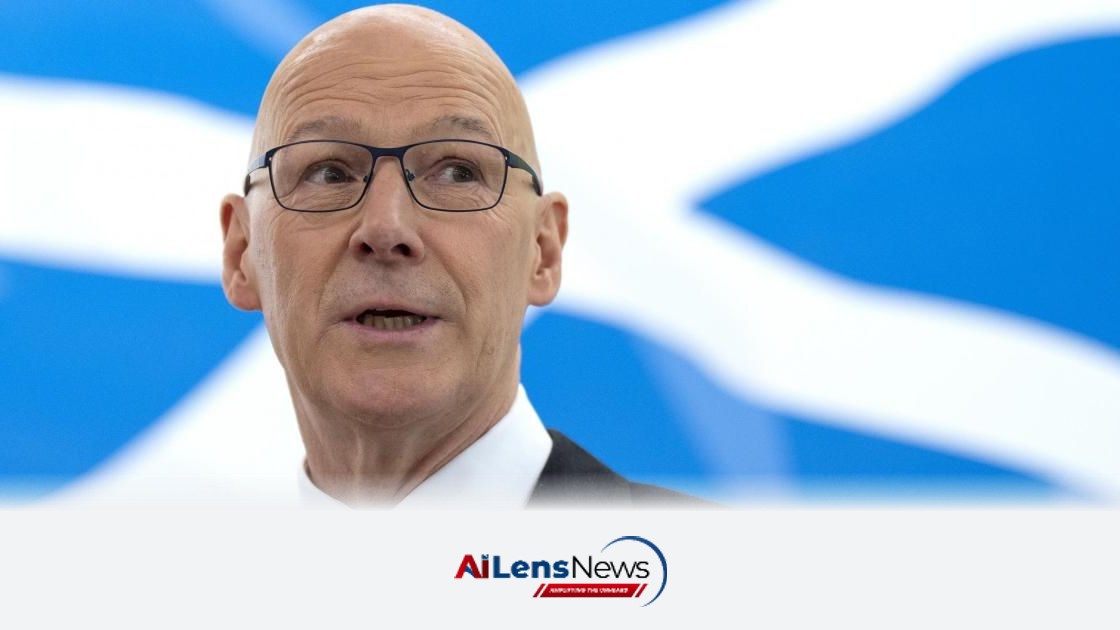



The SNP's repeated pledges for independence referendums have left many supporters feeling misled, as internal debates on the path to independence are stifled.
London, United Kingdom Aug 30, 2026 ALN: It’s difficult to state with any degree of certainty that the SNP’s core supporters are among the most gullible groups on the planet. To paraphrase the great football manager Brian Clough though, they’re probably in the top one.
They’re only matched perhaps by those who think the US whupped Iran’s ass over the Hormuz Straits or people who think the Scottish Greens are still all about the environment.
The SNP have been exploiting their supporters’ credulousness for more than a decade now. During that time you could paper Bute House’s drawing-room with newspaper front pages carrying defiant SNP pledges of independence referendums.
We’ve been getting told to “Save the date,” by Nicola Sturgeon and John Swinney almost every year since the first independence referendum in 2014.
At the SNP party conference in October, they should issue their members with party bingo cards featuring every year from now until 2050.
If a referendum does happen in one of those years, the lucky winner (if they’re still alive) will get to take home a cuddly toy.
Mr. Swinney’s stock response to accusations that he’s maintaining the world’s longest political fiction is that the cynics are all ignorant. We must accept this, he says, because no one’s more passionate about an independent Scotland than he and that anyway, he’s got a plan that only he knows about.
I have a plan that will make Celtic champions of Europe again. It involves persuading the FA to let us into the Prem; getting bought by the Bahrain royal family (long-standing Hoops supporters); persuading Kylian Mbappe, Vinicus Jnr and Ousmane Dembele that they really belong to Glasgow and getting Jurgen Klopp to have one last tilt at European glory.
Mr. Swinney even went as far as to declare, prior to May’s Scottish election, that if there was an independence majority, he would march down to 10 Downing Street and demand a second independence referendum. It was a bold statement that could only have been made by a man who knows that achieving this majority was unlikely to happen.
Even so, the SNP having won the election comfortably for the fifth time in succession, you might have thought that details of his plan might be forthcoming. And that there might be intense debate at conference about applying the finishing touches.
Yet, it now seems that party members will have no opportunity to discuss how best to proceed in the direction of securing a second referendum. Motions about the ‘Route to Independence’ have been blocked by party managers.
This seemed a reasonable enough request from the membership, given that achieving independence is the SNP’s main purported objective and that they’d won the election on the promise of doing all in their power to advance its cause. The motion stated that attempts by the people of Scotland to choose their own constitutional future had been “repeatedly and deliberately blocked by the UK Government, and there is no reasonable prospect of this position changing.” All of this is true.
They reminded Mr. Swinney of a statement he made in May that his priority was to demonstrate “clearly and tangibly the intense pressure … for us to have the choice of our own future.”
It had urged the conference to agree “that the SNP must stop seeking permission for a right that already exists, and instead, take direct control of the route to independence.” Again, a reasonable and valid summation of where the campaign for Scottish independence now finds itself.
An SNP insider then told The Herald: “It’s blatantly obvious that John has put independence on the back burner. His priority for this term in office is public service reform - he’s made that pretty clear. I wish he’d level with the SNP membership and be honest about that instead of constantly marching them up the hill and down again.
“He effectively bounced SNP conference into backing his strategy at last year’s conference. A strategy that demanded an SNP majority - it was never doable - and now he’s boxed us in. Some argue he did it deliberately to park independence for the foreseeable.”
This person didn’t say what many of us were thinking: that given the SNP’s record of failure in every sector of Scottish public life, all they’ve got are the old, familiar battle-cries on independence. The series of expensive White papers they produced over the last couple of years were statements of the bleedin’ obvious that Chat GPT could have produced with a few key prompts.
Independence supporters might reasonably have expected that in the 12 years that have elapsed since the first referendum, the SNP might have produced a formidable strategy and route-map to securing a second one. During this time, the UK Government has been unstable and chaotic. There have been seven Prime Ministers since 2014 and there is a real prospect that the next one will be Nigel Farage. This approaches the definition of a failed state.
Of the many books written about Scottish politics in the post-referendum era, the most authoritative and compelling is Joanna Cherry’s memoir, published last year. In it, she sets out a reasonable framework and strategy for at least focusing the minds of the UK Government on Scottish independence. It should have been the starting point for a working group within the SNP to have produced something detailed that didn’t insult the intelligence of its supporters.
She writes: “The British constitution has already shown it is flexible enough to permit an independence referendum for Scotland, and Scotland’s right to self-determination was recognised in the Edinburgh Agreement in 2014.”
Ms. Cherry cites the Good Friday Agreement which guaranteed the right of the people of Northern Ireland to choose their constitutional future. She notes that it provides for a referendum on the reunification of Ireland if the UK Secretary of State felt it likely that “a majority of those voting would express a wish that Northern Ireland should cease to be part of the United Kingdom” and that such polls may be repeated at a minimum of seven-year intervals.
To learn more about the latest developments in Political Controversies, stay updated with our exclusive reports and analyses on AILensNews.

During a visit to the Morigaon Press Club, Congress MP Gaurav Gogoi raised serio…

The recent agreement between President Trump and Venezuela raises questions abou…
Altaf Thakur, BJP spokesperson, asserts that Article 370 is permanently abrogate…

The CPM is under fire as questions arise regarding the funds collected for a pro…

The recent amendment to the Transgender Persons Act has sparked fears among acti…