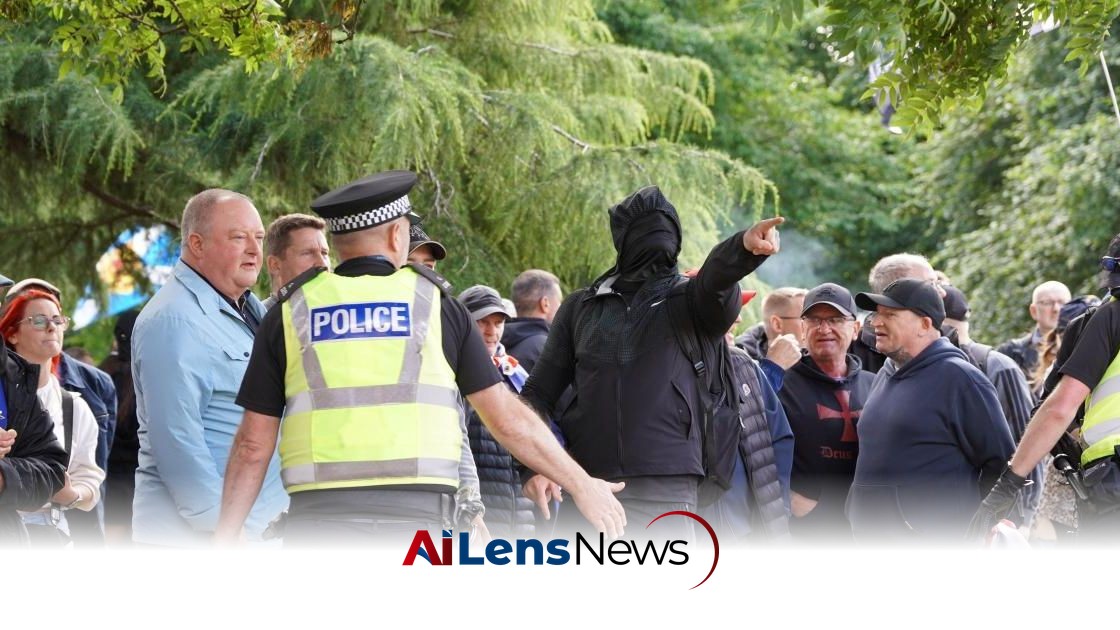


An MSP urges the UK Home Office to proscribe anti-migrant groups inciting violence and terror, following protests in Glasgow that led to arrests and assaults.
London, United Kingdom Jul 29, 2026 ALN: In recent developments, a Member of the Scottish Parliament (MSP) has called for a ban on anti-migrant groups that, according to her, have been involved in activities that could be classified as terroristic in nature. The MSP, representing the Scottish Greens, has articulated concerns that these groups are not only inciting violence but also threatening individuals based on their racial or ethnic backgrounds. This call to action comes amid a concerning rise in anti-migrant protests across Scotland, which have seen a notable increase in violence and public disorder.
The urgency of the situation is underscored by a series of protests that took place in Glasgow over the past weekend, during which law enforcement made 15 arrests. Reports from the scene indicated that the protests devolved into violent altercations, including instances of individuals performing Nazi salutes and an attack on a delivery driver. Such incidents have provoked widespread condemnation from various political leaders and civil rights organizations, highlighting the growing tensions surrounding immigration and race relations in Scotland.
The Scottish Greens MSP, Maggie Chapman, has been particularly vocal about the need for drastic measures against groups like Unite the Clans, which has been linked to violent protests against migrants. This organization, previously known as Aberdeen Against Illegal Migration, has garnered attention for its aggressive tactics during demonstrations, which have included physical assaults on counter-demonstrators and racially charged abuse directed at asylum seekers. Chapman has stated that these groups “clearly intend to cause terror” and should be legally proscribed to prevent further violence.
Proscription, in the UK context, refers to a legal mechanism that allows the Home Secretary to designate organizations as terrorist groups if they are found to promote or engage in terrorism. Once a group is proscribed, membership and support for that group become illegal. This process involves an assessment of the group's activities and a subsequent approval by the UK Parliament. Chapman argues that the proscription of such groups is crucial for ensuring public safety and protecting community cohesion, as well as safeguarding democratic institutions from extremist influences.
Chapman, who was born in Zimbabwe, has herself been targeted by members of anti-migrant groups, which adds a personal dimension to her advocacy. She has shared experiences of being followed and verbally threatened during protests, including a particularly alarming incident where a protester allegedly threatened her life. This highlights the real and present danger that such groups pose not only to migrants but also to those who stand in opposition to their ideologies.
In response to the growing concerns, Yi-pei Chou Turvey, the justice spokesperson for the Scottish Liberal Democrats, echoed Chapman’s sentiments by emphasizing the importance of remaining vigilant against the evolving threats posed by extremist groups. She noted that there are already several racist and neo-Nazi organizations that have been rightly proscribed under the Terrorism Act, and she called on the Home Office to stay alert to similar threats that may arise in the future. Turvey also stressed that it is primarily the responsibility of law enforcement to address fascist violence and maintain order in communities.
The Scottish Government has also expressed its condemnation of the violent behavior exhibited during the recent protests. First Minister John Swinney stated that while democracy allows for the right to protest, the actions witnessed over the weekend were “absolutely and completely unacceptable.” His remarks came in response to public calls for action against anti-migrant groups, although he clarified that any decision regarding proscription ultimately lies with the UK Government. This highlights the complexities involved in addressing such issues, as they often require coordination between different levels of government and law enforcement agencies.
Adding to the gravity of the situation, the National Union of Journalists (NUJ) has reported a disturbing trend of violence against reporters covering these protests. The NUJ has indicated that journalists have faced threats, harassment, and physical attacks while attempting to document events, which raises significant concerns about press freedom and the safety of media personnel in politically charged environments. Nick McGowan-Lowe, the NUJ organizer for Scotland, has emphasized that journalists should be able to carry out their work without fear of harassment or violence, particularly in the context of public protests.
The rise in anti-migrant sentiment and the associated violence have prompted calls for more robust measures to protect vulnerable communities and uphold democratic values. The implications of these events extend beyond immediate public safety concerns, touching on broader societal issues related to integration, community cohesion, and the values that underpin a multicultural society. The discourse surrounding immigration, race, and national identity remains a contentious issue not only in Scotland but across the UK and Europe.
Historically, Scotland has been viewed as a relatively welcoming place for immigrants, with a rich tapestry of cultures contributing to its societal fabric. However, recent years have seen a shift in public sentiment, influenced by various factors including economic pressures, political rhetoric, and global events. The Brexit referendum in 2016, for instance, has been cited as a pivotal moment that exacerbated divisions and fueled anti-immigrant sentiments across the UK. As the country navigates its post-Brexit identity, the rise of nationalist and populist movements has further complicated the landscape, leading to increased polarization on immigration issues.
In this context, the actions of anti-migrant groups not only threaten the safety of individuals but also challenge the fundamental values of inclusivity and diversity that many advocate for in Scottish society. The call for a ban on such groups reflects a broader recognition of the need to confront extremist ideologies head-on, and to foster a climate of respect and understanding among all community members.
As the situation continues to unfold, the Home Secretary has been contacted for comments regarding any potential actions to proscribe anti-migrant groups in Scotland. The implications of any such move would be significant, as it could set a precedent for how similar organizations are treated across the UK. The balance between freedom of expression and the need to protect individuals from hate-driven violence remains a delicate one, requiring thoughtful consideration and dialogue among policymakers, community leaders, and the public.
In conclusion, the call for a ban on anti-migrant groups in Scotland reflects a growing recognition of the threats posed by extremist ideologies. The actions of these groups have far-reaching implications for social harmony and public safety, necessitating a thoughtful and coordinated response from both governmental authorities and civil society. As the dialogue continues, it will be crucial to balance the right to protest with the need to protect individuals from hate-fueled violence and to foster an inclusive environment where all members of society can coexist peacefully. The coming weeks and months will be pivotal in shaping Scotland's approach to immigration, community relations, and the fight against extremism, and will require a collective commitment to uphold the values of democracy and human rights.
To learn more about the latest developments in Political Controversies, stay updated with our exclusive reports and analyses on AiLensNews.

