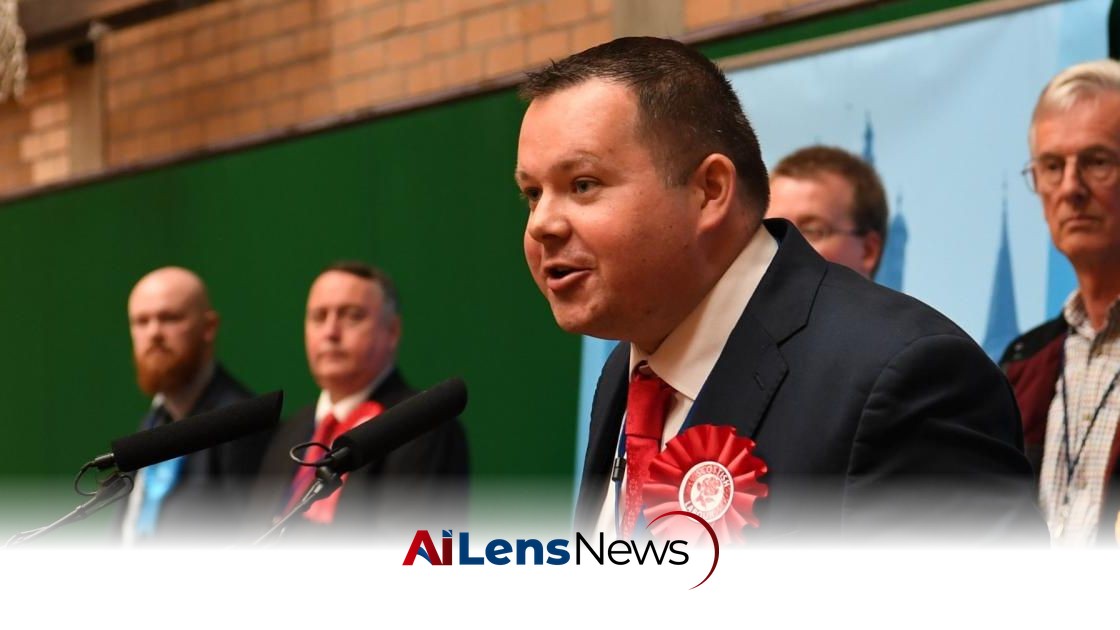


Joe Fagan, a newly elected Scottish Labour MSP, has announced his leadership bid, aiming to revitalize the party and engage more with local communities.
London, United Kingdom Jul 29, 2026 ALN: A fledgling Scottish Labour MSP, elected to Holyrood for the first time in May, has launched a "bold" leadership bid which he claims would "shake up Scottish politics."
Joe Fagan has been a regional Scottish Labour MSP for South Scotland since May 2026 and is shadow minister for public finance and local government. His political career gained momentum when he served as Leader of South Lanarkshire Council until stepping down in May 2026 after being elected to Holyrood. His rapid rise within the party reflects a broader trend of younger politicians taking up leadership roles as traditional party structures evolve in response to changing public sentiment.
Fagan launched his bid on Tuesday evening by asserting that "continuity won’t cut it" and vowed to "win back trust" by ensuring the party would be "rooted in communities." This statement underscores a growing recognition within the party that past strategies may no longer resonate with the electorate. The call for a fresh approach suggests that Fagan is keenly aware of the challenges facing Scottish Labour, particularly in light of recent electoral setbacks and the party's struggle to connect with voters.
In his address, Joe Fagan MSP articulated a vision for Scottish Labour that emphasizes learning from both successes and failures. He stated, “Scottish Labour needs to learn lessons from where we have won, not just where we have lost.” This perspective is crucial as the party seeks to rebuild its brand and re-establish itself as a viable alternative to the Scottish National Party (SNP) and other political entities. Fagan pointed to Andy Burnham’s by-election victory in Makerfield and Labour's own successes in South Lanarkshire as indicators that the party can regain public trust when it is genuinely engaged with local communities.
Fagan's remarks highlight a significant shift in how political parties must operate in the current climate. He emphasized that, “The lesson is simple: people will listen to Scottish Labour again when we stop sounding like a party talking to itself and start proving that we are on their side.” This sentiment reflects a broader critique of political insularity, where parties become disconnected from the everyday concerns of their constituents. By positioning himself as a candidate who prioritizes community engagement, Fagan aims to differentiate his leadership style from that of his predecessors.
Drawing on his experience as a local council leader, Fagan cited specific achievements, such as making swimming free for under-16s in South Lanarkshire, cutting the cost of living, and delivering the best-paid home care workforce in the country. These accomplishments are strategically important as they serve as tangible evidence of his capability to effect change at the local level, which he hopes to translate into broader political success.
He stated, “I am not here to wait around. As my track record shows, I am here to get things done.” This assertive declaration positions Fagan as a proactive leader who is ready to tackle the pressing issues facing Scotland, including economic challenges and public service delivery. By focusing on practical solutions, he aims to resonate with voters who are increasingly frustrated with political rhetoric that lacks actionable outcomes.
Fagan further articulated his vision by saying, “That means more money in people’s pockets, better services on their doorstep and a politics that puts practical change ahead of excuses.” This emphasis on pragmatic governance aligns with a growing public demand for accountability and effectiveness in political leadership. His call to "unite our party and seize this municipal moment" reflects an understanding that local governance is critical in shaping national policies and that Labour's future success may hinge on its ability to connect with grassroots movements.
In the context of Scottish politics, Fagan's bid comes at a pivotal moment. Scottish Labour is bracing for an eight-week leadership contest as the race to replace Anas Sarwar formally gets underway. Nominations will open on August 3 and close on August 19, with the result announced at a Special Conference on Saturday, September 19. This timeline indicates a structured approach to the leadership transition, allowing for thorough debate and discussion among party members.
Mr. Sarwar's recent resignation as an MSP after being made a member of the House of Lords and brought into Government by Andy Burnham marks a significant shift in the party's leadership landscape. His departure has left a vacancy that several candidates, including Fagan, Monica Lennon, and Michael Marra, are eager to fill. Lennon, who will return to Holyrood following Sarwar's resignation, and Marra, the party's finance spokesman, have both formally declared their candidacies, indicating a competitive race ahead.
Additionally, left-wing MSP Katy Clark is reportedly considering a bid, having previously lost the 2014 deputy leadership election to Kezia Dugdale. Clark's recent resignation from the House of Lords and her new role as Deputy Presiding Officer of the Scottish Parliament position her as a contender with significant political experience. Her outreach to colleagues to gauge support suggests she is strategically positioning herself for a potential challenge.
Paul Sweeney has also expressed interest in the leadership role, adding to the growing list of candidates. The presence of multiple contenders reflects a vibrant and dynamic political environment within Scottish Labour, as various factions within the party seek to assert their vision for its future direction.
The party's acting leader, Dame Jackie Baillie, has ruled herself out of the race, which may provide an opportunity for new leadership styles to emerge. Baillie's decision not to run suggests a willingness to allow fresh perspectives to take the helm, potentially paving the way for a transformative phase for Scottish Labour.
As the leadership contest unfolds, the implications for Scottish Labour will be significant. The outcome will not only determine the future direction of the party but also its ability to reconnect with voters who may have turned away in recent years. With the SNP continuing to dominate Scottish politics, the new leader will face the formidable challenge of articulating a compelling alternative vision that resonates with the electorate.
In conclusion, Joe Fagan's leadership bid represents a critical juncture for Scottish Labour, as the party seeks to redefine itself in a rapidly changing political landscape. His emphasis on community engagement, practical solutions, and a commitment to change resonates with the broader public sentiment, suggesting that his campaign could play a pivotal role in shaping the future of Scottish Labour. As the leadership contest progresses, the party's ability to adapt and respond to the evolving needs of its constituents will be key to its success in the coming years.
To learn more about the latest developments in Political Parties, stay updated with our exclusive reports and analyses on AiLensNews.

