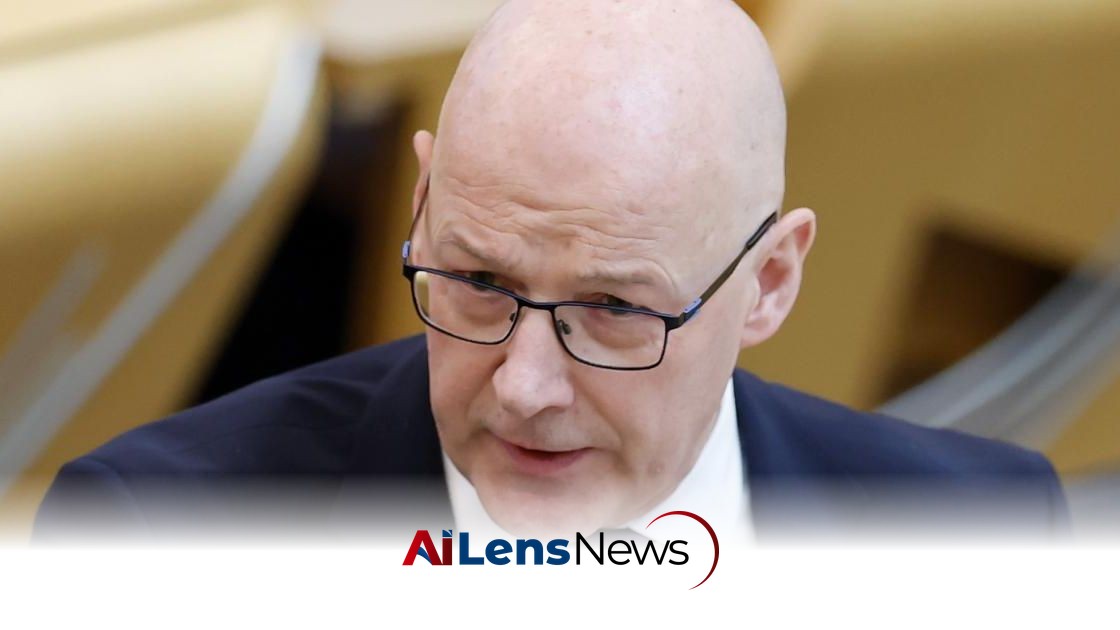


With the leadership crisis in the UK Parliament temporarily resolved, calls for Scotland's First Minister to demand a Section 30 order for a new independence referendum are intensifying.
London, United Kingdom Jul 21, 2026 ALN: In recent weeks, the political landscape in the United Kingdom has undergone significant changes, particularly in relation to the leadership of the UK Parliament. With the appointment of a new Prime Minister, discussions surrounding Scotland's push for independence have gained renewed focus. The First Minister of Scotland is now urged to take a definitive stand by demanding a Section 30 order, which would grant the Scottish Parliament the authority to hold a legally binding referendum on independence.
The Section 30 order is a crucial mechanism within the Scotland Act of 1998, which allows the UK Parliament to devolve powers to the Scottish Parliament, including the power to legislate on constitutional matters such as independence referenda. The Scottish Government has previously sought a Section 30 order to hold a second independence referendum, following the first one in 2014, where 55% of voters opted to remain in the UK. However, the political climate has shifted since then, with a growing segment of the Scottish population expressing a desire for a second chance to vote on the matter.
Proponents of Scottish independence argue that the right to self-determination is a fundamental democratic principle. They contend that the people of Scotland should have the opportunity to decide their own future, particularly in light of significant political events such as Brexit, which was opposed by a majority of Scottish voters. The argument for a new referendum is based on the premise that the circumstances have changed drastically since 2014, warranting a fresh assessment of public opinion on independence.
The implications of Brexit, which saw the UK leave the European Union, have been particularly pronounced in Scotland, where a significant majority of voters chose to remain in the EU. This divergence has fueled discontent among those who feel that their preferences are being overlooked by the UK Government. The First Minister's demand for a Section 30 order is seen as a necessary step towards fulfilling the democratic aspirations of the Scottish people. It represents an assertion of Scotland's right to self-governance and the ability to shape its own destiny. The political discourse surrounding independence has also been influenced by recent polls indicating an increase in support for independence, suggesting that a significant portion of the population is ready to reconsider their stance.
However, the response from the UK Government is anticipated to be one of resistance. The Prime Minister may likely reject the request for a Section 30 order, citing the outcome of the 2014 referendum as a mandate for the status quo. This anticipated rejection raises questions about the future of the independence movement and the strategies that may need to be employed to push for a referendum. The UK Government's position is often rooted in the belief that the matter was settled with the 2014 vote, and they may argue that there is no significant new evidence or change in circumstances that would justify a second referendum.
If the UK Government continues to deny Scotland's request for a democratic vote, the First Minister may need to explore alternative avenues to demonstrate Scotland's commitment to pursuing independence. This could involve mobilizing public support through grassroots campaigns, engaging with international bodies, or seeking legal avenues to challenge the UK Government's stance on the matter. The potential for legal challenges is particularly significant, as there are precedents in various jurisdictions where courts have intervened in matters of self-determination and constitutional rights.
The implications of this political struggle extend beyond Scotland's borders. The international community is closely watching the developments, particularly in the context of self-determination and regional autonomy movements worldwide. Scotland's pursuit of independence has the potential to inspire similar movements in other regions, raising questions about the future of the United Kingdom as a political entity. The situation in Scotland is emblematic of broader trends in global politics, where issues of national identity, autonomy, and self-governance are increasingly at the forefront.
As the First Minister prepares to meet with the Prime Minister, the significance of this moment cannot be overstated. It represents not only a pivotal moment for Scotland but also a broader reflection of the changing dynamics within the UK. The outcome of these discussions will likely shape the political landscape for years to come, influencing both domestic and international perceptions of Scotland's quest for independence.
In conclusion, the call for a Section 30 order by Scotland's First Minister is a crucial step in the ongoing dialogue surrounding independence. It underscores the importance of democratic rights and the desire for self-determination among the Scottish people. As the political situation evolves, the implications of these discussions will reverberate throughout the UK and beyond, highlighting the complexities of governance, identity, and the quest for autonomy in an increasingly interconnected world.
Ruth Ritchie, a resident of Lockerbie, has voiced her support for this movement, emphasizing the need for clarity and confidence in the First Minister's approach. The sentiment among many in Scotland is one of determination to ensure that their voices are heard and that they have the opportunity to shape their future. The desire for independence is not merely a political issue; it is deeply intertwined with the national identity and cultural heritage of Scotland.
As Scotland moves forward, the call for a Section 30 order is not merely a procedural request; it is a declaration of the Scottish people's commitment to their democratic rights and their vision for a better future. The journey towards independence is fraught with challenges, but it is also filled with the potential for renewal, growth, and self-determination. The outcome of this political struggle will not only define Scotland's future but will also have lasting implications for the entire United Kingdom, as well as for the principles of democracy and self-governance that resonate across the globe.
To learn more about the latest developments in Elections, stay updated with our exclusive reports and analyses on AiLensNews.

