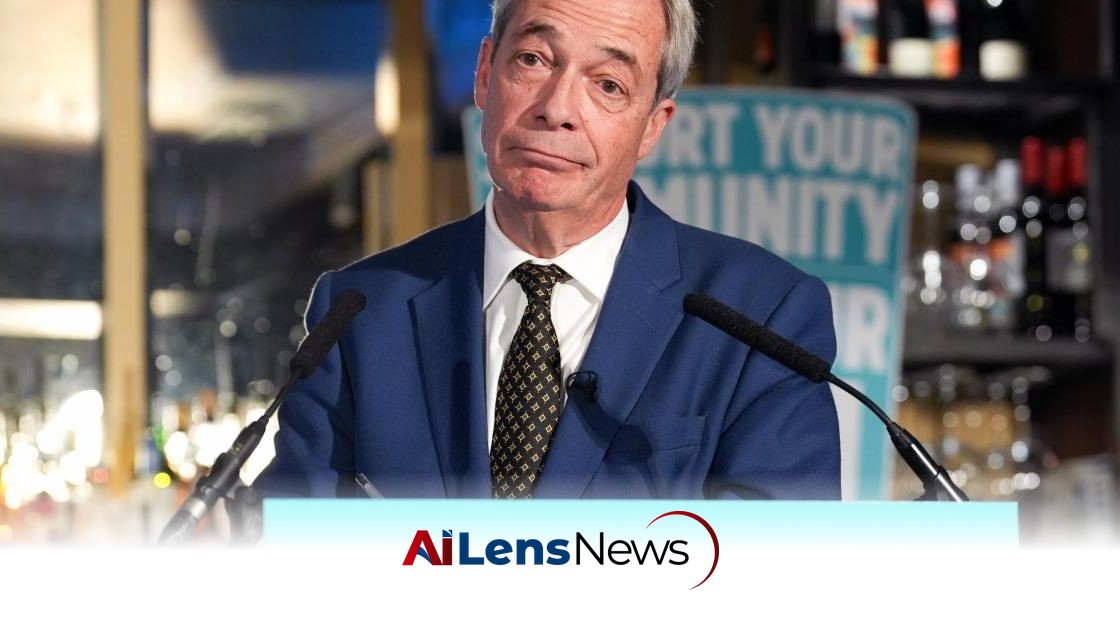


Reform UK responds to criticism regarding their proposal to criminalize election materials in Gaelic and Scots, asserting it was misinterpreted.
London, United Kingdom Jul 15, 2026 ALN: Reform UK has responded to the backlash following their proposals to criminalize election campaign materials in Gaelic and Scots.
The National previously reported how Nigel Farage's party has moved an amendment to a Westminster bill that would, if passed, criminalize all political materials that are not in or Welsh. This proposal has sparked significant controversy and debate, particularly in Scotland, where both Gaelic and Scots are integral to the cultural identity of many communities.
If Reform's amendment to the Representation of the People Bill is passed, those found in violation of the law could face severe penalties, including up to six months in jail and a fine. This potential legislation has raised alarms among various political groups and advocates for linguistic diversity, who fear it could undermine the rights of speakers of minority languages in the UK.
The Scottish National Party (SNP) has accused Reform of plotting "to crush Scotland's native Scots and Gaelic languages," emphasizing that such plans are reminiscent of historical attempts to suppress Gaelic during the Highland Clearances. The Highland Clearances were a series of evictions and forced displacements in the Scottish Highlands during the 18th and 19th centuries, which had devastating effects on the Gaelic-speaking population and their culture.
In addition to the SNP's condemnation, the Scottish Greens have criticized Farage's party for what they describe as "censorship," labeling the amendment as "absurdly" and "dangerously" broad. The implications of such a law could significantly affect political discourse in Scotland, where both Gaelic and Scots have been recognized as vital components of the nation's heritage.
In response to the backlash, Reform UK has sought to clarify its position, accusing the SNP of being "unsurprisingly misleading" in their interpretation of the amendment. A spokesperson for the party claimed that the "amendment was drafted for application in elections in England and Wales, not Scotland and Northern Ireland." However, the amendment itself includes two paragraphs that explicitly outline criminal punishments applicable in Scotland, raising questions about the party's understanding of the legal text they proposed.
The act it would amend, the Representation of the People Bill, extends across Great Britain and Northern Ireland, thus including Scotland. This legal framework means that any changes to the bill would inherently affect all regions, including those where Gaelic and Scots are actively spoken and used in political contexts.
A Reform UK spokesperson has since stated that criminalizing Gaelic or Scots in Scotland was not the "intention" of the amendment. When pressed on whether Reform UK had "published an amendment that they don't understand," they responded: "No, the Table Office changed it later on. There was an administrative mess up." This statement raises concerns about the legislative process and the clarity of communication within the party regarding significant amendments that could impact minority language rights.
They added: "The amendment was intended for England and Wales. So, if you're publishing election material in Hartlepool in Gaelic, then yeah [it would be criminalized]." This comment underscores a perceived lack of awareness about the linguistic landscape of the UK, where many regions have rich traditions of multiple languages, including Gaelic and Scots.
Reform UK MSP Max Bannerman arriving at the Scottish Parliament (Image: Jane Barlow/PA Wire)
Meanwhile, Reform UK MSP Max Bannerman, representing the party's interests in Scotland, told The National: "As a Highlander who is a keen supporter of the Gaelic language and Scotland’s rich cultural heritage, I can guarantee that Reform UK is committed to protecting the linguistic heritage of Britain." Bannerman's statement reflects an effort to distance the party from accusations of anti-Gaelic sentiment, positioning the amendment as a means of preserving the integrity of elections rather than as an attack on cultural identity.
Bannerman further claimed that the amendment was "about preserving the integrity of elections and ensuring that they are fought in domestic languages, not Urdu or Bengali." This remark has been met with criticism, as it implies a hierarchy of languages that could marginalize non- speakers and further alienate minority communities. Critics argue that such a stance fails to recognize the multicultural fabric of modern Britain, where numerous languages coexist and contribute to the nation's identity.
"This is not about diminishing Scotland’s identity or heritage," he added, attempting to reassure constituents that the party's intentions were not malicious. However, the framing of the issue as one of election integrity rather than linguistic rights has not assuaged fears among advocates for Gaelic and Scots speakers.
Bannerman continued: "That’s why I’m exploring introducing a bill to the Scottish Parliament to ensure that future Scottish elections are fought in Gaelic, Scots, and only. The SNP have failed to protect the integrity of our indigenous languages in favor of manufacturing outrage over non-issues. Reform is putting our money where our mouth is." This proposed initiative could be seen as a countermeasure to the backlash against the amendment, suggesting that Reform UK is willing to engage with language rights in a more constructive manner, albeit under the shadow of their controversial proposal.
The implications of this ongoing debate are manifold. For one, it highlights the tension between national identity and political pragmatism in Scotland. The use of Gaelic and Scots in political discourse is not merely a matter of language; it is deeply intertwined with issues of cultural heritage, historical injustices, and the ongoing struggle for recognition of minority rights within the UK. Furthermore, the backlash against Reform UK's amendment may galvanize support for greater protections for these languages, potentially leading to legislative initiatives that reinforce the importance of linguistic diversity in Scottish society.
As the situation develops, it will be essential for all parties involved to engage in meaningful dialogue that respects the linguistic rights of all citizens while addressing the complexities of political communication in a multicultural landscape. The outcome of this controversy may set important precedents for how languages are treated in political contexts across the UK and could influence future legislative efforts aimed at protecting minority languages and cultures.
To learn more about the latest developments in Political Controversies, stay updated with our exclusive reports and analyses on AiLensNews.

