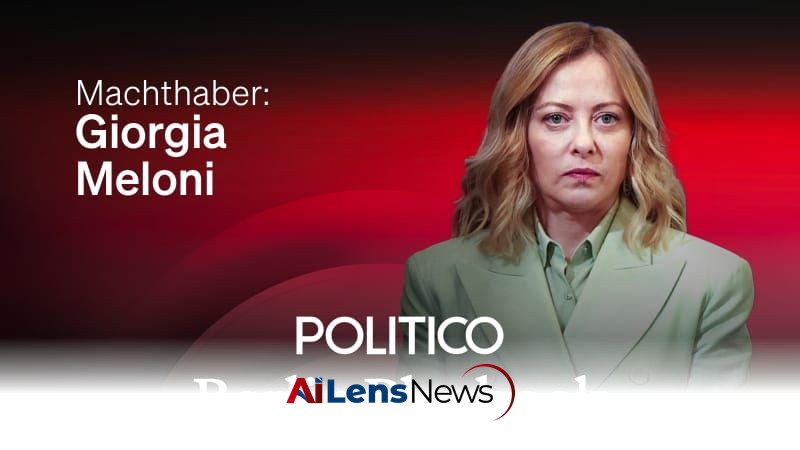


In this episode of the Berlin Playbook, we delve into the motivations and decisions of Giorgia Meloni, one of today's most powerful and controversial politicians.
London, United Kingdom Aug 1, 2026 ALN: Giorgia Meloni, the leader of the Brothers of Italy party, has emerged as a significant figure in European politics, particularly following her ascent to the position of Prime Minister of Italy in October 2022. Her rise to power marks a notable shift in Italy's political landscape, as she is the first woman to hold the office of Prime Minister in the country’s history. This article delves into the power dynamics surrounding Meloni, examining her political ideology, decision-making processes, and the broader implications of her leadership on both Italy and the European Union.
Meloni’s political journey began in her youth, when she became involved in politics as a member of the Italian Social Movement, a party with roots in post-World War II neo-fascism. Over the years, she has shifted her political stance, moving towards a more mainstream right-wing ideology. As the leader of Brothers of Italy, she has positioned her party as a nationalist and conservative alternative in a political landscape that has often been dominated by centrist and leftist parties. Her party gained prominence during the European migrant crisis, adopting a hardline stance on immigration, which resonated with a significant portion of the Italian electorate.
Meloni's political rhetoric often emphasizes themes of national sovereignty, traditional family values, and a critical view of the European Union's influence over member states. She has been vocal about her opposition to what she perceives as excessive bureaucracy and regulations imposed by Brussels, advocating for policies that prioritize Italy's interests. This perspective has garnered both support and criticism; supporters view her as a defender of national identity, while critics argue that her views threaten the unity and collaborative spirit of the EU.
One of the key aspects of Meloni's leadership style is her ability to connect with her base. She employs a populist approach, often framing her messages in a way that resonates with ordinary citizens who feel disenfranchised by the political elite. Her speeches frequently invoke a sense of urgency regarding issues such as immigration, economic insecurity, and cultural identity. This has allowed her to build a strong rapport with her supporters, who appreciate her direct communication style and her focus on issues that affect their daily lives.
However, Meloni's rise to power has not been without controversy. Her party's historical ties to far-right movements have raised concerns among various groups, including immigrants, LGBTQ+ advocates, and those who fear the erosion of civil rights. Critics argue that her policies may exacerbate social divisions and undermine Italy's commitment to human rights. Additionally, her government’s approach to governance has been scrutinized for its handling of dissent and criticism, with some observers noting a tendency towards authoritarianism.
In terms of decision-making, Meloni has shown a pragmatic approach, often balancing her ideological convictions with the practical realities of governing a diverse and economically challenged country. Her administration has faced significant challenges, including managing Italy’s economic recovery post-COVID-19, addressing rising energy costs, and navigating the complex landscape of European politics. Meloni has had to make difficult decisions, often weighing the expectations of her party against the broader needs of the country.
Moreover, Meloni's government has had to respond to external pressures, particularly from the European Union regarding fiscal policies and budgetary constraints. Italy is one of the largest beneficiaries of the EU's recovery fund, and Meloni must navigate the delicate balance between asserting Italy's sovereignty and fulfilling the conditions set by the EU. Her approach to these negotiations will be crucial in determining Italy's economic future and its relationship with other member states.
The implications of Meloni’s leadership extend beyond Italy’s borders. As a prominent figure in the European right, her policies and political strategies may influence similar movements across the continent. The rise of right-wing populism in Europe has been a significant trend in recent years, and Meloni’s success could embolden other leaders who share her views. This could lead to further fragmentation within the EU, as member states grapple with the challenges of nationalism and regionalism. In this context, Meloni's leadership could serve as a catalyst for a broader shift in political dynamics across Europe, potentially reshaping alliances and altering the balance of power.
Furthermore, Meloni’s foreign policy stance is also a point of interest. She has expressed a desire to strengthen Italy’s ties with other right-wing governments, potentially leading to a coalition of like-minded leaders. This could reshape alliances within the EU and affect Italy's role on the global stage. For instance, her government’s approach to relations with Russia and China will be closely watched, particularly in light of ongoing geopolitical tensions. Meloni's inclination towards a more assertive nationalistic foreign policy may lead to a reevaluation of Italy's traditional alliances and partnerships, impacting not only bilateral relations but also Italy's standing within international organizations.
As Meloni continues to navigate her role as Prime Minister, the international community will be paying close attention to her policies and their outcomes. The effectiveness of her government in addressing economic challenges, managing immigration, and balancing national interests with European obligations will ultimately define her legacy. Additionally, her ability to unify her party and maintain public support amid criticism will be pivotal in determining her long-term influence in Italian and European politics. Observers will be particularly interested in how she balances her party's hardline positions with the necessity of governance in a diverse society.
In conclusion, Giorgia Meloni’s rise to power represents a significant moment in Italy's political history, characterized by a shift towards nationalism and conservative values. Her leadership style, decision-making processes, and the implications of her policies will have lasting effects not only on Italy but also on the broader European landscape. As the world watches, Meloni's actions will undoubtedly shape the future of Italy and its role within the European Union, making her one of the most powerful and controversial figures in contemporary politics. The unfolding of her tenure will be critical in understanding the evolving nature of European politics and the potential resurgence of nationalist sentiments across the continent.
To learn more about the latest developments in Elections, stay updated with our exclusive reports and analyses on AiLensNews.

