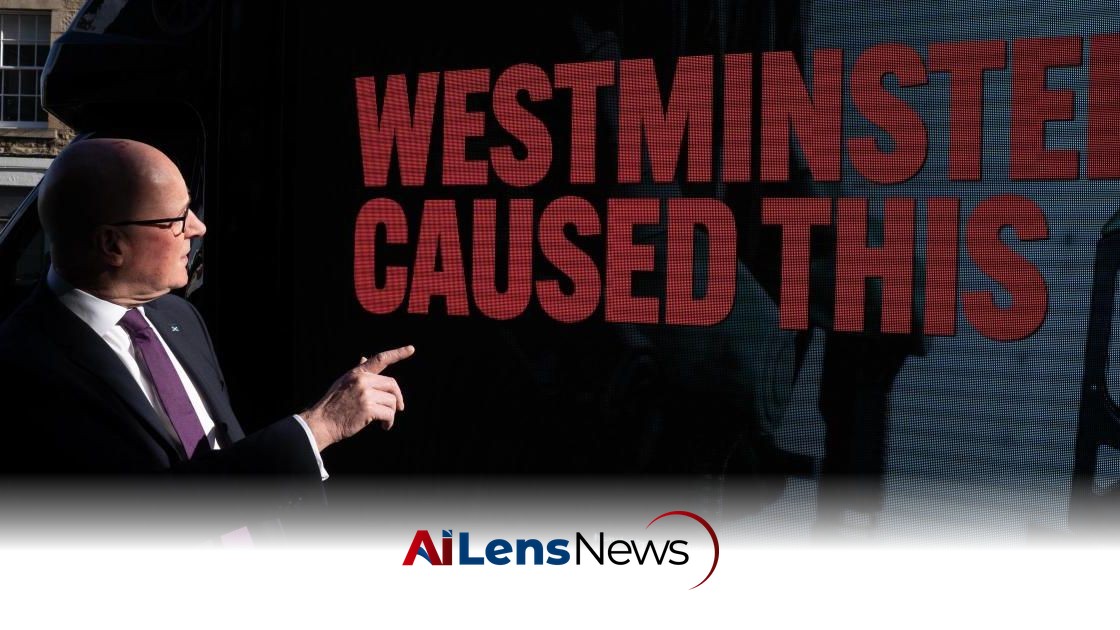


Recent polling indicates that 45% of Scottish voters support a unilateral declaration of independence, highlighting shifting attitudes towards independence.
London, United Kingdom Aug 12, 2026 ALN: In recent political discourse surrounding Scotland's potential independence, a new poll has emerged revealing a significant level of support among the Scottish electorate for a unilateral declaration of independence by the Scottish Government. Conducted for The National, this poll indicates that 45% of voters would back such a declaration if those who are undecided are excluded from the results. This level of support reflects a notable shift in public sentiment regarding Scotland’s path to independence, suggesting that the concept, often dismissed as unrealistic or fringe, is gaining traction among the populace.
When accounting for all voters, including those who are undecided, the support for a unilateral declaration drops to 35%, while opposition stands at 42%. This data indicates a complex landscape of opinion regarding independence, with a substantial portion of the electorate open to the idea, even if it is not the majority view. The figures suggest a growing urgency among the Scottish National Party (SNP) and other pro-independence factions to consider more assertive actions towards achieving independence.
Among SNP voters, the support for a unilateral declaration is even more pronounced, with 69% expressing strong support for Holyrood to declare independence without the consent of Westminster. This overwhelming backing from SNP voters underscores the party's foundational commitment to independence and reflects the party's role as the primary vehicle for the independence movement in Scotland. In contrast, Green voters exhibit slightly less enthusiasm, although a significant 44% of them would strongly support such a declaration, with an additional 10% expressing some level of support.
Even more striking is the level of support for a unilateral declaration among voters of traditionally Unionist parties. Approximately 25% of Liberal Democrat voters and 19% of Labour voters indicated they would support a unilateral declaration of independence. This crossover support from voters who typically align with Unionist parties suggests that the independence movement may be resonating with a broader audience than previously thought. Additionally, 28% of those who did not vote in the last election and 21% of Reform UK voters also expressed support for the idea, indicating that the appeal for independence may transcend traditional party lines.
For proponents of a unilateral declaration of independence, these polling figures serve as a rallying cry, suggesting a potential shift in the political landscape. Advocates argue that a unilateral declaration could catalyze a new political reality, compelling Westminster to engage with Scotland's aspirations for independence more seriously. Such a move would represent a departure from the SNP's current strategy, which has relied heavily on negotiating for a second referendum—a strategy that has been met with resistance from the UK government.
The idea of a unilateral declaration is not without its risks and challenges. Political analysts caution that such a declaration could provoke a strong reaction from Westminster, which may view it as a direct challenge to the territorial integrity of the United Kingdom. The historical context of unilateral declarations of independence reveals the potential for conflict and instability; examples such as Biafra, Anguilla, Katanga, and Catalonia illustrate the complexities and dangers associated with declaring independence without widespread recognition or support.
Moreover, the international community's response to a unilateral declaration of independence is uncertain. Countries with their own constitutional disputes may be reluctant to recognize an independent Scotland, particularly if the declaration is perceived as unilateral and lacking a democratic mandate. The UK government would likely employ various political and economic pressures to undermine the viability of a newly declared state, complicating the path forward for Scotland.
The SNP, as the largest pro-independence party, would be expected to lead any efforts towards a unilateral declaration. However, the party's historical inclination towards gradualism and caution in its approach to independence raises questions about whether it would take such a bold step. Since the leadership of Alex Salmond through to current figures like John Swinney, the SNP has consistently favored a strategy that emphasizes negotiation and public consent, rather than unilateral action.
In addition to the possibility of a unilateral declaration, there are alternative strategies that the SNP and pro-independence supporters could pursue. One such option could involve leveraging the dynamics of a potentially hung parliament in the next General Election to push for a referendum on independence or even a referendum on the question of holding a referendum. Such tactics could engage the electorate and create a renewed dialogue around Scotland’s future within the UK.
The polling data also suggests that support for independence remains robust, with previous findings indicating that 52% of Scots would favor independence if a referendum were held tomorrow. This level of support highlights the ongoing momentum of the independence movement, which continues to evolve and adapt to the political landscape.
As the debate surrounding Scotland's independence continues, the question remains: how will the movement navigate the complexities of public opinion, political strategy, and the realities of governance? The growing support for a unilateral declaration, alongside the traditional avenues of negotiation and referendum, suggests that the independence movement is at a critical juncture. Engaging with this momentum while addressing the legitimate concerns and risks associated with unilateral action will be essential for the movement's future success.
Historically, the independence movement in Scotland has been characterized by a series of pivotal moments, including the 2014 independence referendum, where 55% of voters chose to remain in the United Kingdom. Since then, the political landscape has shifted considerably, with issues such as Brexit and the subsequent economic implications contributing to a reevaluation of Scotland's position within the UK. The SNP has capitalized on these sentiments, positioning itself as the champion of Scotland's right to self-determination. The political discourse has since evolved, with calls for a second referendum gaining momentum, especially in light of the perceived democratic deficit experienced by many Scots.
The implications of a unilateral declaration of independence are profound. It could fundamentally alter the relationship between Scotland and the rest of the UK, potentially leading to a constitutional crisis. Furthermore, it raises questions about the future governance of Scotland, including issues of currency, trade, and international relations. The Scottish Government would need to address these critical areas to ensure a smooth transition should independence be pursued unilaterally.
In conclusion, the current polling data highlights a significant moment for the independence movement in Scotland. The support for a unilateral declaration, while not yet a majority, indicates a shifting tide in public opinion that could have lasting implications for the political landscape. As the SNP and other pro-independence factions consider their next steps, they must weigh the potential benefits of unilateral action against the risks and challenges it presents. The path to independence remains fraught with complexities, but the growing support among the electorate suggests that the conversation is far from over, and the quest for independence continues to resonate with many Scots.
To learn more about the latest developments in Public Opinion & Analysis, stay updated with our exclusive reports and analyses on AiLensNews.

