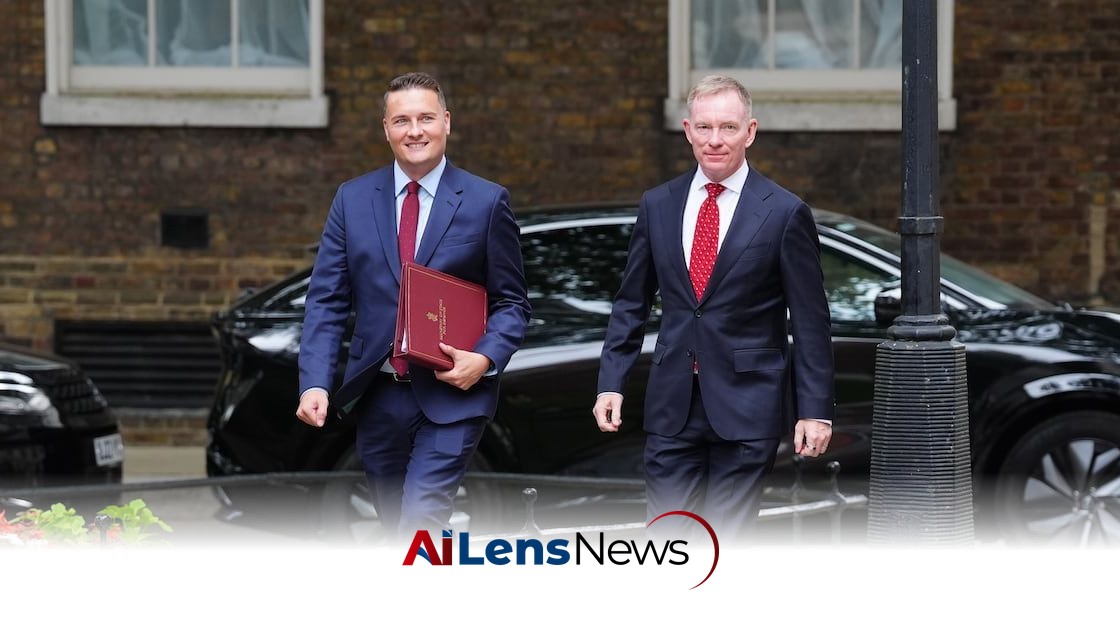


Chris Bryant emphasizes his commitment to political stability and economic growth in Northern Ireland following his appointment as Secretary.
London, United Kingdom Jul 22, 2026 ALN: New Northern Ireland Secretary Chris Bryant has stated that his door will be open to all the Stormont parties and communities. Speaking after his appointment by Prime Minister Andy Burnham on Monday night, Mr. Bryant expressed that while the role comes with a "heavy responsibility," he is eager to engage fully. The position of Northern Ireland Secretary is pivotal, especially given the region's complex political landscape and the historical context of its governance.
The Northern Ireland Secretary is responsible for overseeing the governance of Northern Ireland and ensuring that the devolved government operates effectively. This role has been particularly challenging in recent years due to the political instability that has characterized the region, especially since the Brexit referendum in 2016, which raised significant questions about Northern Ireland's status within the United Kingdom and its relationship with the European Union.
In a statement released on Tuesday evening, he highlighted his focus on maintaining political stability and promoting economic growth. "I want to be very clear from the outset: my door will be open to all parties and all communities," he affirmed. This commitment to open dialogue is crucial, as Northern Ireland has a history of sectarian divisions and political fragmentation, making cooperative governance essential for peace and progress.
"We are going to work together constructively to keep building a stable, prosperous future for everyone in Northern Ireland," he added. His priorities include ensuring that every young person sees economic opportunities for themselves and their families in Northern Ireland. This focus on youth and economic opportunity is particularly relevant given the challenges many young people face in the region, including high unemployment rates and the impact of the COVID-19 pandemic on the economy.
There has been a mixed reaction from Northern Ireland's political parties regarding Mr. Bryant's appointment. Sinn Féin Leader Mary Lou McDonald and deputy president and Northern Ireland First Minister Michelle O’Neill reported having spoken with Mr. Bryant by phone, urging a change in approach by the Labour government regarding its decisions that impact workers and families. Sinn Féin's emphasis on addressing workers' rights and family welfare reflects broader concerns about social justice and economic inequality that have been exacerbated by recent economic challenges.
They emphasized the need to address the legacy of the past, end immunity from prosecution for British State forces, and reform the Stormont institutions. The legacy of the Troubles, a period of conflict in Northern Ireland that lasted from the late 1960s until the Good Friday Agreement in 1998, continues to shape contemporary political discourse. Issues surrounding justice and accountability remain contentious, and calls for reform of the Stormont institutions highlight ongoing frustrations with the political process.
Ms. McDonald insisted that the political realities in Britain and Ireland are rapidly changing, focusing on the constitutional future beyond the Union and the prospect of Irish unity. The conversation around Irish unity has gained momentum in recent years, especially in light of Brexit, which has led to renewed discussions about the future of Northern Ireland's relationship with both the UK and the Republic of Ireland.
Ms. O’Neill added that the Labour government’s approach must change, noting that the Executive is not being funded fairly, which is devastating public services. She stressed the need for a budget that prioritizes relief for families facing cost-of-living pressures. Public services in Northern Ireland, including healthcare and education, have faced significant strain, and the demand for adequate funding is pressing as families deal with rising costs and economic uncertainty.
Speaking to reporters in East Belfast, DUP leader Gavin Robinson acknowledged Mr. Bryant’s favorable stance toward the European Union. He expressed the need for an arrangement with the government that ensures Northern Ireland is not at a disadvantage compared to other parts of the UK. The DUP's concerns reflect broader anxieties about the implications of the Northern Ireland Protocol, a part of the Brexit agreement that has created a de facto customs border in the Irish Sea, affecting trade and political relations.
Robinson pointed out the government's decision to remove VAT from some utility bills, noting that Northern Ireland would need to transfer cash rather than receive the VAT decision directly, highlighting a reliance on EU agreements. This situation underscores the complexities of Northern Ireland's post-Brexit reality, where local governance must navigate the implications of international agreements while addressing the needs of its citizens.
SDLP leader Claire Hanna described her discussion with Mr. Bryant as constructive, pressing him to ensure the Executive agrees on a budget for the current financial year before August 1, when a 5% cut on departmental spending is set to take effect. The urgency of budgetary discussions is critical, as cuts could have severe repercussions for public services and the overall welfare of communities across Northern Ireland.
Meanwhile, TUV leader Jim Allister criticized Mr. Bryant as an "EU fanatic," expressing skepticism about his ability to advocate for Northern Ireland against EU policies. This sentiment reflects a broader tension within Northern Irish politics, where differing views on Brexit and the EU's role continue to create divisions. Mr. Bryant responded, expressing his eagerness to work with Allister for a strong Northern Ireland within a strong United Kingdom, indicating his commitment to engaging with all perspectives in the political landscape.
As Mr. Bryant steps into his new role, he faces the formidable task of fostering dialogue among diverse political factions, addressing pressing economic issues, and navigating the complex legacy of Northern Ireland's past. His commitment to open communication and collaboration will be essential as he seeks to build a stable and prosperous future for all communities in the region. The implications of his leadership will be closely watched, as the political landscape in Northern Ireland continues to evolve amid ongoing challenges and opportunities for growth.
To learn more about the latest developments in Elections, stay updated with our exclusive reports and analyses on AiLensNews.

