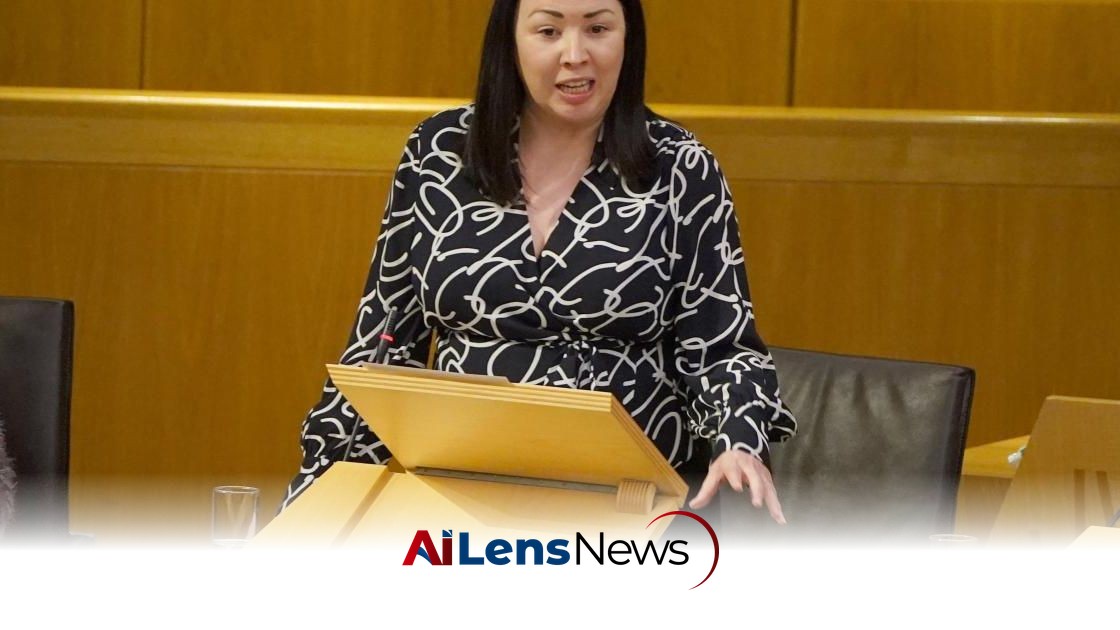


Former MSP Monica Lennon has announced her candidacy for the Scottish Labour leadership, emphasizing the need for radical change to avoid party decline.
London, United Kingdom Jul 27, 2026 ALN: FORMER MSP Monica Lennon has launched her bid to become Scottish Labour's next leader, marking a significant moment in the party's ongoing struggle for relevance within Scotland's political landscape. This announcement comes in the wake of Anas Sarwar's resignation, which has left a leadership vacuum that many within the party hope can be filled by a candidate who can reinvigorate its base and appeal to a broader electorate.
Lennon, who is poised to take over Sarwar’s Glasgow seat when the Scottish Parliament reconvenes after its recess, articulated a sense of urgency in her campaign, warning that without “radical and fast change,” the party faces “oblivion.” This stark assessment reflects the broader concerns among party members and supporters regarding Scottish Labour’s declining fortunes in recent elections, particularly since the devolution of powers in 1999. The political landscape in Scotland has become increasingly complex, with the Scottish National Party (SNP) establishing dominance and other parties such as the Scottish Greens and Liberal Democrats gaining traction.
Although she lost her seat in the 2026 elections, Lennon remains a prominent figure within the party. Her political career began in earnest when she was elected as a Central Scotland MSP in 2016, and during her tenure, she has held significant roles, including serving as the health and net zero spokesperson. One of her notable achievements was introducing groundbreaking legislation for free period products in Scotland, a move that positioned her as a progressive voice within the party and garnered attention for its impact on gender equality and social justice. This legislation was not only a landmark policy for Scotland but also helped to elevate the conversation around women's health and rights, setting a precedent that other regions have since looked to emulate.
In her campaign launch, Lennon emphasized the need for introspection and responsiveness to the sentiments of party members and the general public. She stated, “Being outside Parliament since May has given me space to reflect and listen. I’ve spoken with members and voters who feel disappointed, disillusioned, and defeated.” This acknowledgment of the party's current state resonates with many who feel that Scottish Labour has not effectively addressed the concerns of its constituents. The sentiment of disillusionment is not unique to Scottish Labour; it reflects a broader trend in many political parties across the UK, where traditional party loyalties are being tested by changing voter expectations and priorities.
She further elaborated on the challenges facing the party, noting, “Anyone looking objectively at our party today would conclude a harsh reality. We are in the last chance saloon.” This metaphor underscores the urgency with which she believes the party must act to reverse its fortunes. Since the establishment of the Scottish Parliament, Scottish Labour has experienced a steady decline in electoral support, with each Holyrood election since 1999 resulting in a loss of seats and influence. The decline has been particularly pronounced in urban areas, where the SNP has made significant inroads, capturing the support of voters who once identified with Labour. This shift has raised questions about the party's relevance and its ability to connect with the electorate on critical issues.
Lennon’s call for a “completely new style of leadership” highlights her vision for a more inclusive and collaborative approach within the party. She advocates for a “big tent” strategy that encourages open debate and harnesses the diverse talents present within Scottish Labour. This approach aims to transform internal conflicts into constructive discussions that can lead to innovative policies and a more united front in elections. The idea of a “big tent” is particularly relevant in the current political climate, where polarization is prevalent, and parties must find ways to engage a broader spectrum of voters.
“This is the fightback of our lives. We can drift into irrelevance, or we can unite, reform, and win again. I can’t do it alone, but I am ready to lead that fight,” she asserted. This rallying cry is not just a plea for support; it is a recognition of the collective effort required to rejuvenate the party and regain the trust of the electorate. The urgency in her message reflects a growing awareness within the party that time is of the essence if they hope to reclaim their position as a major political force in Scotland.
In the context of her leadership bid, it is notable that Lennon previously faced Anas Sarwar in the 2021 Scottish Labour leadership election, where she was defeated. This history adds a layer of complexity to her current campaign, as she seeks to position herself as a transformative leader capable of addressing the party's shortcomings while learning from past electoral challenges. The dynamics of this leadership contest will not only determine the future of Lennon but also set the tone for the party's strategy moving forward.
Moreover, Lennon has indicated that she is open to considering a split from the UK Labour party as part of a comprehensive review of Scottish Labour's policies. In 2020, she was vocal about the need for Scottish Labour to assert its independence from the UK party structure, stating, "If we look like a pressure group within a UK party structure, we will continue to be rejected." This sentiment reflects a growing desire among some Scottish Labour members to forge a distinct identity that resonates more closely with Scottish voters, particularly in light of the increasing prominence of the SNP and other regional parties. The debate over independence and the party's stance on key issues such as Brexit and social justice are pivotal in shaping its future direction.
The party’s ruling body has yet to establish a timetable for the leadership contest, leaving the field open for other potential candidates. Current MSP Michael Marra has also signaled his interest in running for the leadership position, which could lead to a competitive race that will require candidates to articulate their visions for the future of Scottish Labour. As the party navigates these internal dynamics, the need for a coherent and compelling narrative will be essential in attracting support from both party members and the wider electorate.
The implications of this leadership bid extend beyond the immediate party dynamics. The outcome of this contest will likely influence Scottish Labour's strategy in upcoming elections, particularly as they seek to regain lost ground in both the Scottish Parliament and local councils. The party's ability to connect with voters on pressing issues such as healthcare, education, and climate change will be critical in determining its future viability. With the SNP continuing to dominate the political narrative in Scotland and other parties gaining support, the stakes for Scottish Labour have never been higher.
As the political landscape in Scotland continues to evolve, with the SNP maintaining a strong foothold and the rise of other parties such as the Scottish Greens and the Scottish Liberal Democrats, the stakes for Scottish Labour have never been higher. The party’s leadership contest will not only shape its internal structure but also its broader electoral strategy as it seeks to redefine itself in a rapidly changing political environment. The challenge for Lennon and any potential challengers will be to articulate a vision that not only addresses the immediate concerns of party members but also resonates with the electorate at large.
In conclusion, Monica Lennon’s leadership bid for Scottish Labour comes at a pivotal moment for the party. Her call for radical change and a new style of leadership resonates with many who are eager for a revitalized approach to politics in Scotland. As the contest unfolds, the decisions made by Lennon and her potential challengers will be crucial in determining the future trajectory of Scottish Labour and its role in Scotland’s political landscape. The outcome of this leadership contest will not only impact the party's internal dynamics but will also have significant implications for its electoral strategy and its ability to engage with a diverse and evolving electorate in the years to come.
To learn more about the latest developments in Elections, stay updated with our exclusive reports and analyses on AiLensNews.

