

More
Checking your session
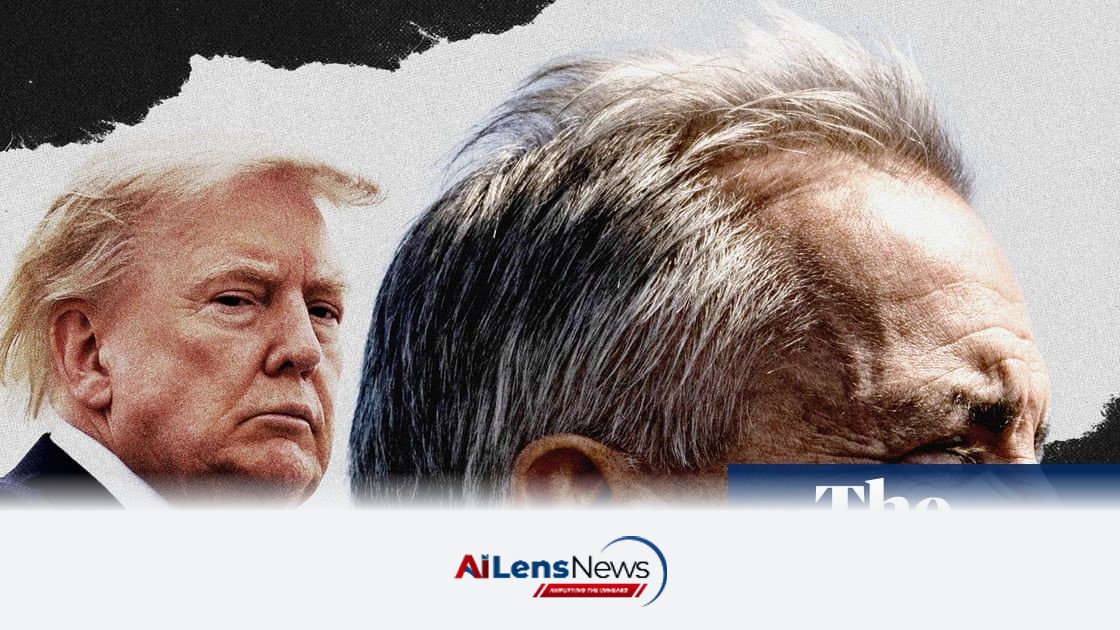



Mark Carney, Canada's Prime Minister, confronts U.S. President Trump over failed trade negotiations, asserting Canada's resolve against American pressure.
London, United Kingdom Aug 30, 2026 ALN: Mark Carney stood before a walnut-veneered lectern, his face drawn tight, as he announced that talks with Canada’s biggest trading partner had collapsed. “Last spring, I warned that America is trying to break us so that they can own us,” he said. “And I promised: that will never, ever happen. We are keeping that promise.”
For years, the former central bank governor had worked hard to calm markets. Now, he was asking Canadians to accept uncertainty and confrontation.
Near the end of the press conference last Saturday, a reporter made reference to the sombre, combative tone of the speech: “Why does it feel like today Mark Carney is going to war?”
The prime minister paused.
“We were attacked. You’re at war when you get attacked,” he said. “We got attacked.”
The unlikely transformation of an economist and central banker with no prior electoral experience into a powerful global politician has bucked precedent and expectations. But Carney has settled into the role he warned was necessary for the country, that of a wartime leader standing up to an erratic and vindictive adversary who seems hellbent on subjugating Canada.
After trade negotiations with the U.S. broke down, the two sides traded recriminations and made good on threats to impose new tariffs on each other. In his latest act of petty antagonism, Trump signed an executive order on Thursday directing the U.S. federal government to rename Lake Ontario as “Lake America.”
But Carney, in walking away from the proposed deal, did what few other leaders have done: dared Trump and the U.S. to test his nation’s resolve.
“We cannot accept what they have offered, and we will not give what they have asked,” he said.
For those who have worked with the demanding – and, at times, temperamental – central banker, such a calculated refusal to accede to a bad deal comes as little surprise.
Carney was raised in Canada’s western prairies, and his story – of an outsider gradually working his way into, and eventually reshaping, powerful institutions – offers clues to a man unwilling to accept the terms set by others.
“He was pretty doggedly determined,” said one person who worked alongside Carney when he was serving as UN special envoy for climate action in 2021.
When trying to convince banks to make climate pledges, Carney could turn on the charm. “He was pretty diplomatic, when dealing with people that he knows he’s got to influence,” his former colleague said.
But it has been no shock to see Carney standing up to Trump on the world stage. “It doesn’t surprise me … and I think it’s because of that determination and that unwillingness to back down.”
Carney was not always so sure-footed. When he was handpicked as governor of the Bank of England in 2013 by the then UK chancellor, George Osborne, Carney’s hard-driving approach was not a natural fit with the venerable institution in London’s Square Mile. When he arrived, it still had pink-uniformed, top-hatted guards at the entrance.
The traits acquired during his days at Goldman Sachs have continued into his tenure as prime minister. He remains an early riser, a dedicated runner, and demands that ministers know their files front to back, according to those who work with him. Media have also reported that staff are expected to dress in formal business attire and documents are to be written using British spelling – to the frustration of Canadian linguists.
While Carney’s career in a string of powerful institutions reflects a sharp, analytical mind, his tenure at the Bank of England telegraphed that the wonkish economist was also willing to become political when necessary.
When Carney overhauled the Bank’s communications strategy, introducing “forward guidance” to show its thinking about future interest rates, it was not immediately embraced as a success.
The senior Labour MP Pat McFadden – now a cabinet minister – accused the Bank under Carney of baffling investors and the public with mixed messages about the future of interest rates.
In October 2015, with the referendum looming on whether Britain should leave the European Union, Carney used a speech at Oxford University to underline the benefits to the UK of the “economic and financial openness” that came with membership.
With the eurozone debt crisis a recent memory, Carney also highlighted the increased risk of financial instability that membership of the EU implied; but Brexiters seized on his positive comments as an unwarranted intervention in a highly politicised topic.
The row deepened when Carney suggested Brexit might plunge the UK into recession. Bernard Jenkin, the Conservative director of the leave campaign wrote to the governor, urging him to butt out.
Carney’s reply displayed the same relish for a fight that has been evident in his handling of Trump. “Dear Mr. Jenkin,” his letter began, “I am responding to your letter to dispel immediately the numerous and substantial misconceptions it contained.” He went on to accuse the veteran MP of “a fundamental misunderstanding of central bank independence as enshrined in statute.”
In the event, there was no Brexit recession, something many economists attributed partly to the Bank’s robust response, including rapid interest rate cuts and quantitative easing (the emergency bond-buying scheme used during the global financial crisis).
Charles Randell spent five years on the board of the Prudential Regulation Authority, which Carney chaired after becoming Bank of England governor. “I’m sure if you ring around enough people who worked with him at the Bank, you’ll find people who will say that he had his shortcomings,” Randall said. “But with time to reflect on my experience … he’s one of the most impressive people I’ve ever worked with.”
Randell, who was then the chair of the Financial Conduct Authority, said that even behind the scenes, Carney was a force to be reckoned with, demonstrating a blend of determination and strategic thinking that has defined his approach to leadership.
As Canada navigates the tumultuous waters of international trade, Carney's assertive stance against the U.S. signifies a pivotal moment in the country's political landscape, one that could reshape its future relations with its largest trading partner.
To learn more about the latest developments in Elections, stay updated with our exclusive reports and analyses on AILensNews.

Icelanders are casting their votes in a referendum to decide whether to resume n…

Ali Mohammad Sagar emphasizes the enduring connection between the National Confe…

Calls for clarity and public involvement in the border poll process are growing,…
The Minnesota Supreme Court has rejected Mike Lindell's request for a recount in…

Icelanders voted on resuming EU membership talks, influenced by Trump's interest…