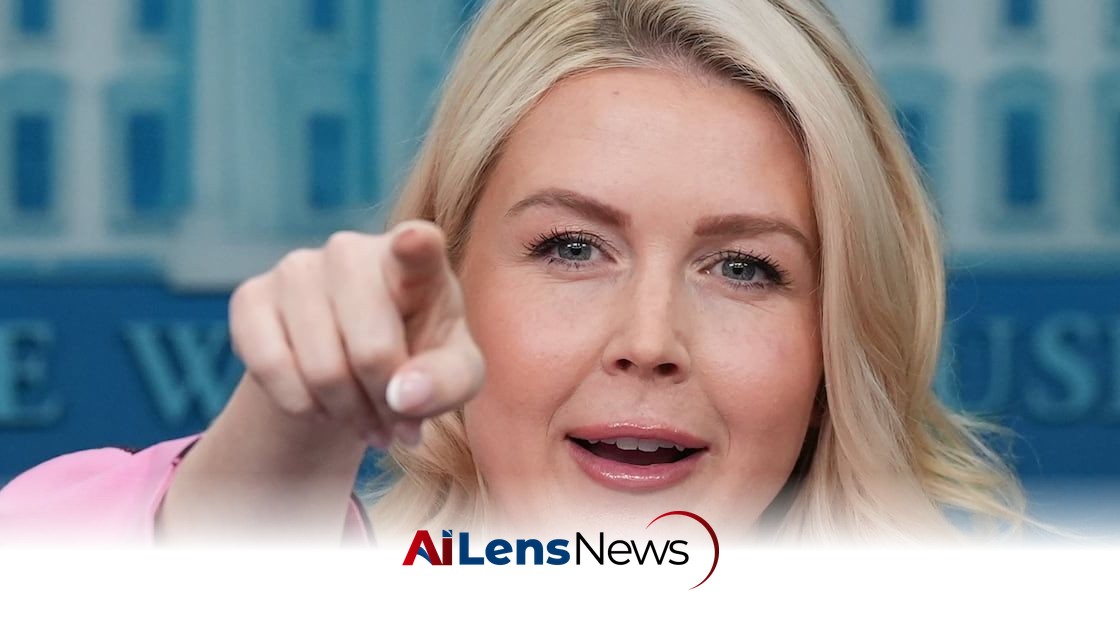


Karoline Leavitt will leave her role as White House press secretary at the end of the month to focus on her family and join Trump's 2024 campaign as an outside adviser.
London, United Kingdom Aug 13, 2026 ALN: White House press secretary Karoline Leavitt's impending departure at the end of the month has stirred discussions regarding the future of communication strategies within the Trump administration, especially as the November midterm elections approach. President Donald Trump made the announcement on Wednesday, highlighting Leavitt's role as one of his most trusted advisers during a pivotal time for his political agenda.
Leavitt's transition from the press secretary role to an outside communications adviser and party operative is significant. She will be instrumental in shaping the future of Trump's "Make America Great Again" movement, a slogan that has become synonymous with Trump's political identity since he first ran for president in 2016. Both Leavitt and Trump emphasized this transition in their announcements, indicating a continued partnership focused on advancing their shared political goals.
In her social media post, Leavitt, who is 28 years old, shared her desire to dedicate more time to her family, particularly her young children. This personal note resonates with many working parents who often grapple with balancing professional commitments and family life. Leavitt welcomed her second child, a daughter, in May and has only recently returned from maternity leave, which may have influenced her decision to step back from the high-pressure role of press secretary.
Trump's praise for Leavitt underscores her impact during her time in the White House. He referred to her as "one of the best White House Press Secretaries in the History of the Office," a statement that reflects both his appreciation for her work and the loyalty that characterizes his administration's inner circle. Leavitt herself described her tenure as "the honor and adventure of a lifetime," suggesting a deep personal commitment to her role and the administration's objectives.
Leavitt's journey to the position of press secretary has been notable. She joined Trump's 2024 campaign and previously served as the transition spokeswoman before her appointment. This trajectory not only highlights her rapid rise within the ranks of the Trump administration but also her status as the youngest person to hold the position of White House press secretary. This achievement has drawn attention, especially in a political landscape that often sees older, more seasoned figures in such roles.
Former principal deputy press secretary Harrison Fields remarked on Leavitt's unique capabilities, stating, "Few could or will ever compare to Karoline." He emphasized her fluency in Trump's communication style and her adeptness at managing media relations. Fields' comments reflect a broader sentiment among Trump's supporters, who view Leavitt's approach as both strategic and effective in navigating the often tumultuous relationship between the administration and the media.
During her year-and-a-half tenure, Leavitt, alongside White House communications director Steven Cheung, initiated a transformation in the administration's approach to the media. This shift was characterized by a more selective engagement with journalists, diverging from the traditional norms established by the independent White House Correspondents Association. The long-standing "press pool" system, which aimed to provide uniform access to the president for various media outlets, was altered significantly under Leavitt's guidance.
The Trump administration's decision to selectively choose which journalists would have access to the president has drawn both praise and criticism. Supporters argue that this new approach recognizes the evolving media landscape, where traditional outlets are increasingly competing with digital platforms and independent media. By creating a special "new media" seat in the briefing room, the administration elevated podcasts, newsletters, and emerging digital outlets, reflecting a shift in how news is consumed and disseminated.
However, critics have raised concerns that this selective access serves as a mechanism for the administration to reward outlets that provide favorable coverage while sidelining those that offer critical perspectives. This dynamic has implications for press freedom and the role of journalism in a democratic society, as the traditional checks and balances that come with a free press are challenged by such strategic communications practices.
Leavitt's departure comes amidst reports of a controversial incident involving President Trump during a NATO summit in Turkey in July. According to the Washington Post, Trump used a plane carrying cabinet officials, staff, and journalists as a decoy when leaving the summit, a move that has raised eyebrows regarding transparency and security protocols. The U.S. Secret Service reportedly facilitated a transfer from one jet to another using a catering truck, leaving journalists and staff unaware of the president's movements. This incident marks a significant departure from established protocol, which typically prioritizes clear communication with the press.
The implications of Leavitt's departure extend beyond her personal career trajectory. As the Trump administration gears up for the midterm elections, her absence may signal a shift in the administration's communication strategy, especially in an environment where media relations are crucial for shaping public perception. The upcoming elections will test the efficacy of the strategies implemented during her tenure and the ability of the administration to adapt to changing circumstances.
In conclusion, Karoline Leavitt's departure as White House press secretary not only marks the end of a significant chapter in her career but also raises questions about the future of media relations within the Trump administration. As she moves to a role that allows her to influence the broader political landscape, the administration will need to navigate the complexities of media engagement, public perception, and electoral strategy in the lead-up to the midterms. The evolving nature of political communication continues to challenge traditional norms, and Leavitt's legacy will likely be felt in the ongoing discourse surrounding the relationship between the presidency and the press.
To learn more about the latest developments in Elections, stay updated with our exclusive reports and analyses on AiLensNews.

