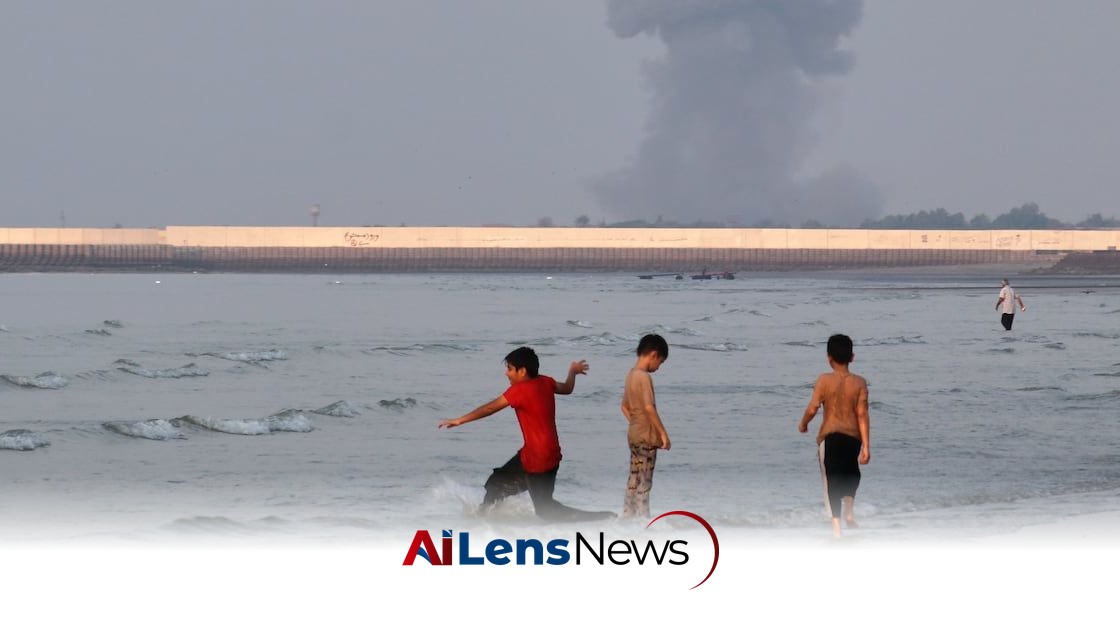


Tehran warns of closing vital export corridors following US naval blockade and military strikes, raising fears over global energy supply.
London, United Kingdom Jul 15, 2026 ALN: The ongoing tensions between Iran and the United States have escalated significantly in recent days, with Iran threatening to block critical shipping routes that are vital for global energy supplies. This latest round of hostilities comes after the U.S. reimposed a naval blockade on Iranian ports, which Tehran has responded to with a series of aggressive statements and military posturing.
Tehran's threats to close "all other export corridors that benefit the US and its allies" reflect a broader strategy aimed at leveraging its geographic position to exert pressure on the U.S. and its partners. The Strait of Hormuz, a narrow passage that connects the Persian Gulf to the Arabian Sea, is particularly significant as it is one of the world's most crucial chokepoints for oil transportation. Approximately 20% of global oil supply passes through this strait, making it a focal point for international trade and energy security.
The Islamic Revolutionary Guard Corps (IRGC), Iran's elite military force, issued a statement asserting that regional energy exports should either be accessible to all or denied entirely, signaling Tehran's willingness to escalate its military activities in response to perceived threats from the U.S. and its allies. This rhetoric underscores Iran's strategic calculus, which involves using its military capabilities to influence regional dynamics and deter foreign intervention.
Analysts suggest that Iran may also leverage its Houthi allies in Yemen to threaten the Bab el-Mandeb Strait, another vital maritime passage that connects the Red Sea to the Gulf of Aden. This strait is critical not only for Saudi oil exports but also for a significant portion of global shipping traffic. A senior Houthi official has indicated that the group is prepared to act against shipping in the Bab el-Mandeb, potentially leading to a broader conflict that could disrupt energy supplies and drive up global oil prices.
The Houthis, who have been engaged in a protracted civil war in Yemen against a Saudi-led coalition, have previously demonstrated their capability to disrupt maritime traffic. Following the outbreak of the Gaza war in October 2023, the Houthis targeted commercial shipping in the Red Sea, claiming to focus their attacks on vessels linked to Israel as a show of solidarity with the Palestinian cause. This development raises concerns about the potential for a multi-front conflict that could further destabilize the already volatile region.
The recent escalation in hostilities comes on the heels of a series of U.S. military strikes aimed at degrading Iranian capabilities used to attack commercial shipping in the Strait of Hormuz. According to U.S. military reports, Iran has been implicated in attacks on seven commercial vessels over the past week, leading to casualties among crew members. The U.S. Central Command confirmed that it targeted various military installations near the Strait of Hormuz in a retaliatory strike that lasted for several hours.
The IRGC has vowed to keep the Strait of Hormuz closed until what it refers to as "the end of America’s evils," signaling a firm stance against U.S. military operations in the region. The IRGC's claims of having targeted U.S. military facilities in Bahrain and Kuwait further illustrate the escalating nature of the conflict. Reports indicate that Iranian forces have been actively engaging U.S. assets, including launching missiles at U.S. bases in Jordan, raising the stakes for all parties involved.
In a broader context, the hostilities between Iran and the U.S. have reignited after a fragile truce was established in June 2023, following months of intense fighting that resulted in significant casualties on both sides. The recent escalation has drawn international concern, as the potential for a wider conflict could have dire implications for regional stability and global energy markets.
U.S. President Donald Trump has taken a hardline approach, threatening to target Iranian infrastructure, including power plants and bridges, if Tehran does not return to the negotiating table. Trump's administration has been vocal about its stance on Iran, emphasizing the need for a new agreement to curb Iran's nuclear ambitions and regional influence. The President's comments about imposing a 20 percent fee on shipping through the Strait of Hormuz sparked outrage and criticism from various quarters, including the United Nations shipping agency. However, he later retracted this proposal, indicating a shift towards pursuing investment deals with Gulf states instead.
The implications of these developments are profound, as rising tensions have already begun to impact global oil prices. Following the latest attacks and threats, oil prices surged, closing at a one-month high. This reflects market concerns about potential supply disruptions that could arise from a conflict in the Gulf region, highlighting the interconnectedness of geopolitical dynamics and global energy markets.
As the situation continues to evolve, the international community is closely monitoring the developments in the Gulf region. The potential for a wider conflict remains a significant concern, with analysts warning that any disruption to shipping routes could have ripple effects throughout the global economy. The stakes are high, and the actions taken by both Iran and the U.S. in the coming days will be critical in shaping the future of regional stability and international energy security.
In conclusion, the threats from Iran to block key shipping routes underscore the increasing volatility in the region, driven by a complex interplay of military actions, political rhetoric, and economic interests. The ongoing conflict between Iran and the U.S. has far-reaching implications for global energy markets and regional stability, making it a focal point of international attention as the world grapples with the potential consequences of a renewed confrontation in the Gulf.
The geopolitical landscape in the Middle East has long been characterized by a complex web of alliances and enmities, particularly involving major powers like the United States, Russia, and regional players such as Saudi Arabia and Israel. The U.S. has historically positioned itself as a key ally of Saudi Arabia, which sees Iran as a principal adversary in the region. This rivalry has often manifested in proxy conflicts, such as the ongoing war in Yemen, where Iran supports the Houthis against the Saudi-led coalition, and in Syria, where Iranian forces have backed the Assad regime against various opposition factions.
The strategic importance of the Strait of Hormuz cannot be overstated. It serves as a critical artery for oil shipments, and any threat to its security has immediate implications for global markets. A significant disruption in this region could lead to soaring oil prices, affecting economies worldwide, especially those heavily reliant on oil imports. Furthermore, the potential for military confrontation raises the specter of broader conflict, drawing in other nations and alliances, further complicating an already intricate geopolitical situation.
Moreover, the international community's response to Iran's provocations will be crucial. The United Nations and other global entities often seek to mediate tensions and promote dialogue, but the effectiveness of these efforts can be hampered by the entrenched positions of the involved parties. The U.S. has maintained a policy of maximum pressure against Iran, aiming to curb its nuclear program and regional influence, while Iran has consistently pushed back against what it perceives as unjust sanctions and military threats.
The potential for miscalculation on either side remains high, particularly in a region marked by a history of conflict and mistrust. Incidents involving naval forces or airstrikes can quickly escalate, leading to unintended consequences. The international community is thus faced with the dual challenge of addressing immediate security concerns while also working towards a long-term resolution of the underlying issues that fuel these tensions.
In light of these developments, the role of diplomacy becomes increasingly critical. Engaging in constructive dialogue, building confidence, and addressing the root causes of conflict are essential steps toward achieving stability in the region. However, the path to peace is fraught with challenges, as deep-seated grievances and geopolitical rivalries continue to shape the actions and policies of the involved parties.
In summary, the threats from Iran to block key shipping routes highlight the fragility of peace in the Gulf region and the broader implications for global energy security. As the situation unfolds, the international community must remain vigilant and proactive in seeking avenues for de-escalation and dialogue, recognizing that the stakes are high not only for the nations directly involved but for the entire world economy.
To learn more about the latest developments in Political Controversies, stay updated with our exclusive reports and analyses on AiLensNews.

