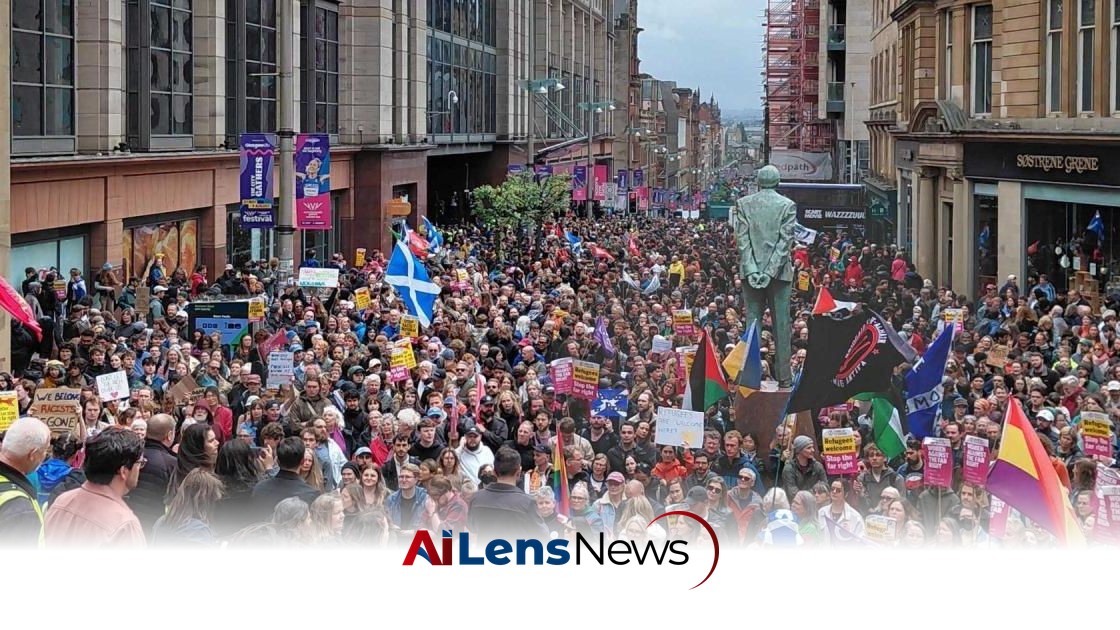


A coalition of anti-racism groups is organizing a rally in Glasgow on July 25 to counter a far-right gathering, amid rising anti-immigration tensions.
London, United Kingdom Jul 13, 2026 ALN: ANTI-RACISM campaigners will hold a rally in Glasgow on July 25 to counter a meeting of the far-right group "Unite the Clans" and to protest growing anti-immigration disorder that has spread across Glasgow in recent weeks.
Organised by a coalition of groups including Stand Up To Racism (SUTR) and Women Against The Far Right, and supported by groups like the University College Union (UCU) and Refuweegee, protesters will gather on Saturday, July 25 at 11am at the McLennan Arch in Glasgow Green. This rally is positioned as a response to a series of troubling events that have unfolded in Glasgow, reflecting a wider trend of increasing far-right activity and anti-immigrant sentiment in the UK.
The protest will aim to counter another coalition-led rally, organised by Unite the Clans. This comes after several days of anti-immigration demonstrations in Glasgow, which have raised significant concerns among community leaders and anti-racism advocates. The recent climate of hostility has been exacerbated by social media misinformation, which has played a crucial role in shaping public perception and inciting unrest.
The anti-immigration disorder – which has seen crowds gather in Cranhill, Castlemilk, and Royston – emerged as social media posts were disseminated on far-right pages like Unite the Clans and various similar local pages about alleged sexual assaults. These posts have been criticized as misleading and incendiary, contributing to a climate of fear and division within communities. The power of social media in amplifying these narratives cannot be understated; it allows for rapid information dissemination but also facilitates the spread of harmful misinformation that can lead to real-world consequences.
Police Scotland reported that misinformation was being spread online by bad actors, often from outside Glasgow, exacerbating tensions in the city. The situation escalated to the point where five police officers were injured during the protests, highlighting the volatility of the atmosphere and the challenges faced by law enforcement in maintaining public order. This rise in violence underscores the urgent need for effective communication strategies to counteract misinformation and prevent further escalation of tensions.
Anti-racism groups have expressed grave concerns that “extremists from elsewhere could seek to inflame tensions.” They accused far-right actors of using “horrific attacks on women to infiltrate local communities to build their far-right street movement.” This tactic of exploiting societal fears and grievances to recruit and mobilize support for extremist ideologies is a well-documented phenomenon that has been observed in various contexts globally. The manipulation of public fear is a common strategy employed by far-right groups, who often seek to present themselves as protectors of community safety while simultaneously fostering division and distrust.
The recent surge in far-right activity is not an isolated incident but part of a broader trend that has been observed across the UK and Europe in recent years. This trend has seen the rise of populist movements that often capitalize on economic uncertainty, social change, and fears around immigration. The emergence of groups like Unite the Clans reflects a growing willingness among some individuals to openly express and organize around xenophobic and racist sentiments. The political landscape in the UK has shifted in recent years, with increased visibility and acceptance of far-right ideologies, prompting a backlash from anti-racism advocates.
It comes after videos emerged last month of fascist-style protests in Glasgow and Edinburgh that were described by an expert as “reminiscent of how Hitler staged National Socialism.” On June 18 at 10pm, around 60 men dressed in black organized into four columns outside Glasgow Cathedral, a scene that alarmed many observers who recognized the historical parallels. Six days later, on June 24, a similar fascist-style protest was held outside the Scottish parliament in Edinburgh, as reported by The Times. These organized protests have drawn widespread condemnation from various sectors of society, with many viewing them as a direct threat to the values of inclusivity and diversity that underpin democratic societies.
These incidents have heightened fears among minority communities and have prompted calls from various sectors of society for a more robust response to hate crimes and racism. In response to the June 9 incidents, thousands of anti-racism protesters gathered in Glasgow, effectively drowning out a small far-right gathering that had to be escorted out of the area by police. This display of solidarity among anti-racism advocates served as a powerful counter-narrative to the hate-driven rhetoric that had been gaining traction. Another anti-racism rally was held the following week in Edinburgh, also attended by thousands, which closed down part of Leith Walk where several Muslims and their businesses were allegedly targeted on June 19. These events underscore the resilience of communities in the face of adversity and their commitment to standing against racism and division.
In a statement posted on Facebook, SUTR called on people to join the counter-protest. The post stated: "The fascist group 'Unite the Clans Scotland' have announced a demonstration in Glasgow on 25th July and invited the likes of Britain First to join them. We say no to racism, division and hatred! No Pasaran! Assembly point and details to be announced - on social media for more updates! Glasgow says no to racism, no to the far right! Spread the word." This rally is part of a larger movement aimed at combating the rise of far-right extremism and promoting inclusivity and diversity within society. Activists argue that it is essential to confront hate head-on and to create safe spaces for marginalized communities.
The implications of these protests extend beyond immediate concerns about public safety; they reflect a societal struggle over values, identity, and the direction of communities in an increasingly polarized world. The rise of the far-right has prompted many to reflect on the core values that underpin their societies, and the need to actively defend those values against extremist ideologies is increasingly seen as a civic duty.
As the date of the rally approaches, the atmosphere in Glasgow remains charged, with both anti-racism advocates and far-right supporters preparing for confrontation. The outcome of these events could have lasting impacts on community relations in Glasgow and potentially influence the dynamics of political discourse in Scotland and beyond. The ongoing challenges of misinformation, social media's role in shaping public opinion, and the need for effective community engagement strategies are all critical factors that will shape the future landscape of anti-racism activism and far-right opposition. The rally on July 25 will serve not only as a testament to the resilience of those who oppose hate but also as a critical moment for the community to reaffirm its commitment to inclusivity and solidarity against division.
To learn more about the latest developments in Political Controversies, stay updated with our exclusive reports and analyses on AiLensNews.

