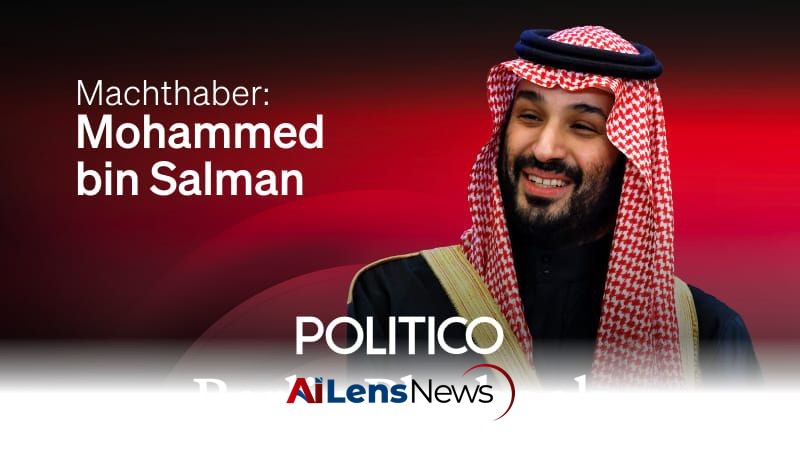


This article delves into the power dynamics surrounding Mohammed bin Salman, examining his influence and decision-making processes as a key global leader.
London, United Kingdom Aug 12, 2026 ALN: In the realm of global politics, few figures have emerged as both influential and controversial as Mohammed bin Salman, the Crown Prince of Saudi Arabia. His rise to power is emblematic of a new generation of leaders who utilize modern strategies to navigate the complexities of both domestic and international politics. This article delves into the various dimensions of his influence, examining the implications of his policies and the broader context in which he operates.
Mohammed bin Salman, often referred to by his initials MBS, was born on August 31, 1985, in Jeddah, Saudi Arabia. He is the son of King Salman bin Abdulaziz Al Saud and has been positioned as the heir apparent since his father ascended to the throne in 2015. His rapid rise within the Saudi political hierarchy has been marked by a series of strategic appointments that have consolidated his power, including his elevation to Crown Prince in 2017, when he replaced his cousin Mohammed bin Nayef. This move not only underscored MBS's ambition but also signaled a shift in the Saudi leadership dynamics, as he sought to implement his vision for the kingdom.
One of the defining features of MBS's leadership is his ambitious vision for the future of Saudi Arabia, encapsulated in the Vision 2030 program. Launched in 2016, this initiative aims to diversify the Saudi economy beyond its heavy reliance on oil revenues, which have historically dominated the kingdom's financial landscape. The Vision 2030 program seeks to develop sectors such as tourism, entertainment, and technology, positioning Saudi Arabia as a global investment powerhouse. This economic diversification is not merely an aspiration but a necessity, as the global landscape shifts towards sustainability and renewable energy sources.
To achieve these goals, MBS has implemented a series of bold reforms, some of which have been met with both enthusiasm and skepticism. For instance, he has championed social reforms, including granting women the right to drive and promoting greater participation of women in the workforce. These changes reflect a significant cultural shift in a country that has long been criticized for its conservative stance on gender issues. However, these reforms are often viewed through a lens of skepticism, as many observers question whether they are genuine attempts at modernization or merely a means to improve Saudi Arabia's international image. Critics argue that while these reforms are a step in the right direction, they do not address the underlying issues of gender inequality and human rights abuses that persist in the kingdom.
On the international stage, MBS has adopted a more assertive foreign policy, characterized by a willingness to engage in military interventions, most notably in Yemen. The Saudi-led coalition's intervention in Yemen, which began in 2015, has resulted in a protracted conflict that has drawn widespread condemnation due to the humanitarian crisis it has precipitated. Critics argue that MBS's military strategy has not only failed to achieve its objectives but has also damaged Saudi Arabia's reputation globally. The conflict has led to severe humanitarian consequences, with millions of people facing famine and a lack of basic healthcare, raising questions about the moral implications of Saudi Arabia's military actions.
Moreover, MBS's foreign policy has been marked by a desire to counter Iranian influence in the region. This has led to a series of diplomatic and military confrontations, as well as alliances with other countries that share similar concerns about Iran's regional ambitions. The normalization of relations with Israel, exemplified by the Abraham Accords, reflects a strategic pivot that aims to realign regional alliances in response to perceived threats. This shift has been significant in reshaping the geopolitical landscape of the Middle East, as traditional rivalries give way to new partnerships based on mutual interests.
However, MBS's leadership is not without controversy. The murder of journalist Jamal Khashoggi in 2018, which has been linked to the Saudi government, sparked international outrage and raised questions about the limits of MBS's authority and the implications of his leadership style. The incident has led to strained relations with Western allies and has fueled discussions about human rights practices in Saudi Arabia. The global response to Khashoggi's murder highlighted the complexities of balancing strategic partnerships with ethical considerations, prompting many countries to reassess their ties with the kingdom.
Domestically, MBS has faced challenges in managing dissent and maintaining stability. His crackdown on perceived opponents, including the arrest of activists, clerics, and members of the royal family, has drawn criticism from human rights organizations. These actions have raised concerns about the extent to which MBS can balance his reform agenda with the need to quell internal opposition. The tension between his modernization efforts and the conservative elements within Saudi society presents a significant challenge, as MBS navigates the delicate landscape of Saudi politics.
Economically, while MBS's Vision 2030 has ambitious goals, the transition away from oil dependency poses significant challenges. The volatility of global oil markets, coupled with the economic impacts of the COVID-19 pandemic, has underscored the vulnerabilities of the Saudi economy. As the world moves towards renewable energy sources, the future of the Saudi economy remains uncertain, highlighting the importance of MBS's ability to adapt and innovate. The reliance on oil revenues has historically provided the kingdom with substantial wealth, but the changing energy landscape necessitates a rethinking of economic strategies.
In the context of global geopolitics, MBS's influence extends beyond the borders of Saudi Arabia. His relationships with key world leaders, including those in the United States, China, and Russia, reflect a nuanced approach to diplomacy. MBS has sought to position Saudi Arabia as a pivotal player in global energy markets while navigating complex international relationships. This balancing act is critical as the kingdom faces pressures to reform its economy and improve its international standing. The ability to engage with multiple global powers allows Saudi Arabia to leverage its strategic position, but it also requires careful management of competing interests.
The implications of MBS's leadership are profound, not only for Saudi Arabia but for the broader Middle East and beyond. As he continues to implement his vision, the outcomes of his policies will likely shape the future trajectory of the region. The interplay between modernization efforts, social reforms, and traditional power structures will be a key area to watch as MBS navigates the challenges of governance in a rapidly changing world. The balance between reform and maintaining the status quo will determine the sustainability of his initiatives and the long-term stability of the kingdom.
In conclusion, Mohammed bin Salman represents a complex figure in contemporary politics, embodying both the aspirations and challenges of a nation at a crossroads. His influence is felt not only within Saudi Arabia but also in the wider geopolitical landscape. As he continues to assert his vision for the kingdom, the world watches closely, anticipating the implications of his decisions for the future of the region and global politics as a whole. The trajectory of MBS's leadership will be pivotal in shaping not only Saudi Arabia's future but also the dynamics of power and influence in the Middle East, making it essential for observers to remain engaged with the developments emanating from the kingdom.
To learn more about the latest developments in Political History & Legacy, stay updated with our exclusive reports and analyses on AiLensNews.

