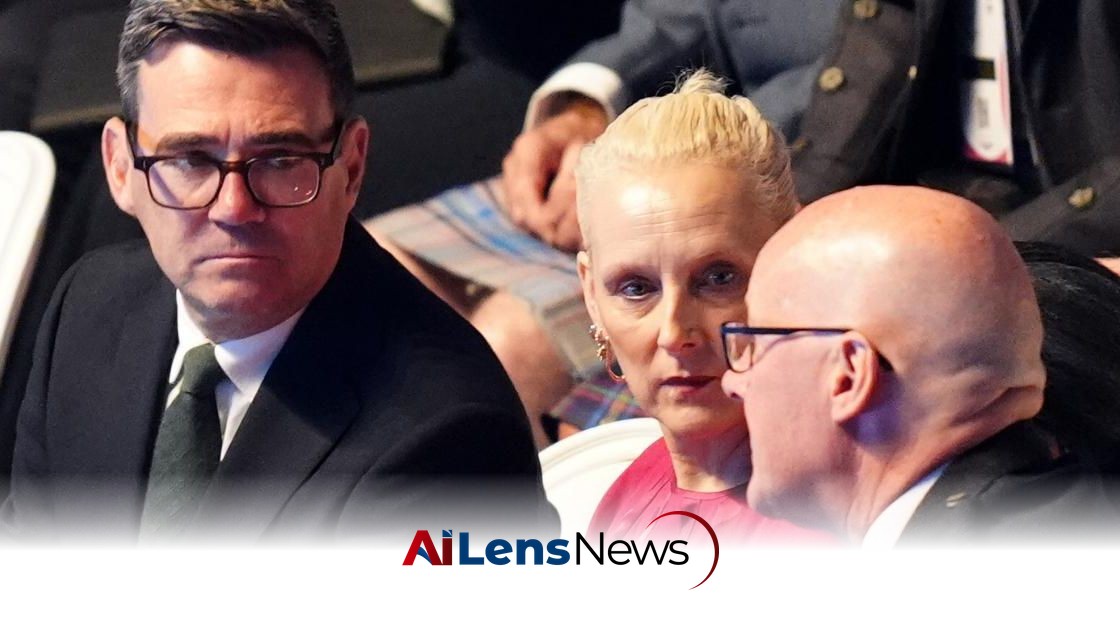


Professor Catherine Happer cautions Prime Minister Andy Burnham that avoiding Scottish media could worsen the disconnect with voters, highlighting the importance of democratic accountability.
London, United Kingdom Jul 25, 2026 ALN: The relationship between Scotland and Westminster has long been a contentious one, characterized by a sense of detachment and disconnection among Scottish voters towards the UK government. The recent actions of Prime Minister Andy Burnham, particularly his decision to avoid engaging with the Scottish media during his official visit to Scotland, have raised significant concerns about this disconnect. Professor Catherine Happer, a prominent media expert from Glasgow University, has highlighted the implications of such actions, suggesting that they could exacerbate the already strained relationship between Scotland and Westminster.
Burnham's visit, which included key figures such as Energy Secretary Miatta Fahnbulleh and Scottish Secretary Douglas Alexander, was marked by their refusal to engage with the Scottish press. This decision is not an isolated incident; it reflects a broader trend that has emerged under the leadership of Labour leader Keir Starmer. Previous visits by high-ranking Labour officials, including Angela Rayner and Rachel Reeves, have similarly seen them sidestep engagement with Scottish journalists. This ongoing pattern raises questions about the Labour Party's commitment to addressing the concerns and voices of Scottish citizens.
Professor Happer, who directs the Glasgow University Media Group, emphasized the importance of politicians communicating with journalists who can scrutinize their policies and hold them accountable. She pointed out that Burnham's approach of favoring social media influencers over traditional media is a troubling departure from democratic norms. By avoiding direct engagement with the press, Burnham risks alienating Scottish voters further and reinforcing the perception that Westminster politicians are out of touch with the realities faced by people in Scotland.
Happer's comments resonate with a growing sentiment among Scottish voters who feel marginalized by the UK government. The perception that Scottish voices are being excluded from important political conversations can lead to increased support for independence and further political fragmentation within the UK. Burnham's recent remarks regarding Scottish independence being "off limits" have only intensified these feelings, suggesting a reluctance to engage with the aspirations of many Scots who seek greater autonomy.
Moreover, Happer acknowledged that Burnham's strategy of bypassing mainstream media could be seen as a positive move in some respects. She noted that his approach could serve as a means of breaking away from what she termed "the circuit of neoliberalism," a political and economic paradigm that has dominated UK politics for decades. Burnham's vision for a political reset, which aims to move away from neoliberal policies, may resonate with voters who are disillusioned with the status quo.
However, Happer cautioned that this strategy must be balanced with a commitment to accountability and transparency. While a social media-first approach may allow Burnham to present a more relatable image, it also risks creating an echo chamber where dissenting voices are stifled. The absence of traditional media scrutiny can lead to a lack of accountability, which is a cornerstone of democratic governance.
In this context, the response from Downing Street to Happer's concerns was telling. The prompt refusal to provide a statement reflects a broader reluctance to engage with criticism, further alienating Scottish voters who seek representation and acknowledgment from their leaders. This lack of responsiveness can be interpreted as a continuation of a Westminster-centric approach that has historically overlooked the unique needs and aspirations of Scotland.
Gillian Mackay, co-leader of the Scottish Greens, echoed Happer's concerns, stating that the UK government displayed a lack of respect for Scotland during their visit. She highlighted the importance of accountability, particularly when key decisions affecting Scotland's future are being made by UK ministers. The refusal to engage with Scottish journalists sends a message that the government is not interested in listening to the concerns of the people it is meant to serve.
Mackay contrasted the UK government's approach with that of Scottish politicians, who have made it a priority to engage with the media and the public. She cited the example of her colleague Zack Polanski, who actively sought to communicate with the Scottish press during his election campaign. This approach not only fosters transparency but also builds trust with constituents, something that Burnham's administration risks undermining by shutting out Scottish voices.
As Scotland grapples with significant issues such as energy policy, climate change, and economic recovery, the need for constructive dialogue between the Scottish government and Westminster has never been more critical. The decisions made by UK Cabinet Secretaries, particularly those related to Scotland's energy industry, have far-reaching implications for the country's future. Therefore, it is essential that Scottish media have access to these decision-makers to ensure that the voices of Scots are heard and considered.
The opening of the Commonwealth Games in Glasgow, which coincided with the visits of Burnham and other UK officials, further highlighted the contrast in approaches between Scottish and UK leaders. First Minister of Scotland John Swinney and First Minister of Wales Rhun ap Iorwerth made themselves available to the Scottish press, demonstrating a commitment to transparency and accountability. Their willingness to engage with journalists stands in stark contrast to the actions of Burnham and his ministers, raising questions about the UK government's dedication to democratic principles.
In conclusion, the warning from Professor Catherine Happer serves as a crucial reminder of the importance of media engagement in a functioning democracy. As the disconnect between Scottish voters and Westminster continues to grow, it is imperative that politicians, including Prime Minister Andy Burnham, recognize the need for open dialogue and accountability. By fostering a more inclusive political environment that values the voices of all constituents, the UK government can begin to rebuild trust and address the legitimate concerns of Scottish citizens. Failure to do so may not only perpetuate the existing disconnect but could also hasten calls for greater autonomy and independence among those who feel sidelined by the political establishment.
To learn more about the latest developments in Political Controversies, stay updated with our exclusive reports and analyses on AiLensNews.

