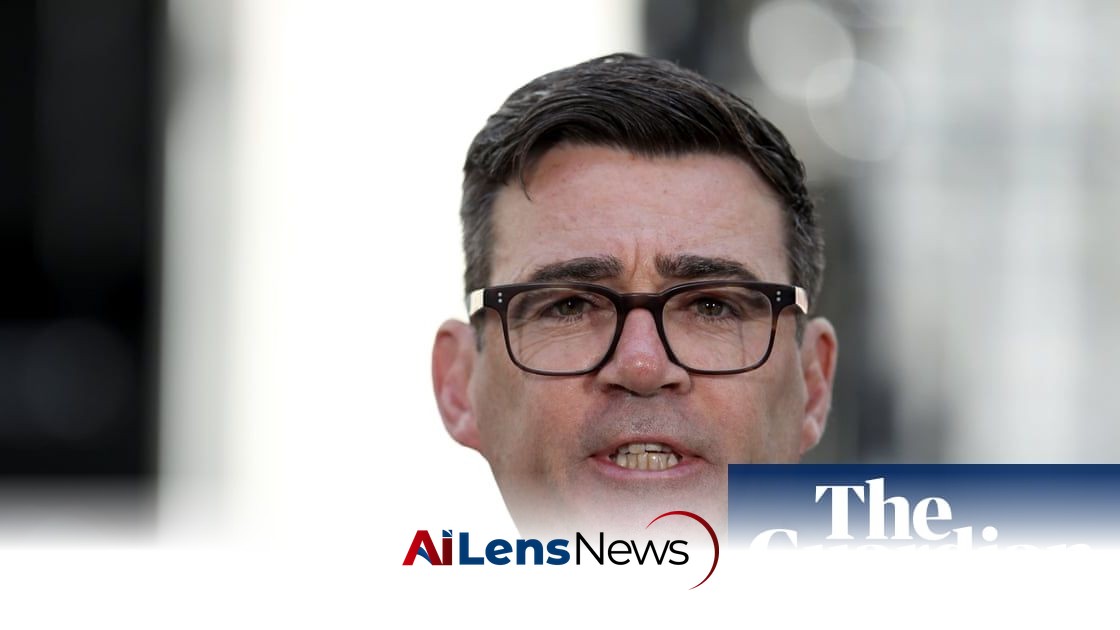


New UK Prime Minister Andy Burnham emphasizes the need for change and unity while announcing his cabinet, including John Healey as Chancellor.
London, United Kingdom Jul 21, 2026 ALN: Andy Burnham has declared that his arrival in power will “bring back hope” to Britain as he launched his premiership with the surprise appointment of John Healey as Chancellor. He also promised to address the long-term damage inflicted on communities during the Thatcher era.
In his inaugural address from Downing Street, the new UK Prime Minister acknowledged that the public is “fed up” with politics, emphasizing the need for the government to “do better” in delivering real change.
Burnham stated that the government would announce “some breathing space” for citizens regarding the cost of living, with plans to cut energy bills and bus fares expected as part of a fully funded package.
He later told reporters that he would explore “any flexibility” within the government’s existing fiscal rules to borrow billions more for infrastructure investment, while maintaining a “very prudent” approach to the economy.
Following his comments, UK 10-year gilt prices dropped, reflecting market concerns over potential higher borrowing and increased debt. However, the markets stabilized by the time Healey, 66, was officially announced as Chancellor.
Healey, a former Defence Secretary whose resignation had previously pushed Keir Starmer to the brink, emerged as a compromise candidate after Ed Miliband and Shabana Mahmood were considered for the role. Miliband has been appointed as Foreign Secretary, while Mahmood remains at the Home Office.
In his first call with a world leader, Burnham spoke to Donald Trump, who had previously dismissed him as merely the mayor of “some town.” Burnham invited Trump to Manchester for next year’s G20 summit, to which Trump later responded positively on social media, indicating they had a productive conversation about various topics including Iran and the US-UK military alliance.
Burnham also reached out to Ukraine’s President Volodymyr Zelenskyy and European Commission President Ursula von der Leyen.
As the sixth Prime Minister in a decade, Burnham’s leadership presents an opportunity for the Labour Party to reconnect with the public, but it also raises concerns about potential instability.
Speaking without notes and in the presence of his wife, Marie-France van Heel, Burnham stated: “I am acutely conscious that I am the sixth person in the last 10 years to walk up this street, the seventh Prime Minister since 2016, making this a moment for reflection and new resolution.”
He emphasized the need for politicians of his generation to elevate their performance and rise to the challenges ahead, asserting that Britain must demonstrate its ability to regain stability.
“I know people at home are fed up with politics. I hear you, and I want to be honest with you. We have not been good enough, and we need to be better. We will be,” he assured the public.
Burnham called for a renewed sense of national unity and purpose, urging the country to believe once again and to “bring back hope.”
After dismissing several of Starmer’s loyalists, including Chancellor Rachel Reeves and Deputy Prime Minister David Lammy, Burnham spent Monday evening finalizing his cabinet appointments.
Louise Haigh, Burnham’s close ally, has been appointed as First Secretary of State and Chancellor of the Duchy of Lancaster, overseeing a strengthened Cabinet Office that will drive his agenda.
Yvette Cooper will transition from the Foreign Office to the Department of Health, where she will implement Burnham’s plans to reform the social care system. Pat McFadden will continue his role at the Department for Work and Pensions.
Angela Rayner, the former Deputy Prime Minister who resigned over a stamp duty dispute, has been reinstated as Housing Secretary.
Burnham, who succeeded Starmer as Labour leader on Friday, has placed economic transformation at the forefront of his agenda, despite limited options before the next election due to his commitment to fiscal rules.
“We will make this moment a circuit breaker for Britain, bringing forward the biggest changes in the last 40 years. A new political model and a new economic model,” he stated confidently.
Reflecting on the past, Burnham noted that the 1980s saw Britain take wrong turns, with political power centralizing and economic power privatizing, leading to deindustrialization that many regions have yet to recover from.
“Many feel as though they’re still in decline, and they don’t have the ability to turn things around. That’s why we will change politics to make it more collaborative, focusing on problem-solving rather than point-scoring,” he added.
In appointing Healey, a seasoned figure from the Treasury under Gordon Brown, Burnham has positioned him to deliver on his vision for the UK economy, balancing fiscal responsibility with a focus on reindustrialization, devolution, and addressing the cost of living crisis.
Healey will also be tasked with finding funding to increase military spending to 3% by 2030, and is expected to explore the potential for defense bonds, which had previously been rejected by the Treasury due to concerns over increased borrowing.
After his speech, Burnham indicated plans to announce a comprehensive cost of living support package, which may include measures to assist with energy bills and bus fares, and could even extend to freezing private sector rents.
“We want to implement changes that people will notice quickly. While it won’t solve everything, it will demonstrate our commitment to helping them,” he stated.
He reiterated his intention to adhere to fiscal rules while considering any available flexibility within them, assuring that he has never taken risks with the economy in any of his previous roles.
Burnham’s first directive in office will be to end rough sleeping, following a visit to homeless individuals in central London. He had made a similar pledge during his tenure as Greater Manchester Mayor, but witnessed a rise in street homelessness over four years.
He also hinted at the possibility of cutting income tax for lower earners in a future budget, potentially increasing the tax-free personal allowance, which has been frozen for the past five years. However, he did not rule out reinstating the 50p top rate of tax to finance this initiative.
Before departing No 10 for the last time, Starmer expressed pride in his achievements and offered a final warning to Burnham regarding foreign affairs, emphasizing the need for unity in the face of global threats.
“We face a world now where our enemies will stop at nothing to divide us,” he cautioned.
Starmer concluded his remarks by stating, “I go with good grace, I go with a smile and I go proud of everything that we have achieved.”
To learn more about the latest developments in Political Controversies, stay updated with our exclusive reports and analyses on AiLensNews.

