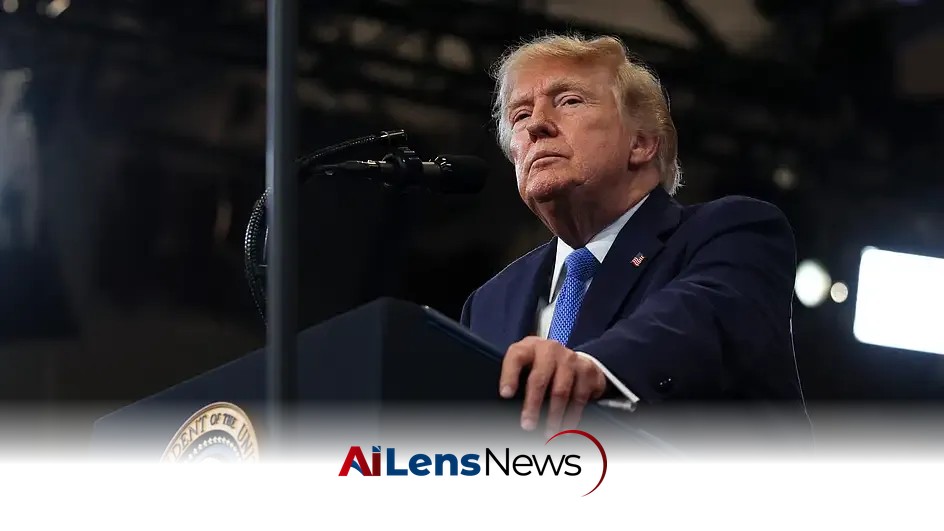


In a bold statement, Trump announced plans to declare the Strait of Hormuz as US territory, coinciding with a second attack on an Adnoc tanker within two days.
Abu Dhabi, United Arab Emirates Aug 15, 2026 ALN: In a significant escalation of rhetoric, former President Donald Trump has indicated that he will soon declare the Strait of Hormuz as United States territory. This announcement comes in the wake of heightened tensions in the region, particularly following a second attack on an Adnoc tanker within just two days. The Strait of Hormuz is a critical maritime passage, through which a substantial portion of the world's oil supply is transported. Trump's declaration, if realized, could have profound implications for international relations and maritime security in the region.
The Strait of Hormuz, located between Oman and Iran, is one of the world's most strategically important waterways. It connects the Persian Gulf with the Gulf of Oman and the Arabian Sea, serving as a transit route for approximately 20% of the world's oil supply. Given its significance, any disruptions in this area can lead to substantial fluctuations in global oil prices, impacting economies worldwide. The recent attacks on Adnoc tankers have raised alarms among global oil markets and security analysts, highlighting the fragile nature of maritime security in this vital corridor.
The recent attacks on Adnoc tankers have raised alarms among global oil markets and security analysts. The first attack occurred just days ago, prompting concerns over the safety of shipping routes in the Gulf. The second incident has intensified fears of a potential conflict, as the region has been a flashpoint for tensions between the United States and Iran. These attacks are part of a broader pattern of hostilities that have characterized US-Iran relations, particularly since the US withdrawal from the Joint Comprehensive Plan of Action (JCPOA) in 2018.
The JCPOA, commonly known as the Iran nuclear deal, was an agreement aimed at curbing Iran's nuclear program in exchange for the lifting of economic sanctions. Following the US exit from the deal, Iran began to gradually breach its commitments, leading to increased tensions and a series of confrontations at sea. The attacks on commercial vessels in the Strait of Hormuz can be seen as part of Iran's strategy to exert pressure on the US and its allies in the region. This pattern of aggression has raised concerns about the potential for a larger military confrontation in an area already fraught with geopolitical rivalries.
Trump's proposal to declare Hormuz as US territory could be seen as a provocative move, potentially inviting retaliation from Iran and complicating diplomatic efforts in the region. Analysts suggest that such a declaration might be intended to assert US dominance in a strategically vital area, but it also risks escalating military tensions. The declaration could be interpreted as a direct challenge to Iran's sovereignty, which may provoke a military response or further aggressive actions by Iranian forces.
Furthermore, this declaration could undermine ongoing diplomatic efforts aimed at de-escalating tensions in the region. Many countries, including traditional US allies in the Gulf, may view such a unilateral move as destabilizing, prompting calls for a coordinated international response. The potential for military engagement remains a pressing concern, particularly given the complex web of alliances and rivalries that characterize the Middle East.
In the context of US foreign policy, Trump's statement could be seen as a continuation of his administration's hawkish stance towards Iran. During his presidency, Trump often emphasized a tough approach to Iran, which included withdrawing from the JCPOA and reimposing sanctions. This approach has been met with mixed reactions, both domestically and internationally, and Trump's latest announcement may further polarize opinions on the best strategy to handle Iran.
Global leaders have expressed concern over Trump's statement. Many are calling for restraint and dialogue to prevent further escalation. The United Nations has urged all parties involved to prioritize diplomacy and avoid actions that could lead to conflict. Countries in the region, including Saudi Arabia and the United Arab Emirates, have a vested interest in maintaining stability in the Strait of Hormuz, as their economies are heavily reliant on oil exports.
Moreover, European nations have emphasized the importance of adhering to international law and respecting the rights of all nations to navigate freely in international waters. The European Union has historically advocated for diplomatic solutions rather than military confrontations, and any aggressive posturing by the US could strain transatlantic relations. European leaders may feel compelled to mediate between the US and Iran to avoid a potential military conflict that could destabilize the region and disrupt global oil supplies.
As the situation unfolds, the international community will be closely monitoring the developments in the Gulf region. The potential for military engagement remains a pressing concern, and the implications of Trump's declaration could reverberate throughout global markets and diplomatic relations. Should tensions continue to escalate, there may be calls for increased naval presence from the US and its allies to ensure the safety of shipping routes, which could further complicate the situation.
Military analysts are already assessing the capabilities of US naval forces in the region, as well as those of Iran. The US has historically maintained a strong naval presence in the Gulf as a deterrent against Iranian aggression, but the prospect of declaring the Strait of Hormuz as US territory could alter the calculus for both sides. Iran's military strategy may adapt in response to such a declaration, potentially leading to a cycle of escalation.
In conclusion, Trump's announcement to declare the Strait of Hormuz as US territory marks a significant moment in the ongoing tensions in the region. With the backdrop of recent attacks on oil tankers, the coming days will be crucial in determining the direction of US-Iran relations and the stability of global oil supplies. The possibility of military confrontation looms large, and the international community's response will be critical in shaping the future of this vital maritime corridor. As nations grapple with the implications of such a declaration, the need for diplomatic engagement and conflict resolution becomes increasingly urgent. The stakes are high, not only for the nations directly involved but for the global economy and international security as well.
To learn more about the latest developments in Political Controversies, stay updated with our exclusive reports and analyses on AiLensNews.

