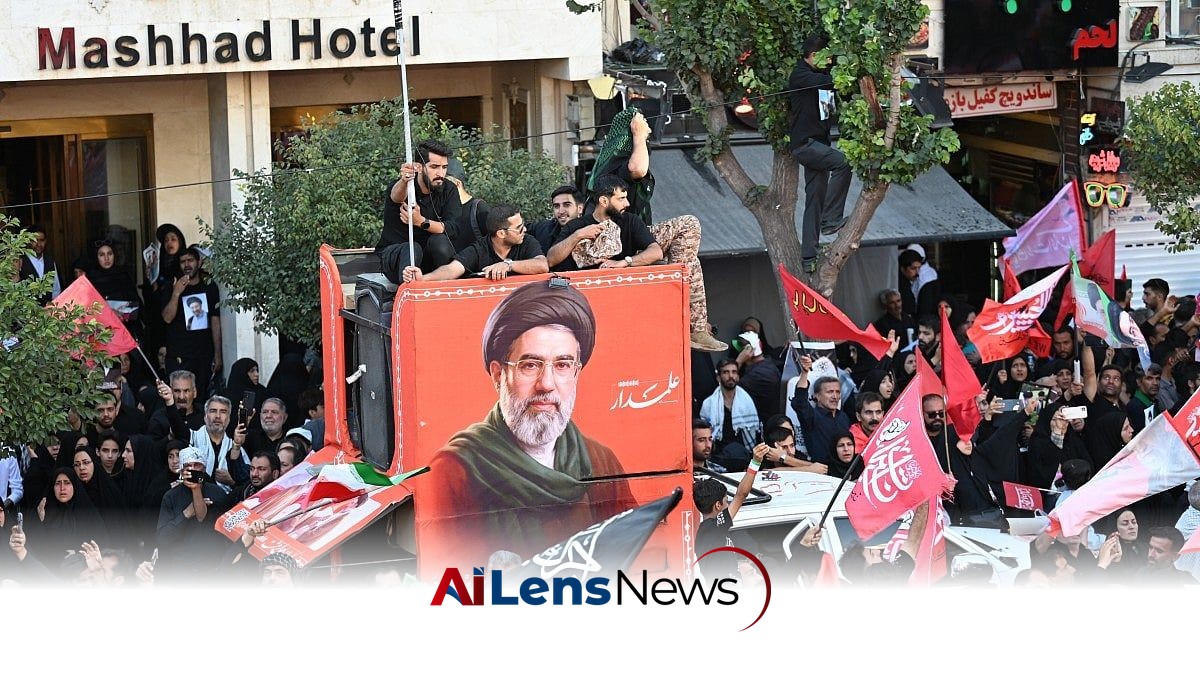


Exploring the internal conflict in Iran between diplomatic efforts and hardline calls for revenge following the death of Ayatollah Khamenei.
Abu Dhabi, United Arab Emirates Jul 13, 2026 ALN: The recent power struggle within Iran has brought to the forefront a critical juncture in the nation’s foreign policy, particularly in relation to the United States. Following the death of former supreme leader Ayatollah Ali Khamenei, the political landscape in Iran has shifted dramatically, revealing deep divisions among its leadership. On one side are the hardliners, who advocate for a stance of revenge and retaliation against perceived enemies, particularly the U.S., which they blame for Khamenei’s death. On the other side are the more moderate elements within the government, who are pursuing diplomatic channels to ease tensions and potentially improve relations with Washington.
Ayatollah Ali Khamenei, who led Iran for decades, was a pivotal figure in shaping the country’s policies, both domestically and internationally. His death has left a significant vacuum in leadership, which various factions within the Iranian government are vying to fill. This has resulted in a struggle between hardliners, who often espouse a more confrontational approach, and moderates, who recognize the importance of diplomacy in an increasingly complex global landscape.
Hardliners in Iran have been vocal in their calls for retaliation against the United States, viewing any diplomatic engagement as a sign of weakness. They argue that the U.S. has long sought to undermine Iran’s sovereignty and influence in the region, and that a response is necessary to assert Iran’s power and deter future aggressions. This perspective is rooted in a broader narrative that frames Iran as a victim of Western imperialism, a narrative that resonates deeply with many Iranians who have lived through decades of sanctions and military threats. The historical context of the 1953 CIA-backed coup that overthrew Iran's democratically elected Prime Minister Mohammad Mossadegh and the subsequent U.S. support for the Shah's regime have contributed to a deep-seated mistrust of American intentions.
Conversely, the moderates within Iran, including some members of the government and diplomatic corps, argue that engaging in dialogue with the U.S. could lead to a reduction in sanctions and a more stable economic environment for the Iranian people. They contend that diplomacy does not equate to weakness, but rather demonstrates a pragmatic approach to international relations. This faction points to recent negotiations with Oman and other mediators as a potential pathway to de-escalate tensions and foster a more constructive relationship with the U.S. They emphasize that the economic hardships exacerbated by sanctions have created a pressing need for a reconsideration of Iran's foreign policy, particularly in terms of its engagement with the West.
The debate over how to approach the U.S. is further complicated by Iran’s geopolitical position. The country sits at a strategic crossroads, sharing borders with several key players in the Middle East, including Iraq, Afghanistan, and Turkey. Iran’s influence in the region has been a source of contention, particularly with its support for groups like Hezbollah in Lebanon and various factions in Syria and Iraq. This regional involvement has often put Iran at odds with U.S. interests, leading to a cycle of conflict and retaliation. The U.S. has consistently viewed Iran's regional activities as destabilizing, contributing to a broader narrative of Iran as a supporter of terrorism, which hardliners leverage to justify their confrontational stance.
In recent years, the U.S. has implemented a series of sanctions aimed at crippling Iran’s economy, particularly following the withdrawal from the Joint Comprehensive Plan of Action (JCPOA) in 2018. These sanctions have had a profound impact on the Iranian economy, leading to widespread inflation and a decrease in living standards for many citizens. The economic pressures have fueled public discontent and have been a significant factor in the calls for a more diplomatic approach to U.S. relations. The protests in Iran that erupted in response to economic grievances have highlighted the urgency of finding a resolution to the standoff with the U.S., as many citizens are increasingly frustrated with the leadership's inability to improve their living conditions.
The implications of this internal power struggle are profound, not only for Iran but also for the broader Middle East. If hardliners succeed in asserting their agenda, Iran may adopt a more aggressive posture, potentially leading to increased tensions with the U.S. and its allies. This could further destabilize the region, as other nations may feel compelled to respond to Iran’s actions, leading to an escalation of conflicts. The potential for military confrontations could rise, especially if hardline factions push for direct actions against U.S. interests in the region, which could provoke a military response from Washington.
On the other hand, if moderates manage to gain the upper hand, there could be opportunities for a thaw in U.S.-Iran relations. This could lead to renewed negotiations over Iran’s nuclear program and a potential lifting of some sanctions, which may alleviate economic hardships for ordinary Iranians. However, this path is fraught with challenges, not least of which is the skepticism from hardliners who view any engagement with the U.S. as a betrayal of Iran’s revolutionary principles. The moderates will need to navigate a delicate political landscape, balancing the demands of hardliners with the expectations of the public, who are increasingly weary of economic hardship.
The international community is closely watching these developments, as they hold significant implications for global security and economic stability. The U.S. has made it clear that it seeks to prevent Iran from acquiring nuclear weapons, and any shift in Iran’s approach could alter the dynamics of nuclear negotiations. Additionally, allies in the region, particularly Israel and Saudi Arabia, are likely to react strongly to any perceived changes in Iran’s posture, which could lead to a recalibration of their own strategies. Israel, for example, has been vocal about its opposition to Iran's nuclear ambitions and has conducted military operations aimed at curtailing Iranian influence in Syria.
Furthermore, the outcome of this power struggle may influence Iran’s relationships with other global powers, including Russia and China. Both countries have shown a willingness to engage with Iran, particularly in the context of energy cooperation and military support. A shift towards diplomacy could open the door for greater collaboration with these nations, while a hardline approach could isolate Iran further on the global stage. Additionally, Russia and China may view a more aggressive Iran as an opportunity to expand their influence in the region, potentially complicating U.S. efforts to contain Iranian power.
As Iran navigates this complex political landscape, the balance between diplomacy and revenge will be crucial in determining its future direction. The internal dynamics within Iran will play a significant role in shaping its foreign policy, and the choices made by its leaders will have lasting implications for both the nation and the wider region. The coming months will be critical in understanding how Iran chooses to respond to the challenges it faces, and whether it can find a way to reconcile its competing visions for its future. The potential for both conflict and cooperation remains high, and the decisions made in Tehran will reverberate far beyond its borders, influencing not only the Middle East but also global geopolitical dynamics.
To learn more about the latest developments in Political Controversies, stay updated with our exclusive reports and analyses on AiLensNews.

