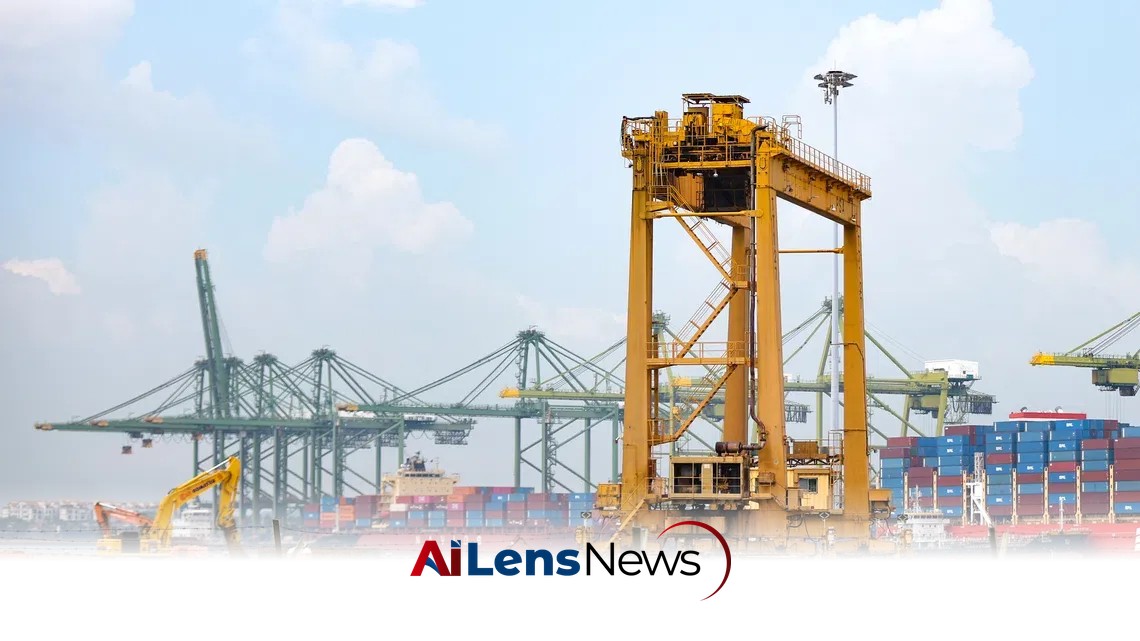


The US has flagged Singapore among countries potentially used by China to reroute goods and evade tariffs, amid new enforcement measures.
Singapore, Singapore Aug 14, 2026 ALN: In a significant revelation regarding international trade practices, the Trump administration has identified Singapore as a key player in what it describes as China's shadow transshipment network. This designation comes amidst growing concerns about the methods used by Chinese exporters to circumvent U.S. tariffs, a situation that has been exacerbated by the geopolitical tensions between the U.S. and China.
The report, titled “The Great Transshipment Scam,” was released by the White House on August 13 and highlights the practice of routing Chinese goods through intermediate countries with lower tariffs. This process effectively conceals the true origin of the products, allowing Chinese exporters to evade U.S. tariffs imposed as part of the ongoing trade war. The implications of this practice are far-reaching, not only affecting U.S. customs revenue but also impacting global trade dynamics.
According to the White House report, the U.S. government estimates that tariff-evading transshipments may have deprived the U.S. of customs revenue ranging from $40 billion to $303 billion. This staggering figure underscores the financial impact of such practices on the U.S. economy. The report notes that following the introduction of tariffs in 2018, there has been a marked shift in U.S. import sourcing patterns. While China's direct share of U.S. goods imports has decreased, the share supplied by countries identified as transshipment hubs has seen an increase.
The report identifies 40 countries, including Singapore, as participants in this shadow transshipment network, categorizing them into three tiers based on their involvement and capabilities. Singapore is placed in Tier 3, which consists of smaller economies that, while having lower absolute illegal transshipment volumes, possess specific advantages that make them attractive for Chinese exporters looking to reroute goods. These advantages include lower labor costs, access to free trade zones, and limited customs enforcement capacity.
One of the critical points raised in the report is the potential for increased commercial and geopolitical leverage that Beijing may gain as these countries become more dependent on Chinese inputs and capital. This dependency could have significant implications for U.S. interests, as it may allow China to maintain indirect access to the U.S. market while simultaneously exerting influence over smaller economies.
The report also emphasizes that while there has been a notable shift in trade patterns, it does not automatically imply that all displaced Chinese trade was illegally transshipped. Some of the changes may reflect legitimate adjustments in global production and sourcing strategies. However, the timing and scale of these shifts warrant further investigation into the extent of tariff evasion.
Singapore's response to the report has been one of defense and clarification. The Ministry of Trade and Industry has been approached for comments, and Singapore Customs has previously stated its commitment to trade compliance. In a statement made in September 2025, Singapore Customs emphasized that the country's legislative and regulatory framework for transshipment aligns with international best practices. They reiterated that transshipped goods do not originate from Singapore and are not intended for domestic circulation, thus maintaining transparency in trade practices.
Furthermore, Singapore Customs has expressed its dedication to ensuring that companies transshipping goods through Singapore adhere strictly to local laws and regulations. The agency collaborates closely with international counterparts to detect and address illicit activities related to the import, export, or transshipment of goods.
The report and its findings are part of a broader effort by the Trump administration to reinforce its tariff regime, particularly in light of a court decision earlier in 2026 that undermined previous tariff measures. This has led to the introduction of a new 12.5 percent levy on approximately one-third of Singapore's domestic exports to the U.S., a move that the White House justified by alleging that Singapore and other economies have failed to effectively enforce prohibitions on goods produced with forced labor.
The implications of these developments are significant for international trade relations. The identification of Singapore as a potential transshipment hub could strain U.S.-Singapore relations, particularly if the U.S. perceives that Singapore is not doing enough to prevent illegal transshipments. On the other hand, Singapore's reputation as a global trade hub could also be at risk, as businesses may reconsider their operations in a country that is now under scrutiny for its role in facilitating potential tariff evasion.
As the global landscape continues to evolve, the dynamics of trade enforcement and compliance will remain critical. The U.S. administration's use of advanced technologies, such as an artificial intelligence-powered system dubbed “Detective Border,” aims to enhance the detection of illegal transshipments. This initiative reflects a growing trend towards leveraging technology in trade enforcement, which could lead to more stringent monitoring of trade activities globally.
In conclusion, the identification of Singapore in the context of China's shadow transshipment network highlights the complexities and challenges of modern international trade. As countries navigate the intricacies of tariffs, compliance, and global supply chains, the need for transparency and accountability in trade practices will be more important than ever. The ramifications of these findings will likely reverberate through the international trading system, influencing policies and practices for years to come.
Understanding the broader context of the U.S.-China trade war is essential to grasp the implications of this report. The trade war, which escalated significantly in 2018, was characterized by a series of tariff increases and trade barriers imposed by both countries. The U.S. aimed to reduce its trade deficit with China and address concerns over intellectual property theft and forced technology transfers. In response, China implemented retaliatory tariffs on U.S. goods, further complicating the trading relationship.
The identification of Singapore as a transshipment hub is particularly noteworthy given Singapore's strategic position as a major global shipping and trade center. The Port of Singapore is one of the busiest in the world, serving as a critical node in international supply chains. Consequently, the country's role in global trade has drawn attention, making it susceptible to scrutiny in the context of trade compliance and enforcement.
Moreover, the implications of the report extend beyond just U.S.-Singapore relations. Other countries identified in the report may also face increased scrutiny from the U.S. government, potentially leading to broader geopolitical ramifications. Nations that are perceived as facilitating tariff evasion could find themselves in a precarious position, balancing their economic interests with the need to maintain favorable relations with the U.S.
In light of these developments, countries involved in international trade may need to reassess their compliance frameworks and trade practices. The potential for increased tariffs and trade barriers could lead to significant shifts in global supply chains, prompting businesses to explore alternative sourcing strategies to mitigate risks associated with trade compliance.
As the international community grapples with the complexities of trade enforcement, the role of multilateral organizations such as the World Trade Organization (WTO) may become increasingly important. These organizations could serve as platforms for dialogue and collaboration among countries seeking to address trade-related challenges and enhance compliance mechanisms.
In summary, the identification of Singapore as a key player in China's shadow transshipment network illustrates the intricate interplay between trade practices, geopolitical dynamics, and compliance challenges in today's global economy. As nations navigate these complexities, the need for transparency, cooperation, and adherence to international trade norms will be paramount in fostering a stable and equitable trading environment.
To learn more about the latest developments in Political Controversies, stay updated with our exclusive reports and analyses on AiLensNews.

