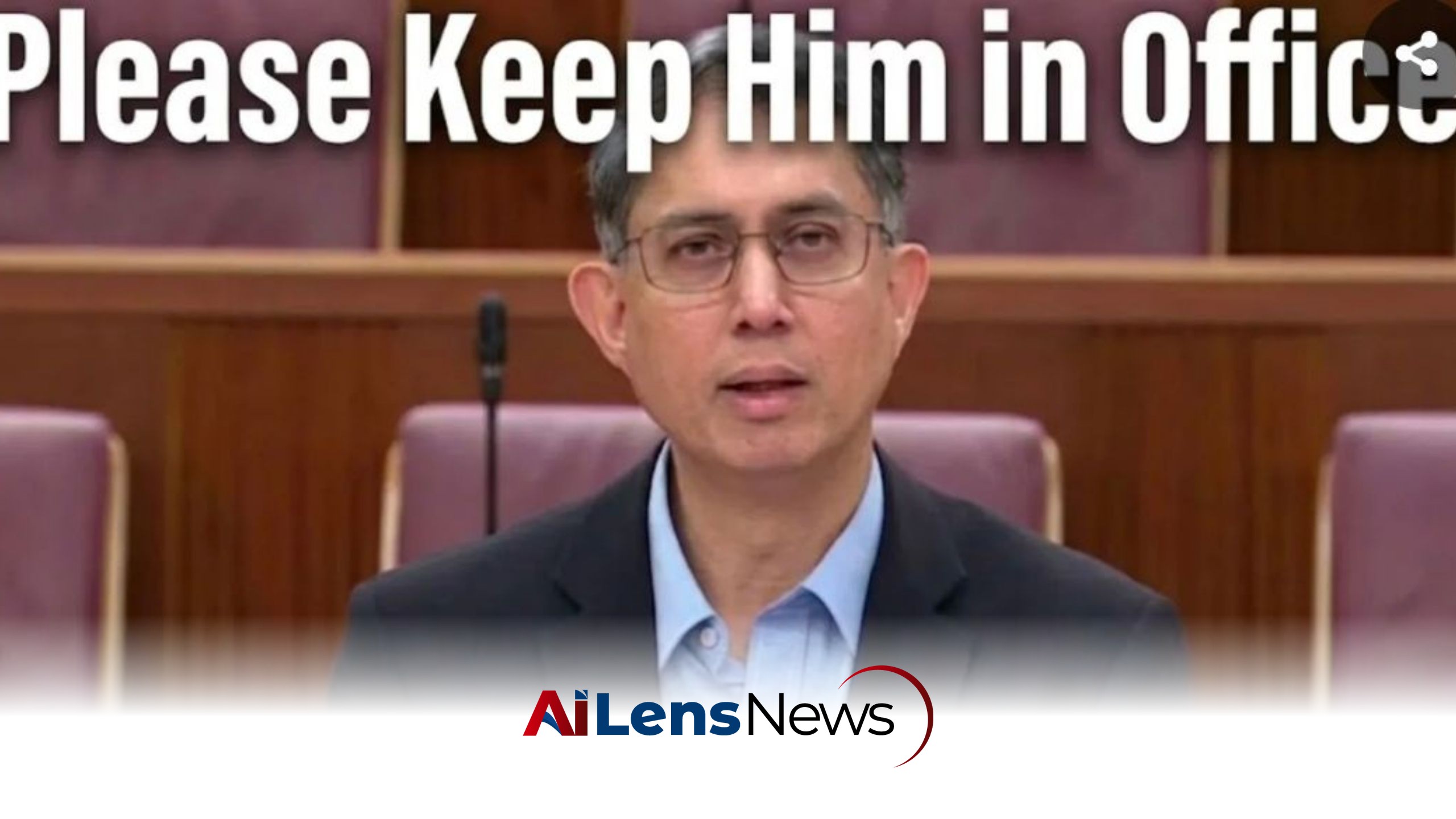


An online petition calling for Prime Minister Lawrence Wong to reject Faishal Ibrahim's resignation has gained significant traction, highlighting his two decades of public service.
Singapore, Singapore Jul 22, 2026 ALN: The political landscape in Singapore was shaken on Monday, July 20, when Faishal Ibrahim announced his resignation from his political office, his seat in Parliament, and his affiliation with the People’s Action Party (PAP). This decision came amid allegations concerning his conduct with a female member of the public, which he described as a lapse of judgment in failing to establish appropriate boundaries. Although he clarified that there was no physical relationship involved, the situation escalated with claims of harassment from both parties.
Faishal Ibrahim had a long and distinguished career in public service, having served as the Acting Minister-in-charge of Muslim Affairs and as Senior Minister of State for Home Affairs. His tenure as a Member of Parliament (MP) spanned nearly two decades, during which he was recognized for his commitment to the communities he represented. His resignation, therefore, was not just a personal setback but also a significant loss for many constituents who valued his leadership and dedication.
In light of his resignation, Prime Minister Lawrence Wong released a statement affirming that while no criminal action would be pursued, the standards expected of public officials were paramount. Wong's acceptance of Faishal's resignation reflected the seriousness of the allegations and the need for accountability among public leaders. This decision, however, did not sit well with many Singaporeans, leading to the emergence of a petition aimed at urging PM Wong to reconsider his acceptance of Faishal's resignation.
“His work matters because Singapore needs experienced, steady public leaders who understand the realities people face and can keep serving without disruption. When a capable leader steps aside, the cost is not only political continuity; it is the loss of relationships, experience, and ongoing work that residents rely on,” stated the petition initiated by Ridjal Noor, a local entrepreneur and business owner.
The petition quickly garnered attention, with hundreds of signatures collected on its first day. Supporters emphasized the importance of stability and continuity in leadership during uncertain times. As Singapore navigates various challenges, including economic recovery post-pandemic and social cohesion, the call for experienced leaders has resonated deeply within the community. Ridjal Noor articulated that Faishal's leadership was crucial at a time when many citizens yearn for trust and clear guidance.
Following the announcement of Faishal's resignation, an outpouring of support emerged on social media platforms. Prominent figures, including former President Halimah Yacob, praised Faishal for his character and contributions to society. While many expressed their well-wishes, a significant segment of the population voiced their belief that Faishal should not have resigned, citing the potential negative impact on the community and governance.
Ridjal Noor further argued that the Prime Minister should reconsider his decision to accept the resignation. He posited that keeping Faishal in office would not only preserve continuity but also ensure that experienced leadership remains in place, especially when effective governance is critical. This sentiment reflects a broader concern among some citizens that the political system should not be overly punitive in response to personal missteps, particularly when those in question have demonstrated a long-standing commitment to public service.
The petition allowed signatories to leave comments, providing a platform for individuals to express their thoughts on Faishal's resignation. Many of the comments echoed sentiments of support and appreciation for his work. Ridjal Noor himself remarked, “I want to keep a good man and a good leader in office.”
“Assoc Prof Faishal deserves to be reinstated. I bear witness that he did good for our people. I saw how he rendered help to the best he can. He restored my faith in SG leadership. At this juncture, without him, I see no other leaders of the same calibre. BRING HIM BACK TO PARLY,” commented another signatory.
Other comments reflected a desire for recognition of Faishal's two decades of public service. One individual expressed frustration over the timing of appreciation, stating, “I don’t think appreciation should only be expressed after someone is gone.” Another signatory highlighted the importance of leaders who are willing to listen and engage with the community, stating, “Sometimes, what a community needs isn’t just policy. It needs someone willing to listen, engage and rebuild trust. I felt he brought that.”
This public support for Faishal Ibrahim raises questions about the expectations placed on public officials and the consequences of personal conduct in the political arena. The situation invites a broader discussion about the balance between accountability and understanding in public service, as well as the impact of social media on political narratives and public opinion.
The implications of this petition extend beyond Faishal's individual circumstances. It reflects a growing desire among citizens for a more compassionate approach to governance, where leaders are not only held accountable for their actions but also recognized for their contributions and commitment to the community. As Singapore continues to evolve, the dialogue surrounding leadership, accountability, and community trust will likely remain at the forefront of public discourse.
As the petition gains traction, it remains to be seen how PM Wong and the PAP will respond. The outcome could have significant implications for the party's image, the perception of leadership standards, and the overall political climate in Singapore. In a society where public trust is paramount, the handling of such situations can either reinforce or undermine confidence in government institutions.
In conclusion, the resignation of Faishal Ibrahim and the subsequent petition to reverse that decision highlight the complexities of leadership in public service. While accountability is essential, the voices of the community calling for continuity and understanding serve as a reminder of the multifaceted nature of governance in Singapore.
To learn more about the latest developments in Political Controversies, stay updated with our exclusive reports and analyses on AiLensNews.

