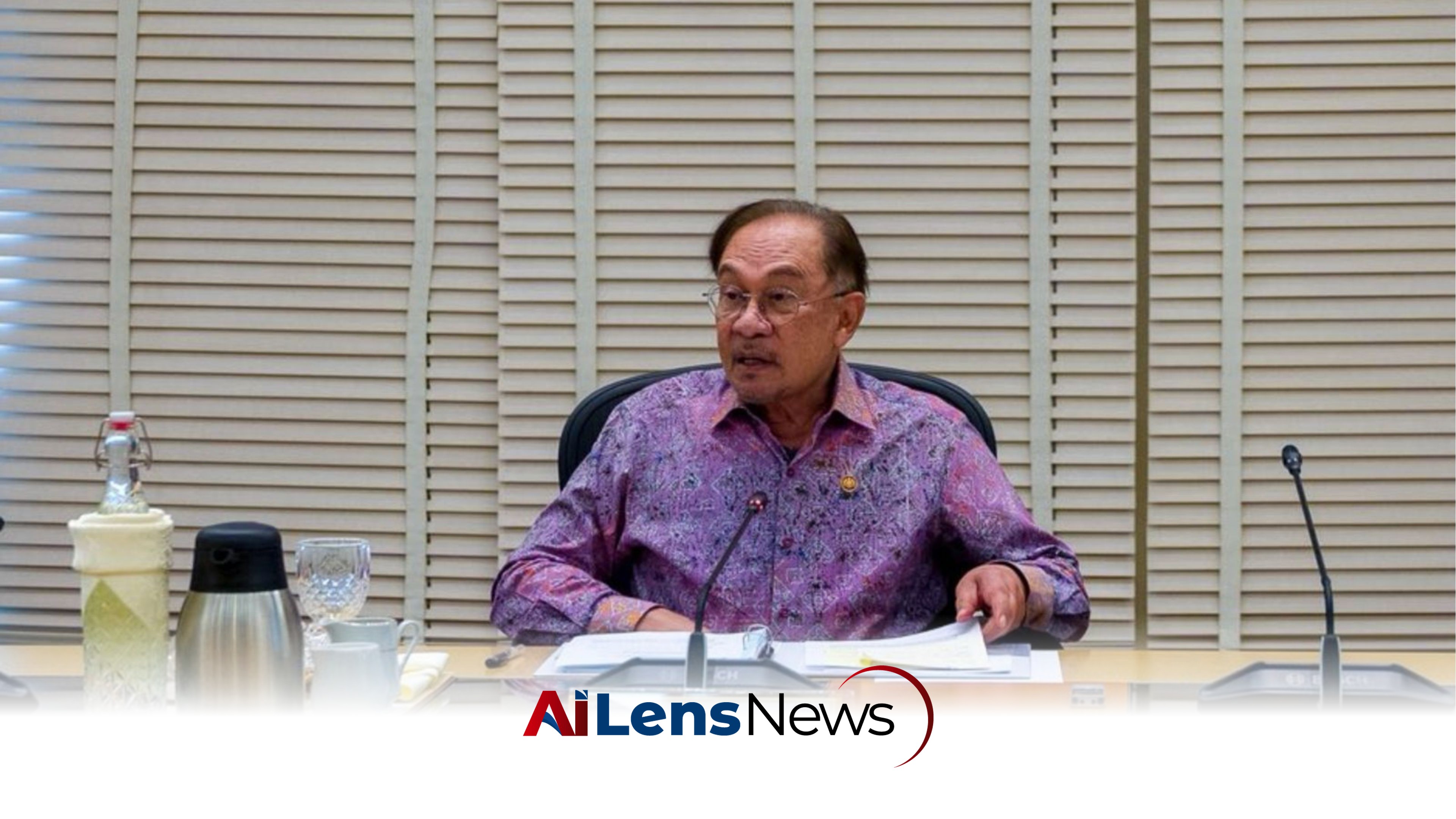


Prime Minister Anwar Ibrahim navigates dissent within his cabinet as he prepares to release a critical report on Tabung Haji, testing political alliances.
Singapore, Singapore Jul 25, 2026 ALN: Prime Minister Anwar Ibrahim has unveiled a potential game-changer in the lead-up to the Negeri Sembilan campaign, rattling dissidents within his own Cabinet who are actively opposing him on the ground.
Anwar has said that by next week, he is releasing a damning report on the Tabung Haji (TH). On July 24, he announced that the government is preparing to release the final report of the Royal Commission of Inquiry (RCI) into TH. The report details investigations into the fund’s past management, operational issues, and asset stewardship.
The first result of the announcement is that some UMNO members are actively pushing Anwar to release the report, believing it will exonerate their leaders. However, in the pro-Anwar camp, there is wind that the report will lay heavily on UMNO and its leaders for the mismanagement of billions of ringgit from the Tabung Haji business. Tabung Haji is a ‘sacred’ tool seen by Malays as the gateway to salvation as it helps bring them to perform their once-in-a-lifetime pilgrimage to Saudi Arabia.
Speculation is mounting over how the upcoming report will affect UMNO and its leaders, as many eagerly wait to see its findings on the alleged misallocation of billions in pilgrimage funds. The Tabung Haji fund has historically played a crucial role in the financial planning of Malaysian Muslims, making its management a sensitive issue intertwined with religious sentiments and public trust.
But while we tackled the issue of etiquette and moral standards in another op-ed, we will now tackle the issue of renegades who belong to the same government headed by Anwar. Yet, as recent events demonstrate, these same figures are openly challenging Anwar’s authority in the state elections. By rallying opposition factions to their side, they carry on as though their actions are neither morally bankrupt nor teetering dangerously on the edge of political betrayal.
Heading towards the fifth year in power, Anwar now faces dissent within the Madani government as UMNO and Barisan Nasional openly embrace Perikatan Nasional (PN) and the Islamists, Pas. This shift in alliances is particularly alarming for Anwar, who has positioned his administration as a reformist government aimed at combating corruption and promoting good governance.
UMNO leader Ahmad Zahid Hamidi took time to pen a Malay oral poem which consists of 4 lines and has a rhythmical tone to tell Anwar that, in the end, he will stick to the done deal from 2022. That is, UMNO and BN will remain in the Madani government until the end of the term, which may come as soon as the end of this year or early next year. The message from Zahid came after Anwar penned his own oral poetry urging Zahid not to break the friendship or deal made between them.
Anwar's poetic response highlights the cultural significance of such expressions in Malaysian politics, where traditional forms of communication can convey complex political messages. It reflects the ongoing struggle between maintaining alliances and addressing internal dissent, a balancing act that is often fraught with challenges.
Friction between UMNO and Pakatan Harapan (PH) escalated significantly after PKR Youth demanded that UMNO ministers resign from the Cabinet if they intend to collaborate with PAS in the Negeri Sembilan state elections. This demand underscores the growing tensions within the coalition and raises questions about the future of the partnership between PH and UMNO, particularly as both parties navigate their respective bases and electoral strategies.
Amid this turbulence, PH’s frustration is understandable. Former Health Minister Khairy Jamaluddin previously noted that PH relied on Barisan Nasional’s (BN) backing to form the ruling coalition; yet, Anwar Ibrahim has repeatedly aimed at corrupt leadership, leading critics to view his rhetoric as an attack on UMNO. This dynamic complicates the narrative surrounding Anwar's administration, as he must reconcile his commitment to anti-corruption with the political realities of coalition governance.
To be fair to Anwar, he has carefully avoided naming UMNO or BN directly as the source of historical graft. Instead, he appears to target specific individuals without explicitly naming them—a tightrope walk meant to retain UMNO’s support while convincing voters that his Malaysia Madani administration is tough on corruption. This strategy reflects a broader trend in Malaysian politics, where leaders often navigate a landscape of competing interests and allegiances.
Nevertheless, the irony remains stark: Anwar presides over an administration where Cabinet ministers actively attack the government on the campaign trail, sharing platforms with the opposition while dancing with Islamists to the tune of BN’s theme song. The situation raises critical questions about the coherence of the Madani government's policies and the extent to which it can effectively govern amidst such internal divisions.
As Malaysia approaches the Negeri Sembilan elections, the implications of these internal struggles are significant. The outcome of these elections could either bolster Anwar's position as a reformist leader or further embolden dissent within his coalition. The stakes are high, not only for Anwar's political future but also for the stability of the current government and the broader political landscape in Malaysia.
Political analysts are closely watching how these developments unfold, particularly in light of Malaysia's complex ethnic and religious dynamics, which often play a pivotal role in electoral outcomes. The interplay between UMNO, PAS, and Anwar's coalition will likely shape the future of Malaysian politics, influencing not only the immediate electoral landscape but also the long-term trajectory of governance and reform in the country.
In conclusion, as Anwar Ibrahim navigates these turbulent waters, he must balance the demands of his coalition partners with the expectations of the electorate. The forthcoming report on Tabung Haji will undoubtedly serve as a litmus test for his leadership and the integrity of his administration. The coming weeks will be crucial in determining whether Anwar can consolidate his power and steer Malaysia towards a more transparent and accountable governance model, or if internal dissent will undermine his efforts and lead to further fragmentation within the coalition.
To learn more about the latest developments in Political Controversies, stay updated with our exclusive reports and analyses on AiLensNews.

