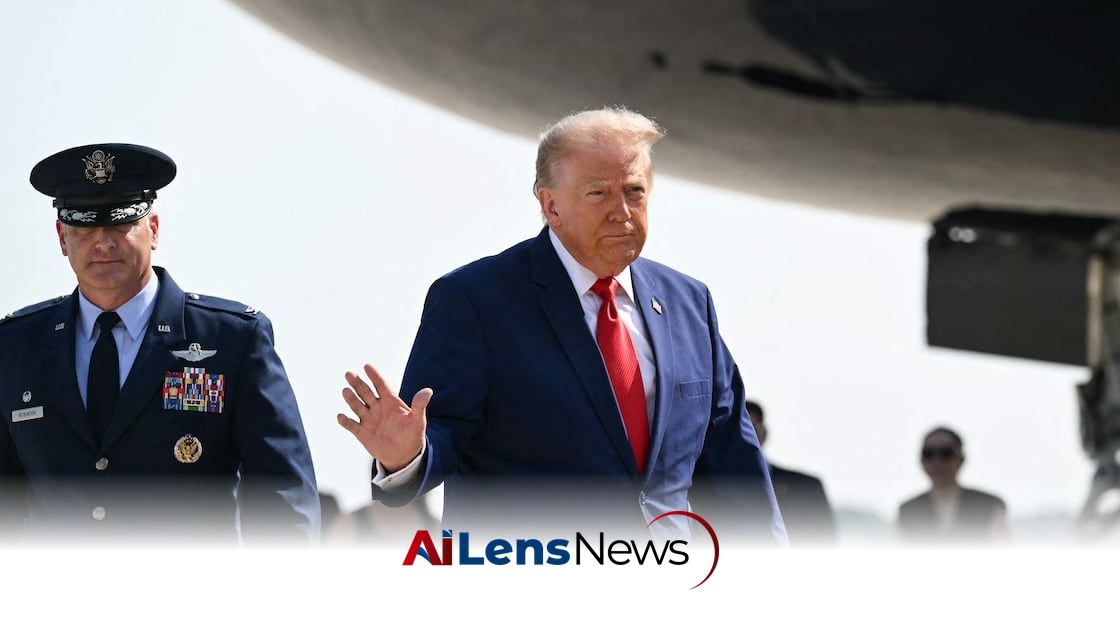


President Trump threatens military action against Iran if attacks on shipping in the Strait of Hormuz continue, escalating tensions in the region.
Riyadh, Saudi Arabia Jul 23, 2026 ALN: President Donald Trump on Wednesday issued a stark warning to Iran, threatening to retaliate against Iranian infrastructure with U.S. military strikes if Tehran targets commercial shipping in the strategically vital Strait of Hormuz. This statement represents a significant escalation in U.S. rhetoric and military posture in the region, where tensions have been mounting over the past several years.
The Strait of Hormuz is a narrow waterway that serves as a critical chokepoint for global oil shipments, with a significant portion of the world’s oil supply passing through it. Control over this waterway has been a source of contention between Iran and the United States, particularly following the U.S. withdrawal from the Joint Comprehensive Plan of Action (JCPOA), commonly known as the Iran nuclear deal, in 2018. Since then, Iran has gradually increased its military activities in the region, including threatening to disrupt shipping as a means of exerting pressure on the United States and its allies.
In a post on Truth Social, Trump articulated his position emphatically, stating, "From this point forward, any time the Islamic Republic of Iran shoots at a ship in the Strait of Hormuz, whether it be by missile, rocket, drone, or any other device or weapon, the United States will bomb and destroy one bridge or power plant, including those located next to, or in, the capital city of Tehran." This declaration underscores the administration's willingness to escalate military responses in the face of Iranian aggression.
Iran's response came swiftly, with a military source quoted by the Tasnim news agency warning that Tehran would retaliate against regional infrastructure and energy facilities should the U.S. act on Trump's threat. The source emphasized Iran's determination to maintain sovereignty over the Strait of Hormuz, asserting, "Iran has a steely will in exercising sovereignty over the Strait of Hormuz and will never allow the waterway to become a source of threats against the country." This statement reflects Iran's broader strategy of deterrence and its commitment to safeguarding its interests in the face of external pressures.
Trump's warning follows a series of U.S. airstrikes on Iranian targets, marking the 11th consecutive night of military action. These strikes have been part of a broader campaign aimed at curtailing Iranian influence in the region and protecting U.S. interests. However, diplomatic efforts to restore a ceasefire have largely stalled, raising concerns about the potential for further escalation into a broader conflict.
The rhetoric from Trump is reminiscent of his earlier threats made in April when he indicated that he would target Iran's civilian infrastructure if Iranian aggression continued. At that time, he suggested that many Iranians might welcome such actions if they led to the downfall of the hardline regime in Tehran. However, Trump ultimately stepped back from these threats, opting instead to extend a ceasefire to facilitate ongoing negotiations. This oscillation between aggressive posturing and diplomatic overtures has characterized much of Trump's foreign policy approach toward Iran.
As the situation continues to evolve, Trump faces significant challenges in managing the conflict while also addressing domestic political pressures. His administration has sought to end the war initiated alongside Israel on February 28, but the complexities of the conflict have made it difficult for Trump to dictate a favorable outcome. Tehran's capacity to threaten shipping in the Strait of Hormuz has emerged as a key leverage point for Iran, complicating U.S. efforts to stabilize the region.
U.S. Secretary of State Marco Rubio, speaking from Manila during a Southeast Asian conference, reiterated Washington's commitment to ensuring freedom of navigation through the Strait of Hormuz. He expressed skepticism regarding the prospects for diplomacy, stating, "We remain open to diplomacy. We remain open to working it out in a negotiated way. But right now, they don't seem to be serious about that." This sentiment reflects a broader frustration among U.S. officials regarding Iran's willingness to engage in constructive dialogue.
The lack of progress in resolving the ongoing conflict poses significant political implications for Trump and the Republican Party, particularly as the midterm elections approach. With control of the Senate at stake, the administration's handling of foreign policy issues, including relations with Iran, will be closely scrutinized by voters. The recent deaths of four U.S. service members in attacks attributed to Iranian forces underscore the human cost of the conflict and the political challenges facing the administration.
On the same day as his warning to Iran, Trump visited Dover Air Force Base in Delaware to attend the dignified transfer of the fallen service members. Three were reported to have been killed in an Iranian strike in Jordan, while one lost his life in a drone attack in Iraq. In his remarks to journalists, Trump emphasized the importance of honoring those who made the ultimate sacrifice, stating, "We’re going to Dover … to honor our heroes and they’re indeed great heroes. All of them said, very strongly, that we can’t let Iran have a nuclear weapon, so we’re going to honor them. For me it’s one of the hardest things to do as president but it has to be done." This statement highlights the emotional toll of military engagements and the weight of responsibility that leaders bear in times of conflict.
The ongoing tensions between the U.S. and Iran, particularly regarding the Strait of Hormuz, are emblematic of a larger geopolitical struggle in the Middle East. As both nations navigate their respective interests, the potential for miscalculation remains high. The implications of Trump's threats could reverberate throughout the region, affecting not only U.S.-Iran relations but also the broader dynamics of Middle Eastern geopolitics. The situation calls for careful consideration of the risks associated with military escalation and the need for diplomatic avenues to prevent further conflict.
To learn more about the latest developments in Elections, stay updated with our exclusive reports and analyses on AiLensNews.

