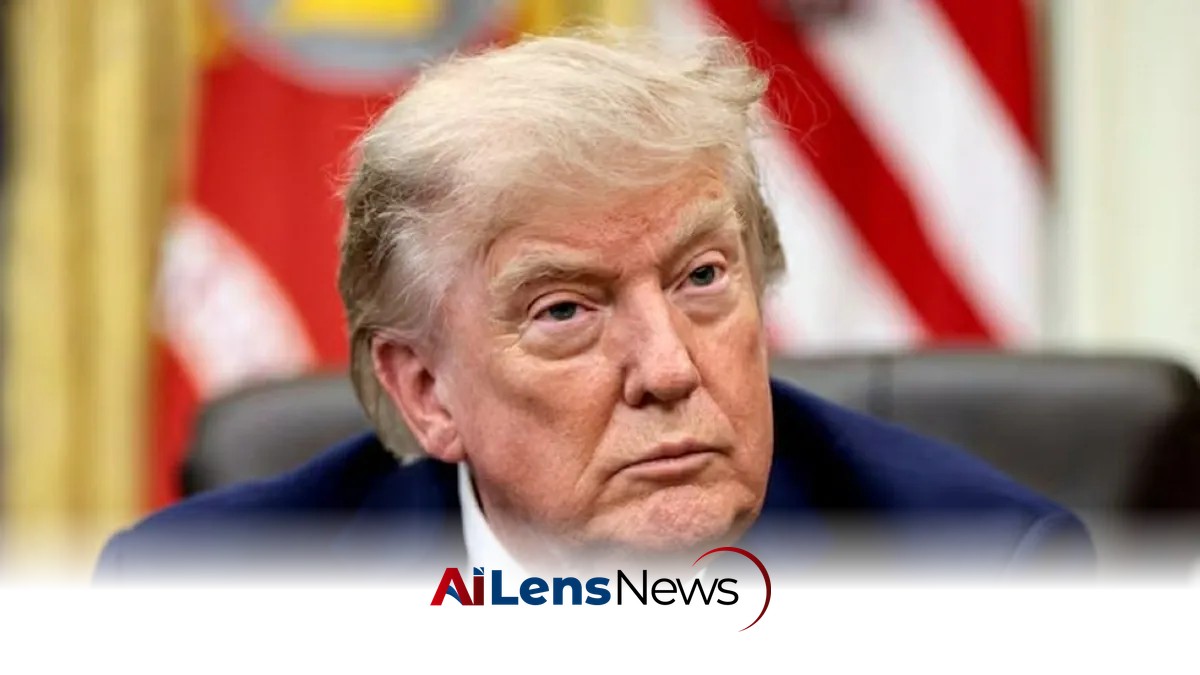


US President Donald Trump announced he will seek compensation from Iran for all individuals killed or wounded due to Iranian actions, complicating peace negotiations.
Riyadh, Saudi Arabia Aug 12, 2026 ALN: US President Donald Trump said Monday he would demand compensation from Iran for "all of the people that they have killed and gravely wounded," as part of any peace negotiations. This announcement marks a significant escalation in the ongoing tensions between the United States and Iran, a relationship fraught with historical animosity and conflict.
Trump’s declaration was a direct response to Iran’s insistence that US payment of war reparations be a pre-condition to any resolution of the ongoing hostilities. The Iranian government has long maintained that the United States' military actions in the region, particularly in the wake of the 2003 invasion of Iraq and subsequent conflicts, have caused extensive damage and loss of life, necessitating compensation. This back-and-forth over reparations highlights the complexities involved in negotiating peace in a region that has experienced decades of conflict.
Trump's social media post came after Iran announced over the weekend that it was nearing a deal with Oman to define new shipping lanes between them through the Strait of Hormuz. This strategic waterway is crucial for global oil shipments, as a significant portion of the world's oil supply passes through it. However, Iran reiterated that the US must meet conditions, including compensation for damages incurred from US and Israeli attacks, before the strategic waterway can be reopened. This insistence complicates the already tense negotiations, as the US and Iran have fundamentally opposing views on what constitutes fair reparations.
“It is an interesting idea because now I am likewise demanding compensation from Iran, for all of the people that they have killed and gravely wounded with their roadside bombs and many conflicts," Trump wrote on Truth Social. His post indicates a willingness to broaden the scope of negotiations to include not only current conflicts but also historical grievances. He noted that his demand encompassed damages arising from the current war, as well as Iranian attacks on US targets dating back over two decades. Furthermore, he included calls for compensation to families of Iranian protesters killed by authorities over the past 50 years, indicating a desire to address a wide range of grievances that have accumulated over time.
The ongoing negotiations aimed at ending the war and reopening the Strait of Hormuz have stalled significantly, and Trump's new demands risk putting a quick agreement further out of reach. The complexities of international diplomacy are evident here, as both sides seem entrenched in their positions, making compromise increasingly difficult. Trump's insistence on compensation could be seen as a negotiating tactic, but it also raises the stakes, potentially delaying any resolution to the conflict.
In a later post, Trump elaborated on his demands, stating that the Islamic Republic should be responsible for deaths and damage it caused in Lebanon, Syria, Yemen, and Gaza. This expansion of claims underscores the broader implications of Iran's actions in the Middle East, where its influence has been a source of tension for both regional and global powers. By linking these conflicts to his demands for compensation, Trump is attempting to frame Iran as a destabilizing force in the region, which could resonate with his political base and influence public opinion.
In what has become a regular pattern, Trump last week threatened to hit Iran “very hard,” potentially with attacks against civilian infrastructure, only to pull back later, hinting that a peace deal was near. This oscillation between aggression and diplomacy has characterized Trump's approach to Iran, creating uncertainty about the US's long-term strategy in the region. The unpredictability of Trump's rhetoric can complicate negotiations, as allies and adversaries alike struggle to gauge his intentions.
Trump this weekend described his approach to the conflict as “low-keying,” suggesting he was prepared to let economic pressure mount in place of further military strikes. This strategy aligns with a broader trend in US foreign policy, where economic sanctions have been used as a tool to exert pressure on adversaries. However, the effectiveness of this approach remains debated, particularly in the context of Iran, which has faced crippling sanctions for years yet continues to pursue its regional ambitions.
Digital media outlet Axios reported that the US president did not express any frustration with Iran’s delaying an agreement to open the Strait of Hormuz during an interview published Sunday. This may indicate a strategic choice to maintain a diplomatic tone, even as tensions remain high. Tehran has demanded that the US first end its blockade of Iranian ports and lift sanctions on its oil industry, which are seen as essential steps for any meaningful negotiation to take place.
As negotiations have faltered, the blockage of the Strait of Hormuz by Iran has sent fuel prices soaring and rattled the world economy, putting pressure on Trump ahead of midterm elections in November. The economic implications of the strait's blockage cannot be overstated, as fluctuations in oil prices can have far-reaching effects on global markets and domestic economies. Trump's administration is acutely aware of these pressures and may be motivated to find a resolution that stabilizes both the region and the economy.
In his post, Trump also referenced and claimed compensation from Iran for the October 2000 bombing of the US Navy guided-missile destroyer USS Cole at a Yemeni port, which he has previously asserted Iran was “probably involved” in. This incident, which killed 17 sailors and wounded more than three dozen others, has been a point of contention in US-Iran relations. The FBI attributed the bombing to al Qaeda, but the connection to Iran remains a contentious issue in discussions about accountability and reparations.
On Monday, Trump stated that his various demands for compensation would be put “firmly into any, and all, future negotiations” with Iran. This commitment to include compensation in future talks signals a shift in the dynamics of US-Iran relations, potentially complicating the path to peace. The insistence on reparations may create additional barriers to dialogue, as both sides navigate a landscape marked by historical grievances, geopolitical interests, and the urgent need for stability in the region.
As the situation continues to evolve, the implications of Trump's demands for compensation will likely reverberate through diplomatic channels. The potential for a peaceful resolution remains uncertain, with both sides entrenched in their positions. The future of US-Iran relations will depend on the willingness of both parties to engage in meaningful dialogue and find common ground amidst a backdrop of longstanding conflict and mistrust.
To learn more about the latest developments in Elections, stay updated with our exclusive reports and analyses on AiLensNews.

