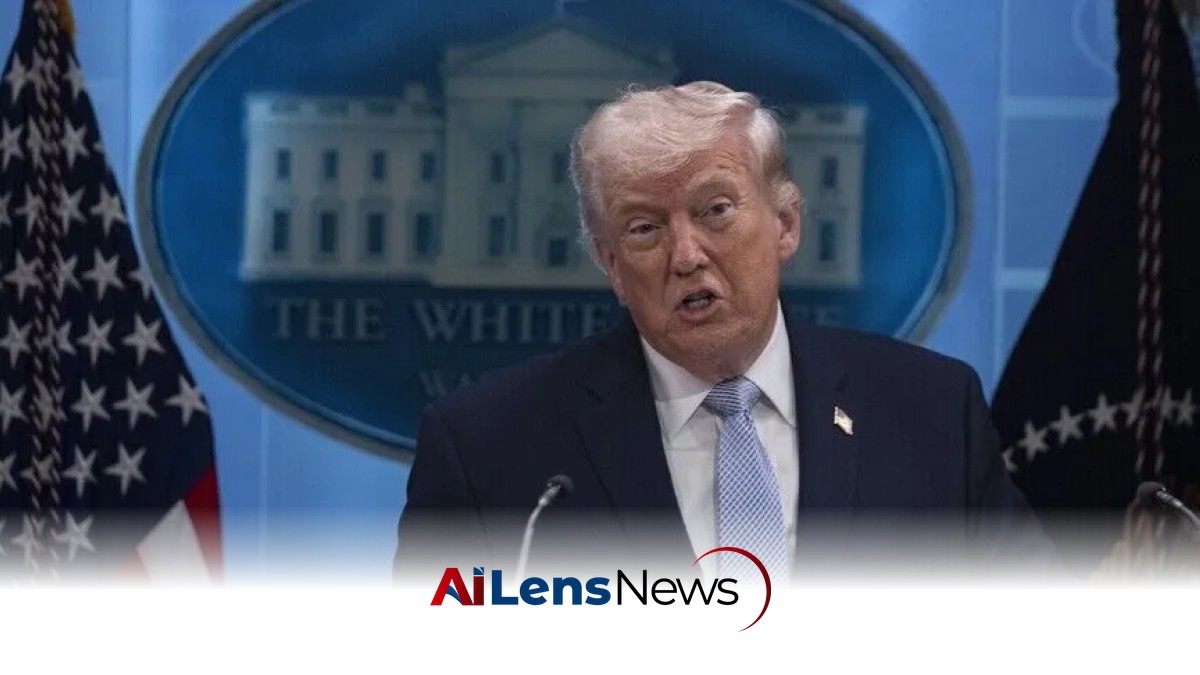



US President Donald Trump announced intentions to declare the Strait of Hormuz a US territory, asserting control amid ongoing tensions with Iran.
Riyadh, Saudi Arabia Aug 16, 2026 ALN: US President Donald Trump said Friday that he would soon declare the Strait of Hormuz a territory of the United States, as Washington and Tehran remain at odds over control and freedom of navigation through the strategic waterway.
The Strait of Hormuz is a narrow passage that connects the Persian Gulf to the Gulf of Oman and the Arabian Sea, serving as a critical chokepoint for global oil transportation. Approximately 20% of the world's oil supply passes through this strait, making it a vital area for international shipping and trade. The geopolitical significance of the strait has made it a focal point of tensions between various nations, particularly the United States and Iran.
“After we finish defeating Iran, which is being very badly defeated, pretty soon I'll be declaring the Hormuz Strait a territory of the United States,” Trump said during remarks at the new Nassau County Police Academy in Garden City, New York. This statement not only underscores the ongoing hostilities between the two nations but also raises questions about international law and the sovereignty of maritime territories.
Trump's comments come amidst a backdrop of heightened military activity and political maneuvering in the region. The US has maintained a significant military presence in the Persian Gulf, citing the need to ensure the safety of shipping lanes and to deter Iranian aggression. The assertion that the US could unilaterally declare the strait as its territory has been met with skepticism and concern from various international observers and legal experts, who argue that such a move would violate international maritime law.
In response to Trump's claims, Iranian military officials have disputed Washington's assertions of control over the waterway. Iran's central military command on Thursday described the assertions as “baseless lies and fabrications.” This reflects Iran's long-standing position that it has sovereignty over its territorial waters and that any foreign military presence is unwelcome. The Iranian government has historically viewed the Strait of Hormuz as a national security interest, and any threats to its control over the strait are met with strong rhetoric and military posturing.
Despite the restrictions imposed by the US, vessels have continued to transit the strait. As of August 12, 3,371 vessels had crossed the waterway in the 166 days since the war began, representing around 20% of pre-war traffic volumes, according to data from commodities and shipping analytics firm Kpler cited by CNN. This statistic highlights the resilience of maritime trade in the region, despite the dangers posed by ongoing military conflicts and geopolitical tensions.
The US and Iran previously agreed to a Pakistan-brokered ceasefire in April and later signed an agreement on June 17 that launched negotiations toward a final settlement. However, the talks subsequently stalled over disagreements involving security guarantees and freedom of navigation through the Strait of Hormuz. The failure to reach a consensus has exacerbated tensions and has led to a resumption of hostilities.
Fighting resumed between July 8 and 24, with Washington carrying out strikes on targets inside Iran. Tehran responded by attacking what it described as US military facilities and equipment in several Arab countries, including Jordan, Bahrain, and Kuwait. This cycle of retaliation underscores the fragility of the situation in the region and the potential for further escalation if diplomatic solutions are not pursued.
The implications of Trump's declaration, if it were to occur, could be far-reaching. Such a move could provoke a strong reaction from Iran, which has warned that it would defend its interests in the region vigorously. Additionally, it could strain US relations with its allies in the region, many of whom rely on the stability of the Strait of Hormuz for their own economic security. Countries like Saudi Arabia and the United Arab Emirates, which have substantial oil exports that pass through the strait, would be particularly concerned about any actions that could lead to increased military conflict.
Furthermore, the international community, including organizations such as the United Nations, would likely view a unilateral declaration of territory by the US as a breach of established norms regarding international waters. The United Nations Convention on the Law of the Sea (UNCLOS) outlines the rights of nations to navigate freely in international waters, and a declaration of sovereignty over the Strait of Hormuz could lead to significant legal and diplomatic challenges.
The Strait of Hormuz has historically been a flashpoint for international tensions, particularly since the 1979 Iranian Revolution, which transformed Iran into a theocratic state and led to a significant deterioration of US-Iran relations. The US has frequently engaged in military operations in the region, citing the need to protect its interests and those of its allies, particularly in the context of oil supply security.
In recent years, the US has employed a strategy of maximum pressure against Iran, which includes a series of economic sanctions aimed at crippling the Iranian economy. This has further heightened tensions, as Iran has responded with aggressive posturing, including threats to close the Strait of Hormuz in response to perceived threats against its sovereignty.
In the context of such a declaration by Trump, one must also consider the historical precedents. The US has previously engaged in actions that have been interpreted as attempts to exert control over international waterways, but a formal declaration of territory over the Strait of Hormuz would be unprecedented and likely provoke a strong backlash not only from Iran but also from other nations that rely on the strait for trade.
Moreover, the potential for military confrontation in the region remains high. The presence of US naval forces in the Persian Gulf has often been met with hostility from Iranian forces, who have conducted various military drills and exercises in the vicinity of the strait. Any miscalculations or accidental engagements could result in a rapid escalation of hostilities, drawing in regional allies and potentially impacting global oil markets.
In conclusion, Trump's plan to declare the Strait of Hormuz a US territory highlights the ongoing and complex nature of US-Iran relations. As both nations navigate the challenges of military engagement, economic sanctions, and diplomatic negotiations, the situation remains precarious. The potential for further conflict exists, and the international community continues to watch closely as events unfold in this critical region of the world. The outcome of these tensions will not only affect the immediate players involved but could also have broader implications for global trade, energy security, and international law. As the situation evolves, it will be crucial for diplomatic channels to remain open to prevent escalation and seek a peaceful resolution to the ongoing disputes.
To learn more about the latest developments in Political Controversies, stay updated with our exclusive reports and analyses on AILensNews.

