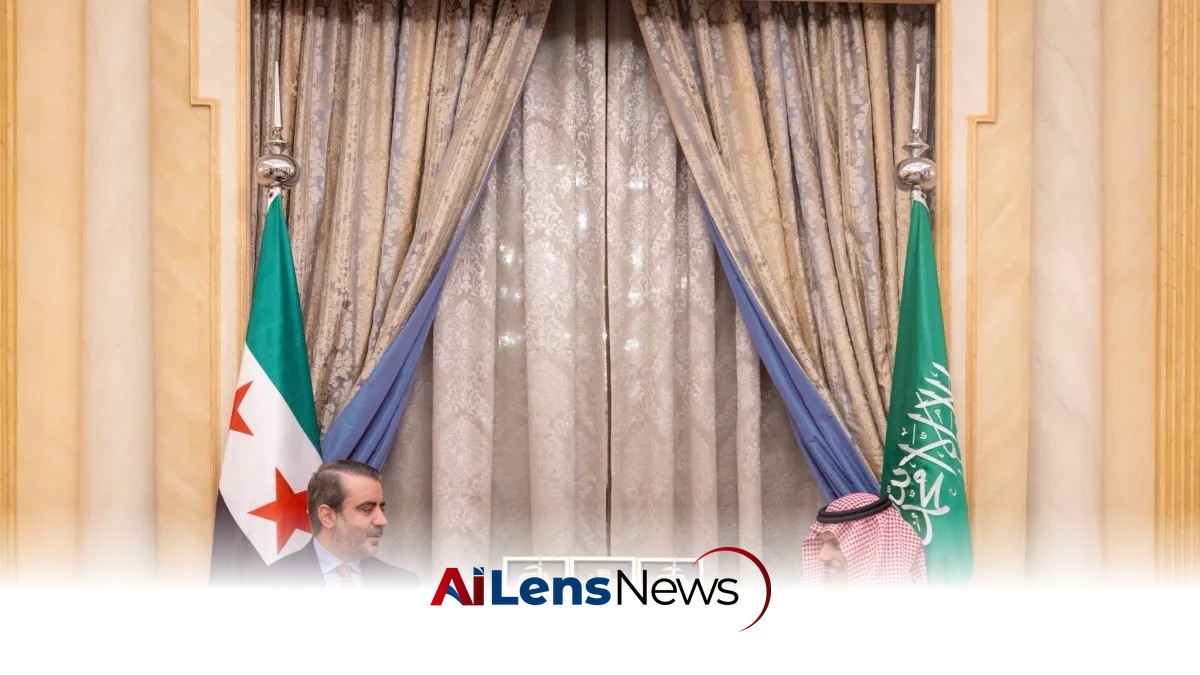


Saudi Foreign Minister Prince Faisal bin Farhan and Syrian counterpart Asaad Al-Shaibani met to enhance cooperation and discuss regional stability.
Riyadh, Saudi Arabia Jul 16, 2026 ALN: Saudi Foreign Minister Prince Faisal bin Farhan received Syrian Foreign Minister Asaad Al-Shaibani in Riyadh on Wednesday to discuss bilateral relations and regional developments.
The two ministers reviewed ties between Saudi Arabia and Syria and explored ways to strengthen cooperation across various sectors. This meeting is significant in the context of the evolving geopolitical landscape in the Middle East, where relationships among nations are being redefined in light of recent events.
The backdrop of this meeting is essential to understanding its implications. For many years, Syria has been embroiled in a devastating civil war that began in 2011, leading to a humanitarian crisis and significant geopolitical tensions in the region. Saudi Arabia, traditionally a key player in the Arab world, had distanced itself from the Syrian government under President Bashar al-Assad, supporting opposition groups instead. However, recent shifts in diplomatic strategies have prompted a reevaluation of relationships.
In recent months, there has been a noticeable thaw in relations between Syria and several Arab states, including Saudi Arabia. This shift can be attributed to various factors, including the desire for regional stability, the need to address security concerns related to terrorism, and the economic implications of prolonged conflict in Syria. The Syrian civil war has not only affected Syria but has also had ripple effects on neighboring countries, leading to increased refugee flows and security challenges.
During the meeting, the foreign ministers likely addressed the potential for economic cooperation, which could include trade agreements, investment opportunities, and collaborative projects aimed at rebuilding Syria's war-torn infrastructure. Saudi Arabia has significant resources and expertise in various sectors, including energy, construction, and technology, which could be beneficial for Syria as it seeks to recover from years of conflict.
Moreover, the discussion of regional developments is critical, especially considering the ongoing tensions involving Iran and its influence in the region. Saudi Arabia has been concerned about Iran's role in supporting militias in Syria and Lebanon, which has fueled sectarian divisions and instability. Strengthening ties with Syria could be seen as a strategic move by Saudi Arabia to counteract Iranian influence and foster a more unified Arab stance in dealing with regional challenges.
In addition to security and economic cooperation, the ministers may have explored cultural and social exchanges, which can play a vital role in rebuilding trust and fostering a sense of regional identity. Cultural diplomacy can help bridge divides and promote understanding among nations that have experienced significant tension.
The implications of this meeting extend beyond bilateral relations. It reflects a broader trend among Arab states to reconsider their positions regarding Syria. The Arab League, of which both Saudi Arabia and Syria are members, has been discussing the possibility of reinstating Syria's membership, which had been suspended in response to the government's violent crackdown on protests during the civil war. A reintegration of Syria into the Arab League could pave the way for increased diplomatic engagement and cooperation among member states.
Furthermore, the meeting comes at a time when the international community is also reassessing its approach to Syria. With the Syrian government regaining control over significant portions of the country, there is a growing recognition that a political solution is necessary to end the conflict and address the humanitarian needs of the Syrian people. Saudi Arabia's engagement with Syria could signal a willingness to participate in a broader dialogue aimed at achieving peace and stability in the region.
As the situation continues to evolve, it will be crucial to monitor the outcomes of this meeting and subsequent engagements between Saudi Arabia and Syria. The potential for increased cooperation could lead to positive developments not only for the two countries but for the region as a whole, provided that the underlying issues of security, governance, and humanitarian needs are adequately addressed.
In conclusion, the meeting between Prince Faisal bin Farhan and Asaad Al-Shaibani marks a significant step in the re-establishment of relations between Saudi Arabia and Syria. It underscores the complexities of Middle Eastern geopolitics and the ongoing efforts to foster stability and cooperation in a region that has faced considerable turmoil. As both nations look to the future, the implications of their discussions will likely resonate throughout the Arab world and beyond, shaping the dynamics of regional politics for years to come.
In the broader context, the realignment of relationships in the Middle East is not a new phenomenon. Over the past few years, several Arab states have been reevaluating their diplomatic postures, particularly in light of the shifting balance of power and the emergence of new threats. The rise of non-state actors, the proliferation of extremist groups, and the impact of external powers have all contributed to a climate of uncertainty in the region.
Saudi Arabia, in particular, has been navigating a complex web of alliances and rivalries. The kingdom's leadership has recognized that maintaining stability in the region requires engaging with a diverse array of actors, including those it has historically opposed. This pragmatic approach may be driven by a recognition that the old paradigms of regional politics are no longer sufficient to address contemporary challenges.
The Syrian civil war has had profound implications not only for Syria but also for its neighbors and the broader region. The influx of millions of Syrian refugees into neighboring countries, including Lebanon, Jordan, and Turkey, has strained resources and heightened tensions. Additionally, the conflict has exacerbated existing sectarian divides, particularly between Sunni and Shia communities, further complicating the geopolitical landscape.
Moreover, the economic toll of the war has been staggering. Syria's infrastructure has been decimated, and its economy is in ruins. The potential for reconstruction and investment is significant, but it requires a stable and secure environment, which has been elusive for years. Saudi Arabia's willingness to engage with Syria could signal a recognition of the need for collective action to address these economic challenges.
As regional dynamics continue to evolve, the role of external powers will also be significant. The United States, Russia, and Iran have all played pivotal roles in shaping the conflict and its aftermath. The interplay between these powers and their interests will undoubtedly influence the trajectory of Saudi-Syrian relations and the broader regional landscape.
In summary, the meeting between the Saudi and Syrian foreign ministers represents a critical juncture in the ongoing evolution of Middle Eastern geopolitics. It reflects a growing recognition among Arab states of the necessity for dialogue and cooperation, even with former adversaries. As both countries navigate the complexities of their relationship, the outcomes of their discussions will have far-reaching implications for regional stability, security, and economic recovery.
To learn more about the latest developments in Elections, stay updated with our exclusive reports and analyses on AiLensNews.

