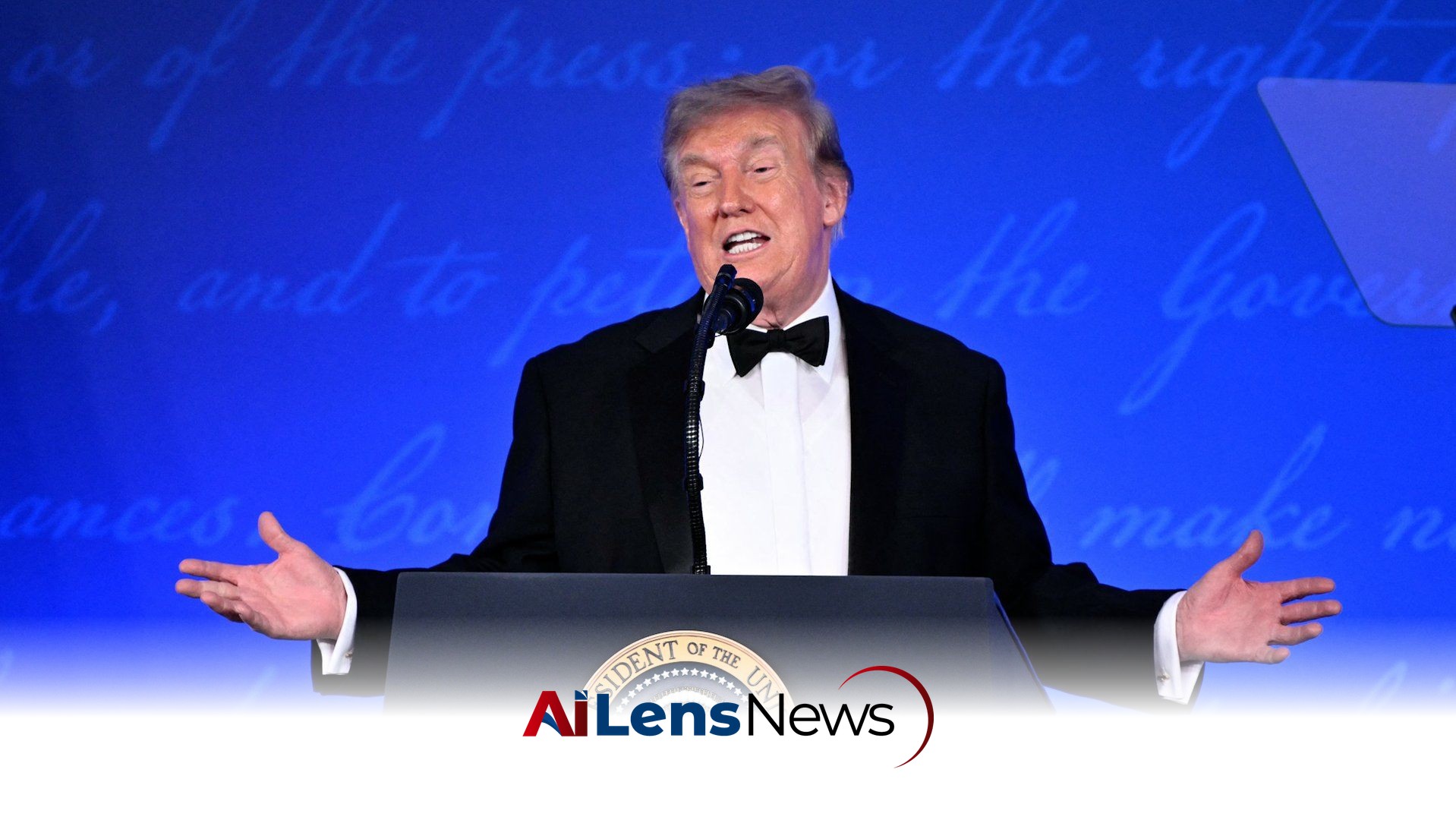


US President Donald Trump faces criticism for derogatorily using 'Palestinian' while mocking Senator Chuck Schumer at a recent event.
Doha, Qatar Jul 25, 2026 ALN: US President Donald Trump is facing significant backlash after he used the term ‘Palestinian’ as an insult while mocking Democratic Senator Chuck Schumer during the White House Correspondents’ Dinner. This remark has drawn widespread condemnation from various quarters, highlighting the sensitivity surrounding the term in the context of the ongoing Israeli-Palestinian conflict.
During his speech, Trump aimed his comments at Schumer, suggesting that the senator's stance on certain issues was akin to that of a 'Palestinian.' The audience's reaction was mixed, with some laughter but also audible gasps from those who found the comment offensive. This incident has sparked a renewed debate about the implications of language in political discourse, particularly regarding sensitive ethnic and national identities.
The backlash has been swift, with critics arguing that using 'Palestinian' in a derogatory manner perpetuates harmful stereotypes and undermines the complexities of the Israeli-Palestinian situation. Advocacy groups and political commentators have taken to social media to express their dismay, calling for a more respectful discourse surrounding such sensitive topics. The term 'Palestinian' is not merely a descriptor of nationality; it is tied to a long history of conflict, displacement, and struggle for self-determination. Many feel that reducing it to an insult trivializes the real suffering experienced by Palestinians and ignores the broader geopolitical implications of the Israeli-Palestinian conflict.
To understand the gravity of Trump's remarks, it is essential to consider the historical context of the Israeli-Palestinian conflict. This conflict has deep roots, dating back to the early 20th century, when nationalist movements emerged among both Jews and Arabs in the region. The establishment of the State of Israel in 1948 led to the displacement of hundreds of thousands of Palestinians, an event known as the Nakba, or catastrophe. Since then, the conflict has been marked by violence, failed peace processes, and ongoing disputes over territory, rights, and recognition.
The term 'Palestinian' encompasses a diverse group of people with varied experiences, identities, and aspirations. For many, it signifies resilience in the face of adversity and a quest for justice and recognition on the international stage. By using it as an insult, Trump not only disrespects this identity but also risks further inflaming tensions between different communities within the United States and abroad.
Political leaders have a responsibility to choose their words carefully, particularly when discussing topics that affect millions of people globally. The incident serves as a reminder of the power of words and the responsibility that comes with public office. Language can shape perceptions and influence public sentiment, and in a politically charged environment, careless remarks can have far-reaching consequences.
Furthermore, Trump's comments come at a time when the Israeli-Palestinian conflict remains a contentious issue in American politics. Support for Israel has traditionally been strong among many segments of the American population, including evangelical Christians and certain Jewish communities. However, there is also a growing movement advocating for Palestinian rights, particularly among younger voters and progressives. This demographic shift is changing the landscape of American political discourse surrounding the conflict.
In recent years, there has been a rise in movements such as Boycott, Divestment, Sanctions (BDS), which calls for various forms of economic and cultural pressure against Israel until it complies with international law regarding Palestinian rights. The backlash against Trump's remarks may further galvanize these movements, as activists and organizations seek to highlight the importance of respectful dialogue and understanding in addressing the complexities of the conflict.
The implications of Trump's comments extend beyond the immediate backlash. They may influence his political standing, especially among voters who prioritize sensitivity and respect in political dialogue. As the 2024 presidential election approaches, candidates will need to navigate issues of race, identity, and international relations with care. For Trump, who has faced criticism for his rhetoric in the past, this incident could serve as a litmus test for how he addresses contentious issues moving forward.
In response to the outrage, some members of Congress have called for more robust discussions about the language used in political discourse. They argue that elected officials should strive to foster an environment of respect and understanding, particularly when discussing issues that have historically been divisive. This sentiment echoes a broader call for civility in politics, which has been increasingly challenged in recent years.
As the fallout continues, it remains to be seen how this incident will impact Trump's political standing and the broader discourse around the Israeli-Palestinian conflict. Advocacy groups are likely to continue pushing for a more nuanced and respectful conversation about Palestinian rights and the complexities of the conflict. The incident may also prompt other political leaders to reflect on their use of language and the potential consequences of their words.
In conclusion, Trump's use of 'Palestinian' as an insult during a high-profile event has sparked significant outrage and serves as a reminder of the importance of language in political discourse. As discussions about the Israeli-Palestinian conflict continue to evolve, the responsibility lies with leaders to engage in a manner that is respectful, informed, and sensitive to the histories and identities of those involved. The reactions to this incident may shape the political landscape in the United States and influence how future conversations about the conflict are framed.
This situation underscores the broader implications of political rhetoric in a multicultural society. The intersection of identity, politics, and language is increasingly relevant in today's globalized world, where leaders are expected to navigate complex social dynamics with care. As political discourse continues to evolve, it is crucial for leaders to recognize the weight their words carry and the potential they have to either unite or divide communities.
Moreover, this incident reflects a growing trend where the language used by politicians is scrutinized more than ever. In an age of social media, where statements can be shared and amplified rapidly, the stakes for politicians have never been higher. Each comment has the potential to resonate far beyond its initial context, influencing public opinion and international relations alike.
The reaction to Trump's remarks may also serve as a catalyst for broader discussions about representation and the narratives that shape public understanding of the Israeli-Palestinian conflict. Advocacy groups may seize this opportunity to advocate for more inclusive and accurate representations of Palestinian experiences in media and political discourse, challenging dominant narratives that often marginalize their voices.
In light of this incident, it is essential for all stakeholders—politicians, activists, and the media—to engage in a more thoughtful and constructive dialogue about the Israeli-Palestinian conflict. This includes acknowledging the historical grievances and aspirations of both Palestinians and Israelis, and striving for a discourse that promotes understanding rather than division.
Ultimately, the fallout from Trump's remarks could lead to a reassessment of how political leaders communicate about sensitive issues. As the nation grapples with questions of identity, belonging, and justice, the imperative for respectful dialogue becomes even more pressing. The responsibility to foster a more inclusive political environment rests not only with individual leaders but also with the collective societal commitment to demand more from those in power.
To learn more about the latest developments in Political Controversies, stay updated with our exclusive reports and analyses on AiLensNews.

