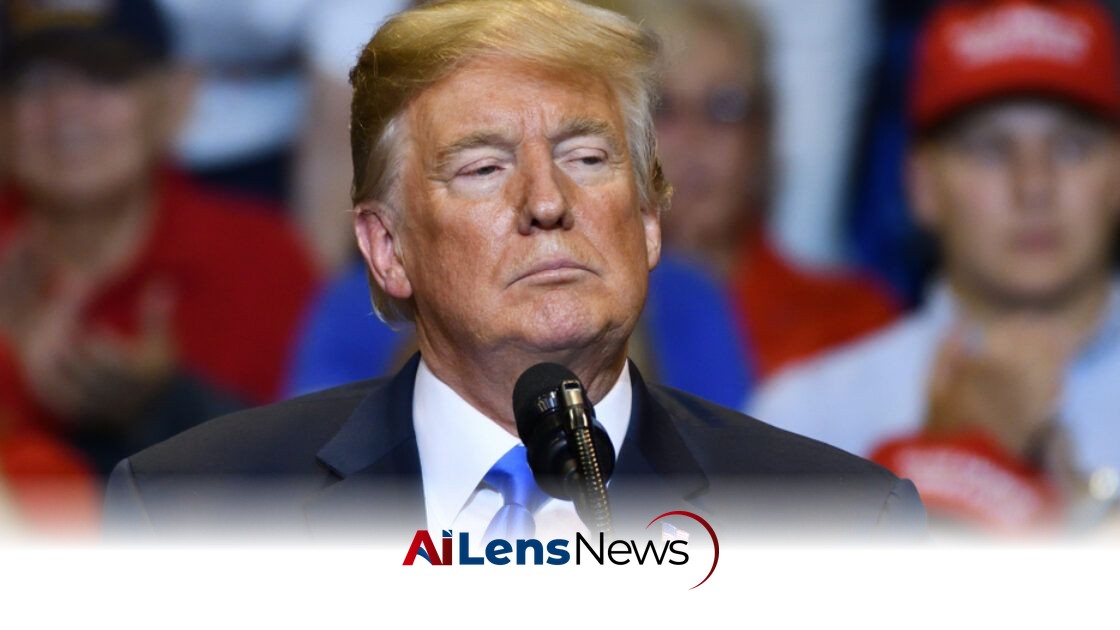



US President Donald Trump reveals a significant agreement for Hamas disarmament and Israeli withdrawal from Gaza, thanking Qatar and other mediators.
Doha, Qatar Aug 2, 2026 ALN: On 31 July 2026, US President Donald Trump announced that a historic agreement was reached for the disarmament of Hamas and the withdrawal of Israeli forces from the Gaza Strip, expressing his gratitude to Qatar and the mediators for their efforts in reaching this agreement.
This announcement marks a significant milestone in the ongoing conflict between Israel and Palestinian groups, particularly Hamas, which has been a focal point of violence and instability in the region for decades. The Gaza Strip, a densely populated area, has been the site of multiple conflicts, leading to substantial humanitarian crises and international concern over the conditions faced by its residents.
In a post on his official Truth Social account, Trump stated:
"Today, the Board of Peace reached a historic agreement for the complete disarmament of Hamas and all other armed groups in Gaza. This is a monumental step toward lasting peace and security."
The agreement is set to be implemented through carefully structured phases, which is crucial for ensuring that all parties adhere to the terms and that the disarmament process is conducted in a manner that promotes stability. Upon completion of disarmament, Israeli forces will withdraw from Gaza, a move that could significantly alter the dynamics of the region and the relationship between Israel and Palestine.
The implications of this agreement are profound. For years, the Israeli military has maintained a significant presence in Gaza, citing security concerns due to Hamas's activities, including rocket attacks on Israeli territory. The withdrawal of Israeli forces could lead to a reduction in military confrontations, but it also raises questions about the security vacuum that may be left behind and how it will be addressed.
Trump expressed his gratitude to Qatar, saying:
"I would like to thank the mediators Egypt, Qatar, and Turkiye for their important efforts, and especially my outstanding team who made this historic breakthrough possible."
Qatar, Egypt, and Turkiye have played pivotal roles in mediating various ceasefires and peace initiatives in the past, often leveraging their relationships with both Hamas and Israel to facilitate dialogue. Their involvement in this agreement underscores the importance of regional cooperation in addressing the Israeli-Palestinian conflict. Each of these nations has vested interests in the stability of Gaza, as unrest can have spillover effects, impacting their own national security and economic stability.
Trump described the agreement as "a major historic achievement in the implementation of the Trump 20-point plan" to end the war. This 20-point plan, which was unveiled earlier in his presidency, aimed to address various aspects of the Israeli-Palestinian conflict, including security arrangements, economic development, and the establishment of a Palestinian state. The plan has faced criticism and skepticism from various stakeholders, particularly regarding its feasibility and fairness to the Palestinian people.
In addition to the disarmament of Hamas, the agreement includes the establishment of an international stabilization force that will work alongside a new Palestinian police force to assume responsibility for Gaza. This aspect is particularly noteworthy, as it suggests a shift towards international involvement in maintaining order and security in the region. The presence of an international force could help to deter violence and provide a framework for governance, but it also raises concerns about sovereignty and the efficacy of such a force in a complex and volatile environment.
The international community has long been divided over the best approach to resolving the Israeli-Palestinian conflict. Some nations have advocated for a two-state solution, while others have supported different frameworks. The success of this agreement may hinge on the support and cooperation of key international actors, including the United Nations, the European Union, and various Arab states.
The announcement of this agreement comes at a time when tensions in the region have been particularly high. The ongoing humanitarian crisis in Gaza, exacerbated by blockades and military operations, has drawn widespread condemnation and calls for action from human rights organizations and global leaders alike. The prospect of disarmament and a withdrawal of Israeli forces could provide much-needed relief to the civilian population, but it also raises critical questions about the future governance of Gaza and the role of Hamas.
Hamas, which has governed Gaza since 2007, has been designated a terrorist organization by several countries, including the United States and Israel. The group's disarmament is a contentious issue, as it is seen by many as essential for peace, while others argue that it could lead to further instability if not handled delicately. The agreement’s success will depend on the willingness of Hamas to comply with disarmament and the ability of the new Palestinian police force to maintain order in the absence of armed groups.
Moreover, the announcement has the potential to reshape the political landscape within both Israeli and Palestinian societies. For Israel, the withdrawal of forces could be perceived as a victory for peace, but it could also face backlash from factions that advocate for a more hardline approach to security. For Palestinians, the establishment of a new police force and the potential for self-governance could be seen as a step toward greater autonomy, but it may also lead to internal divisions if not all factions agree to the terms laid out in the agreement.
In conclusion, while the announcement of a historic agreement for the disarmament of Hamas and the withdrawal of Israeli forces from Gaza is a significant development in the quest for peace, its implementation will be fraught with challenges. The success of this initiative will depend on the cooperation of all parties involved, the effectiveness of international mediation, and the ability to address the underlying issues that have fueled the conflict for decades. As the world watches closely, the coming months will be critical in determining whether this agreement can pave the way for lasting peace in a region long plagued by violence and instability.
To learn more about the latest developments in Elections, stay updated with our exclusive reports and analyses on AILensNews.

