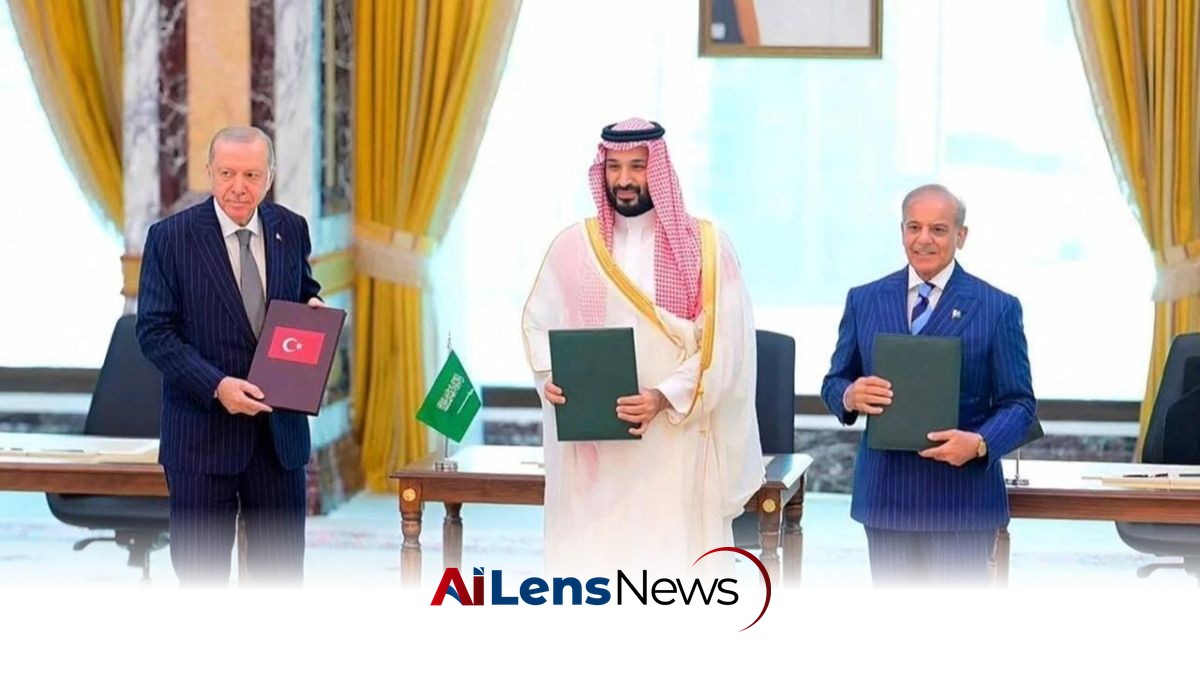



A new military agreement among Saudi Arabia, Pakistan, and Turkey aims to enhance regional security through joint exercises and defense cooperation.
Doha, Qatar Aug 14, 2026 ALN: In a significant development within the geopolitical landscape of the Middle East and South Asia, Turkey, Saudi Arabia, and Pakistan have formalized a military pact aimed at bolstering their defense capabilities and enhancing cooperation among the three nations. This agreement, known as the "Makkah Joint Defence Agreement," was signed on August 7 and marks a strategic alignment of these regional powers in response to rising security threats, particularly from Iran.
The backdrop to this agreement is a complex and often volatile regional environment. In recent years, tensions have escalated in the Middle East, particularly with Iran's increasing military assertiveness, which has included missile strikes against Gulf oil exporters. These developments have raised alarms among neighboring countries, prompting them to seek ways to enhance their collective security. The Makkah Joint Defence Agreement aims to address these concerns by establishing a framework for mutual defense, similar to NATO's Article 5, which stipulates that an armed attack against one member is considered an attack against all.
At the core of the agreement is the establishment of strategic political and military mechanisms that will facilitate high-level coordination among the defense ministers, foreign ministers, and military leaders of the three countries. This institutionalization of defense ties is seen as a crucial step toward creating a more cohesive and responsive military alliance capable of addressing emerging threats in the region.
The defense ministry of Turkey has outlined several key initiatives under this pact, including joint military exercises that will involve land, naval, and air forces. These exercises are expected to enhance interoperability among the armed forces of the three nations, allowing them to operate more effectively together in times of crisis. Additionally, there is a strong emphasis on developing defense industry cooperation, which will not only focus on the procurement of military equipment but also on joint development and production efforts. This collaboration aims to foster technological advancements in areas such as unmanned systems, electronic warfare, and artificial intelligence, which are increasingly vital in modern warfare.
Turkey, which possesses NATO's second-largest military, brings significant military capabilities to the table. Its involvement in this pact is indicative of its desire to play a more prominent role in regional security dynamics, particularly as it seeks to expand its influence in the Middle East and South Asia. The inclusion of Pakistan, a nuclear-armed nation, and Saudi Arabia, the world's largest oil exporter, further underscores the strategic significance of this alliance. The defense pact is also open to potential expansion, with Egypt being mentioned as a candidate for future inclusion. This openness suggests a vision for a broader coalition that could reshape the security architecture of the region.
In addition to military cooperation, the agreement has implications for economic and political relations among the three countries. By fostering closer ties in the defense sector, Turkey, Saudi Arabia, and Pakistan may also enhance their political cooperation on a range of issues, including counter-terrorism, regional stability, and economic development. This could lead to a more unified approach to addressing common challenges and opportunities in the region.
Moreover, Turkey's participation in meetings aimed at establishing an international coalition to protect Red Sea shipping highlights the broader maritime security concerns that have emerged in recent years. The Red Sea is a critical maritime route for global trade, and any threats to shipping in this area could have significant economic repercussions. By taking a proactive stance on maritime security, Turkey and its partners are signaling their commitment to maintaining stability in key shipping lanes, which is essential for the economic interests of not only the involved nations but also the international community.
The Makkah Joint Defence Agreement also reflects a shift in the geopolitical landscape of the Middle East. As traditional alliances are tested and new partnerships are formed, regional powers are increasingly looking to collaborate on security matters. This trend may lead to the emergence of new defense pacts and security frameworks that could alter the balance of power in the region.
The implications of this agreement extend beyond mere military collaboration. The geopolitical dynamics of the Middle East have been characterized by a series of alliances and rivalries, often shaped by historical grievances, sectarian divides, and competing national interests. The partnership between Turkey, Saudi Arabia, and Pakistan could serve as a counterbalance to Iranian influence, particularly in the context of Iran's support for various non-state actors and its military engagements across the region.
Furthermore, the Makkah Joint Defence Agreement may also have economic ramifications. As these countries strengthen their military ties, they may find opportunities for economic collaboration in defense manufacturing, technology transfer, and joint ventures. This could lead to job creation and technological advancements within their respective defense industries, fostering greater self-sufficiency and reducing reliance on external arms suppliers.
However, the success of the Makkah Joint Defence Agreement will depend on the ability of Turkey, Saudi Arabia, and Pakistan to navigate their diverse political landscapes and maintain a unified front in the face of external threats. Each of these countries has its own set of internal challenges and regional aspirations that could complicate their collaboration. For instance, Turkey's relationships with various Kurdish groups, Saudi Arabia's involvement in Yemen, and Pakistan's ongoing tensions with India are all factors that could influence the dynamics of this trilateral partnership.
Moreover, the potential inclusion of additional nations, such as Egypt, could further complicate the alliance. Egypt has its own strategic interests and relationships, particularly with Gulf states and Western powers. Balancing these interests while fostering a cohesive defense strategy among the three founding nations will require careful diplomacy and negotiation.
As the agreement unfolds, it will be crucial to monitor how these three countries implement their commitments and whether they can effectively coordinate their military efforts. The Makkah Joint Defence Agreement represents a strategic alignment of Turkey, Saudi Arabia, and Pakistan in response to shared security challenges. By enhancing military cooperation and establishing institutional mechanisms for coordination, these nations aim to create a more robust defense posture that can effectively address the evolving threats in their region.
This development not only has implications for the three countries involved but also for the broader geopolitical dynamics of the Middle East and South Asia, as it signals a potential shift toward greater regional cooperation in defense and security matters. As global power dynamics continue to evolve, the ability of regional actors to collaborate effectively will be crucial in shaping the future security landscape of both the Middle East and South Asia.
To learn more about the latest developments in Elections, stay updated with our exclusive reports and analyses on AILensNews.

