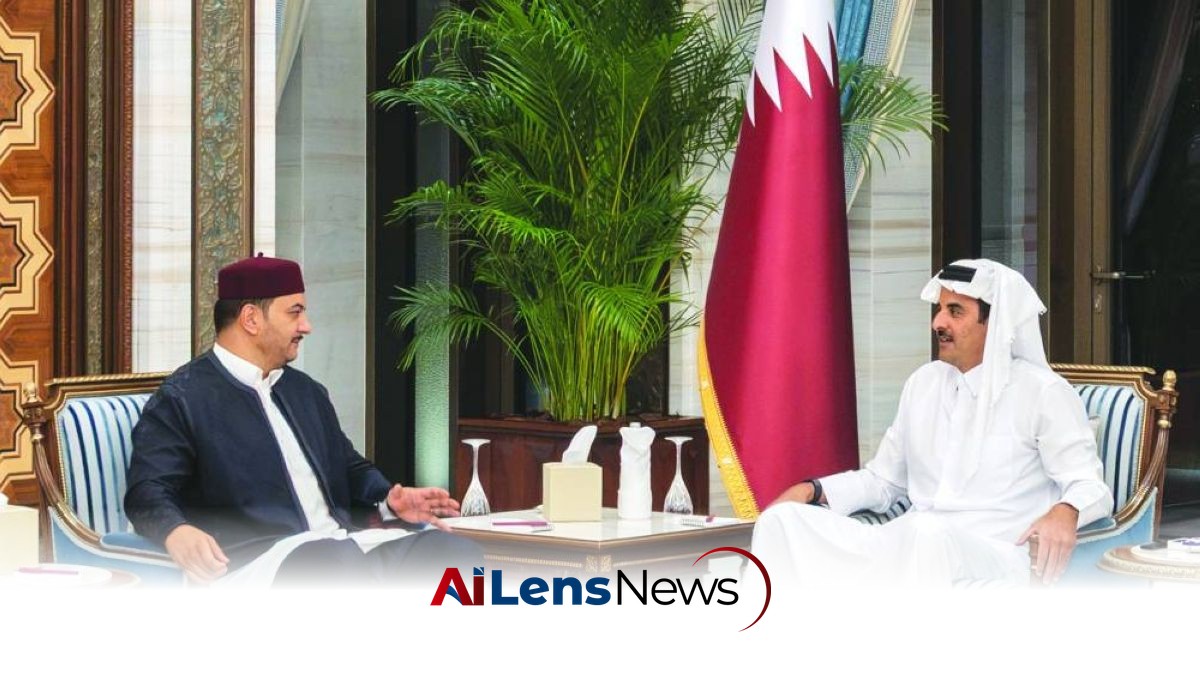


Lt. General Saddam Haftar met with HH the Amir Sheikh Tamim bin Hamad al-Thani to express condolences on the passing of the late Father Amir.
Doha, Qatar Jul 17, 2026 ALN: His Highness the Amir Sheikh Tamim bin Hamad al-Thani met in his office at Lusail Palace with Libya's Lt. General Saddam Khalifa Haftar, who offered condolences on the passing of the late His Highness the Father Amir Sheikh Hamad bin Khalifa al-Thani. This meeting, which took place in a formal setting, underscores the significance of diplomatic engagement in the wake of loss, particularly in the context of leadership transitions and the broader implications for international relations.
During this significant meeting, Lt. General Haftar expressed his heartfelt sympathies, acknowledging the profound loss felt by the Qatari people. The late Father Amir was a pivotal figure in Qatar's development and international relations, having spearheaded initiatives that transformed Qatar into a key player on the global stage. His leadership marked a period of significant economic growth and diversification for the country, as well as a strengthening of diplomatic ties with various nations, including those in North Africa.
The role of the Father Amir in fostering Qatar's foreign policy cannot be understated. Under his guidance, Qatar established itself as a mediator in regional conflicts and an advocate for dialogue and cooperation. This legacy continues to influence Qatar's diplomatic strategies, particularly as it navigates complex relationships in a rapidly changing geopolitical landscape. The condolences offered by Haftar reflect an acknowledgment of this legacy and the role it plays in shaping contemporary relations between Qatar and Libya.
His Excellency Prime Minister and Minister of Foreign Affairs Sheikh Mohammed bin Abdulrahman bin Jassim al-Thani attended the meeting, underscoring the importance of the discussions held. The presence of the Prime Minister indicates that the meeting was not only a formal condolence visit but also an opportunity to engage in dialogue about pressing issues facing both nations. Qatar's foreign policy has often emphasized the importance of regional stability, and the involvement of the Prime Minister suggests a strategic conversation regarding Libya's ongoing political challenges.
The meeting reflects the ongoing diplomatic relations between Qatar and Libya, highlighting the mutual respect and cooperation between the two nations. Historically, Qatar has played a significant role in supporting various factions within Libya, particularly during the Libyan Civil War that began in 2011. Qatar's involvement included providing military and financial support to groups seeking to overthrow the Gaddafi regime, which has shaped its relationships in the region. As Libya continues to grapple with the aftermath of the civil war, which has left the country divided and struggling with governance issues, the importance of maintaining strong diplomatic ties with supportive nations like Qatar becomes even more critical.
As both leaders engaged in dialogue, they reaffirmed their commitment to fostering strong ties and addressing regional challenges collaboratively. The dialogue between Qatar and Libya is particularly relevant in the context of ongoing conflicts in the region, including tensions in neighboring countries and the broader implications of instability in North Africa. Both nations face the challenge of navigating their national interests while promoting peace and stability in a volatile environment.
This visit by Lt. General Haftar marks a significant moment in the context of Libya's political landscape and its relationship with Qatar. Haftar, who has been a controversial figure in Libyan politics, commands significant influence, particularly in eastern Libya. His leadership of the Libyan National Army (LNA) has been characterized by military campaigns aimed at consolidating power, which has often met with resistance from rival factions. The dynamics of Libyan politics are complex, with various groups vying for control and influence, making the role of international allies like Qatar crucial in shaping the future of the nation.
The implications of this meeting extend beyond mere condolences. It serves as a reminder of the interconnectedness of regional politics and the importance of diplomatic channels in addressing both immediate and long-term challenges. As Libya continues to seek stability and governance, the support of nations like Qatar will be vital in fostering dialogue and reconciliation among the various factions.
In conclusion, the meeting not only served as a platform for condolences but also as a reaffirmation of the bonds that unite the two nations in their shared goals and aspirations. The historical context of Qatar's involvement in Libya, combined with the current political landscape, underscores the significance of this diplomatic engagement. As both countries look to the future, the commitment to maintaining strong ties will be essential in navigating the complexities of regional politics and ensuring stability in Libya and beyond.
Libya has been in a state of turmoil since the fall of Muammar Gaddafi in 2011, which led to a power vacuum and ongoing conflict among various factions. The situation has been compounded by external influences, including the involvement of foreign powers that have taken sides in the Libyan conflict. Qatar, under the leadership of the late Father Amir, aligned itself with certain factions during the civil war, which has influenced its current relationships in the region. The complexities of these alliances often require careful diplomatic engagement to ensure that mutual interests are respected and advanced.
Moreover, as Libya continues to face challenges such as economic instability, humanitarian crises, and a fragmented political landscape, the role of international partners like Qatar becomes increasingly significant. The meeting between Lt. General Haftar and the Qatari leaders is indicative of the ongoing efforts to strengthen ties and seek collaborative solutions to the myriad challenges both nations face.
Furthermore, the geopolitical implications of this meeting extend beyond bilateral relations. As regional dynamics shift, the cooperation between Qatar and Libya could influence broader alliances and strategies in the Middle East and North Africa. The importance of dialogue and cooperation in fostering stability cannot be overstated, especially as both nations navigate the complexities of their respective political landscapes.
In light of these factors, the condolences offered by Lt. General Haftar should be viewed as part of a larger diplomatic effort to maintain open lines of communication and foster a spirit of collaboration. As the international community continues to watch the developments in Libya and Qatar, the outcomes of such meetings may play a crucial role in shaping future policies and strategies aimed at promoting peace and stability in the region.
To learn more about the latest developments in Political Controversies, stay updated with our exclusive reports and analyses on AiLensNews.

