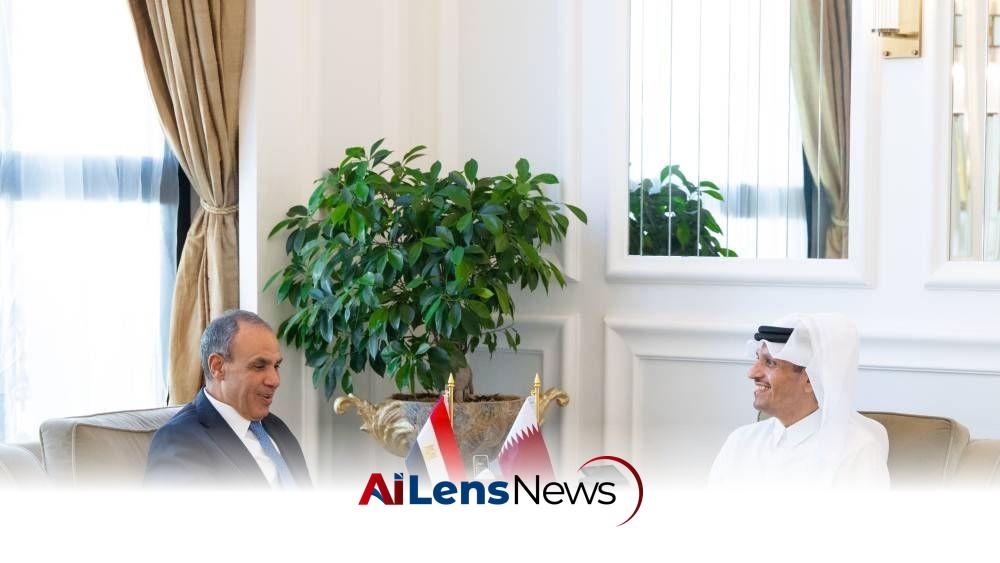


In a recent meeting, Qatar's Prime Minister expressed strong support for diplomatic efforts aimed at reducing regional tensions and enhancing stability.
Doha, Qatar Jul 26, 2026 ALN: Prime Minister and Minister of Foreign Affairs HE Sheikh Mohammed bin Abdulrahman bin Jassim Al Thani met with Minister of Foreign Affairs, International Cooperation, and Egyptians Abroad of the Arab Republic of Egypt HE Dr Badr Abdelatty, who is visiting Doha. This meeting highlights the ongoing diplomatic initiatives in the region, especially in light of the recent geopolitical tensions that have affected various Arab states.
The discussions during the meeting focused on bilateral relations and ways to support and strengthen them. Qatar and Egypt have a long history of diplomatic engagement, but their relations have experienced fluctuations in recent years due to various political dynamics in the Middle East. This meeting signifies a potential thaw in relations and a renewed commitment to collaboration between the two nations.
In addition to bilateral relations, the talks also addressed the latest regional developments. The Middle East has been a focal point of international attention, with ongoing conflicts, economic challenges, and political instability affecting numerous countries. The situation in Syria, the Israeli-Palestinian conflict, and the crisis in Yemen are just a few examples of the complex issues that require urgent diplomatic intervention and cooperation among regional powers.
Particularly, the meeting underscored the importance of diplomatic efforts and joint coordination to de-escalate tensions and enhance security and stability in the region. The Prime Minister and Minister of Foreign Affairs stressed the need for all parties to commit to dialogue and diplomacy. This call for dialogue is not only relevant to Qatar and Egypt but also extends to other key players in the region, including Iran, Saudi Arabia, and the United States.
The reference to the Memorandum of Understanding between the United States of America and the Islamic Republic of Iran is particularly significant. This agreement, aimed at addressing nuclear proliferation concerns, has broader implications for regional security. The Strait of Hormuz, a vital waterway for global oil transportation, has been a point of contention and a flashpoint for military confrontations. Ensuring freedom of navigation in this area is crucial for maintaining not only regional but also global economic stability.
The implications of the Prime Minister's statements are profound. By reiterating Qatar's full support for efforts aimed at defusing tensions, he highlights Qatar's role as a mediator and a stabilizing force in the region. Qatar has historically positioned itself as a neutral party capable of engaging with various factions and countries, making it an essential player in regional diplomacy.
Moreover, the emphasis on a comprehensive agreement that achieves lasting peace in the region reflects a broader desire among many Arab states to move towards stability and cooperation. The recent normalization of relations between several Arab nations and Israel, as well as the ongoing discussions around the Palestinian issue, exemplify the shifting dynamics in Middle Eastern politics.
Qatar's diplomatic efforts are not occurring in isolation. The Gulf Cooperation Council (GCC), which includes Qatar, Saudi Arabia, the United Arab Emirates, Kuwait, Oman, and Bahrain, plays a significant role in fostering regional cooperation. The GCC has been working to address collective security concerns, economic challenges, and political disputes among member states. Qatar's proactive stance in seeking dialogue and cooperation aligns with the broader objectives of the GCC.
Additionally, the meeting with Egypt comes at a time when the country is facing its own set of challenges, including economic pressures and political unrest. Egypt's leadership has sought to strengthen ties with Gulf nations, particularly in light of the financial support and investment that these relationships can provide. The discussions in Doha may pave the way for enhanced economic collaboration and support for Egypt's development initiatives.
As the geopolitical landscape continues to evolve, the role of external powers, including the United States, Russia, and European nations, will also be critical in shaping the future of the Middle East. The U.S. has historically played a significant role in the region, and its relations with both Iran and Gulf states will influence the effectiveness of any diplomatic efforts.
In conclusion, the meeting between Qatar's Prime Minister and Egypt's Foreign Minister signals a commitment to strengthening bilateral ties and addressing regional challenges through dialogue and cooperation. The emphasis on de-escalation and stability reflects a growing recognition among Middle Eastern nations of the need for collaborative approaches to complex issues. As tensions persist, the outcomes of such diplomatic engagements will play a crucial role in determining the future trajectory of peace and security in the region.
To better understand the context of this meeting, it is important to consider the historical backdrop of Qatar-Egypt relations. The two nations have had a complex relationship characterized by periods of both close cooperation and significant tension. Following the Arab Spring in 2011, Qatar and Egypt found themselves on opposing sides of regional conflicts, particularly regarding the political dynamics in Libya and the Muslim Brotherhood's influence in Egyptian politics. This divergence led to a diplomatic rift that saw Egypt imposing a blockade on Qatar, which was only resolved in early 2021 during the GCC summit in Al-Ula, Saudi Arabia.
Since then, both nations have made concerted efforts to mend ties, recognizing that collaboration is essential for addressing shared challenges. This recent meeting is indicative of a broader trend in the region, where countries are increasingly seeking to prioritize diplomatic engagement over confrontation. Such a shift could lead to a more stable and cooperative Middle East, provided that all parties remain committed to dialogue and compromise.
The implications of this diplomatic engagement extend beyond just Qatar and Egypt. As regional powers engage in dialogue, there is potential for a ripple effect that could influence other contentious relationships within the Middle East. For instance, if Qatar and Egypt can successfully navigate their differences and work together, it may encourage other nations, such as Saudi Arabia and Iran, to pursue similar paths of engagement. The potential for a regional rapprochement could open avenues for addressing long-standing conflicts, including those in Syria and Yemen, where the humanitarian crises demand urgent attention.
Furthermore, the economic dimension of this engagement cannot be overlooked. Both Qatar and Egypt are keenly aware of the economic challenges facing their nations, exacerbated by the COVID-19 pandemic and fluctuating global oil prices. Strengthening economic ties could provide much-needed support for Egypt's struggling economy, which relies heavily on remittances from Egyptians working abroad and tourism. Qatar, on the other hand, has significant financial resources that could be leveraged to bolster investment in Egypt's infrastructure and development projects.
Ultimately, the meeting between Qatar's Prime Minister and Egypt's Foreign Minister is not just a bilateral engagement; it represents a crucial step in the broader effort to foster peace, stability, and cooperation in the Middle East. As geopolitical tensions continue to evolve, the commitment to dialogue and diplomatic solutions will be paramount in navigating the complexities of the region's challenges. The outcomes of such meetings will serve as indicators of the potential for a more collaborative and peaceful future in a region that has long been marred by conflict and division.
To learn more about the latest developments in Elections, stay updated with our exclusive reports and analyses on AiLensNews.

