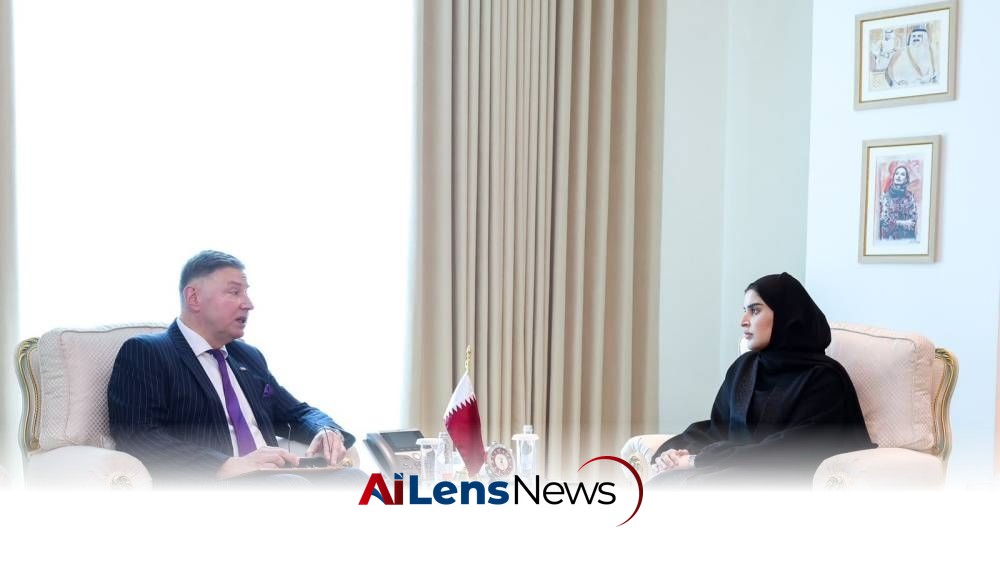


HE Dr Maryam bint Ali bin Nasser Al Misnad engaged with Ambassador Andrii Kuzmenko to discuss bilateral relations and mutual concerns.
Doha, Qatar Jul 26, 2026 ALN: Minister of State for International Cooperation HE Dr Maryam bint Ali bin Nasser Al Misnad met on Sunday with Ambassador of Ukraine to the State of Qatar HE Andrii Kuzmenko.
The meeting discussed bilateral relations and ways to support and strengthen them, along with issues of mutual concern.
This meeting comes at a time when international relations are increasingly complex, particularly in light of the ongoing geopolitical tensions in Eastern Europe. Ukraine has been at the center of global attention since 2014, following the annexation of Crimea by Russia and the subsequent conflict in the eastern regions of Ukraine. The situation escalated dramatically in February 2022 when Russia launched a full-scale invasion of Ukraine, leading to widespread condemnation from the international community and a series of sanctions imposed on Russia by various countries.
In this context, Qatar has emerged as a significant player on the international stage, particularly in its role as a mediator and supporter of diplomatic solutions to conflicts. The country has maintained a balanced foreign policy, seeking to foster relationships with various nations, including those in conflict. This approach aligns with Qatar’s broader strategy of enhancing its global influence and promoting peace and stability in volatile regions.
The discussions between Dr. Al Misnad and Ambassador Kuzmenko likely touched upon the implications of the war in Ukraine for Qatar and the wider region. Qatar has been involved in humanitarian efforts to support Ukraine, providing aid and assistance to those affected by the conflict. The country has also been active in international forums advocating for a peaceful resolution to the crisis, which has resulted in significant humanitarian fallout, including millions of displaced persons and a dire need for reconstruction in Ukraine.
Furthermore, the meeting may have explored potential avenues for economic cooperation between Qatar and Ukraine. Despite the ongoing conflict, Ukraine remains a key player in global agriculture, being one of the largest grain producers in the world. Qatar, which relies heavily on food imports, has been keen on diversifying its supply sources. Strengthening agricultural ties could be mutually beneficial, allowing Qatar to secure food supplies while providing Ukraine with a market for its agricultural products.
In addition to agriculture, there are opportunities for collaboration in other sectors, such as energy, technology, and education. Qatar, with its significant natural gas reserves and expertise in the energy sector, could potentially assist Ukraine in developing its energy infrastructure, which has been severely impacted by the ongoing conflict. Moreover, educational exchanges and partnerships could foster greater understanding and cooperation between the two nations, enhancing Qatar’s role as a hub for knowledge and innovation in the region.
The meeting also highlights the importance of diplomacy in addressing global challenges. As nations navigate the complexities of international relations, dialogue remains a critical tool for resolving disputes and fostering cooperation. Qatar’s engagement with Ukraine illustrates its commitment to maintaining open lines of communication with countries affected by conflict and its willingness to play a constructive role in international diplomacy.
In the broader context, the relationship between Qatar and Ukraine can be seen as part of a larger trend of countries seeking to build alliances and partnerships that transcend traditional geopolitical boundaries. As the world becomes increasingly interconnected, the need for cooperation on issues such as security, trade, and humanitarian assistance becomes more pressing. Qatar’s proactive approach to international cooperation, as exemplified by this meeting, could serve as a model for other nations looking to navigate the complexities of the modern geopolitical landscape.
As the situation in Ukraine continues to evolve, it will be essential for both Qatar and Ukraine to remain engaged in dialogue and collaboration. The outcome of these discussions could have far-reaching implications not only for the two countries but also for the broader region and the international community as a whole. By fostering strong bilateral relations, both nations can work together to address shared challenges and seize opportunities for mutual benefit.
In conclusion, the meeting between Qatar's Minister of State for International Cooperation and the Ukrainian Ambassador underscores the importance of dialogue and cooperation in addressing global challenges. As both countries navigate the complexities of their respective political landscapes, their ability to strengthen bilateral relations will be crucial in promoting stability and prosperity in the region. The implications of this meeting extend beyond the immediate context, reflecting broader trends in international relations and the need for countries to work together in an increasingly interconnected world.
Qatar's foreign policy has been characterized by a commitment to mediation and dialogue, often positioning itself as a neutral ground for discussions between conflicting parties. This strategy has allowed Qatar to maintain amicable relationships with a diverse range of countries, including those involved in contentious geopolitical disputes. The meeting with Ukraine's ambassador illustrates this approach, as Qatar seeks to engage with nations affected by conflict, offering support and fostering dialogue.
The ongoing conflict in Ukraine has had profound implications not only for the country itself but also for global security, energy markets, and humanitarian efforts. As the war continues, the need for international cooperation becomes increasingly apparent. Countries like Qatar, which are willing to engage in diplomatic efforts, play a crucial role in advocating for peace and stability. By meeting with Ambassador Kuzmenko, Qatar demonstrates its willingness to engage with Ukraine and explore avenues for cooperation, even amidst the ongoing crisis.
Moreover, the humanitarian crisis resulting from the conflict in Ukraine has attracted global attention, with millions of individuals displaced and in need of assistance. Qatar's involvement in humanitarian efforts showcases its commitment to global solidarity and support for those affected by crises. By providing aid and assistance, Qatar not only addresses immediate humanitarian needs but also reinforces its image as a responsible member of the international community.
In terms of economic cooperation, the potential for collaboration between Qatar and Ukraine extends beyond agriculture. The energy sector, in particular, presents opportunities for partnership. Qatar is known for its vast natural gas reserves and expertise in energy production and management. As Ukraine seeks to rebuild its energy infrastructure, particularly in the wake of significant damage caused by the conflict, Qatar's experience and resources could be invaluable. Collaborative efforts in energy could enhance Ukraine's energy security and contribute to its economic recovery.
Additionally, the technology sector offers another avenue for collaboration. Both countries can benefit from sharing knowledge and expertise in various technological fields. Qatar's investment in technology and innovation aligns with Ukraine's aspirations for modernization and development. By fostering educational exchanges and partnerships, both nations can cultivate a skilled workforce capable of addressing contemporary challenges.
The significance of this meeting goes beyond bilateral relations; it reflects a broader trend in international diplomacy where nations are increasingly seeking to build partnerships that transcend traditional geopolitical divides. In an age where global challenges such as climate change, security threats, and humanitarian crises require collective action, the importance of dialogue and cooperation cannot be overstated. Qatar's proactive engagement with Ukraine exemplifies this trend, as it seeks to contribute to a more stable and cooperative international environment.
As the geopolitical landscape continues to evolve, the relationship between Qatar and Ukraine may serve as a model for other nations navigating similar challenges. By prioritizing dialogue and collaboration, both countries can work towards addressing shared concerns and leveraging opportunities for mutual benefit. The outcomes of their discussions may not only shape their bilateral relations but also contribute to broader regional stability and international cooperation.
In summary, the meeting between Qatar's Minister of State for International Cooperation and Ukraine's Ambassador represents a significant step toward strengthening bilateral relations amidst a complex geopolitical backdrop. As both countries continue to engage in dialogue and explore avenues for cooperation, the implications of their partnership could resonate beyond their borders, fostering greater understanding and collaboration in an increasingly interconnected world.
To learn more about the latest developments in Elections, stay updated with our exclusive reports and analyses on AiLensNews.

