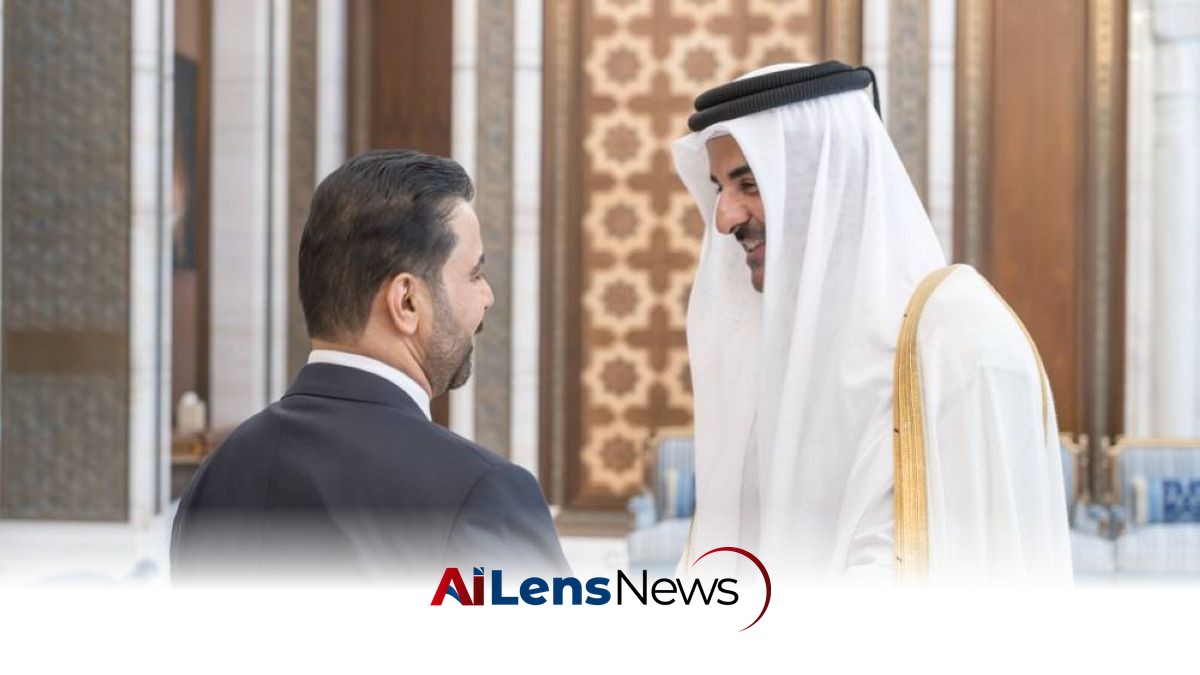


His Highness the Amir Sheikh Tamim bin Hamad Al-Thani and Iraqi Prime Minister Ali Faleh Al-Zaidi held talks to enhance cooperation and address regional issues.
Doha, Qatar Jul 20, 2026 ALN: His Highness the Amir Sheikh Tamim bin Hamad Al-Thani held official talks with Prime Minister of the sisterly Republic of Iraq, Ali Faleh Al-Zaidi, at Lusail Palace on Sunday. This meeting is a significant diplomatic engagement, reflecting the ongoing commitment of both nations to foster and enhance their bilateral relations. The discussions come at a crucial time as both countries seek to navigate the complexities of regional dynamics while reinforcing their historical ties.
At the outset of the talks, HH the Amir welcomed the Iraqi Prime Minister and his accompanying delegation, expressing hope that the fraternal relations between the two countries would continue to grow and prosper across various fields. The cordial welcome underscores the importance that Qatar places on its relationship with Iraq, particularly in light of the historical ties that bind the two nations. Both countries share a rich cultural heritage and have a mutual interest in stability and prosperity in the region. Qatar and Iraq have long-standing connections, with both nations having experienced their share of challenges and triumphs throughout history, which has laid the foundation for a partnership built on mutual respect and shared goals.
For his part, the Iraqi Prime Minister offered condolences on the passing of HH the Father Amir Sheikh Hamad bin Khalifa Al-Thani. This gesture of condolence is notable as it signifies the respect and recognition of the contributions made by the former Amir in shaping Qatar's foreign policy and its relations with neighboring countries, including Iraq. Prime Minister Al-Zaidi also thanked HH the Amir for the warm reception and expressed his hope that the visit would help expand bilateral cooperation and strengthen ties between the two countries across broader horizons. This reflects a mutual desire to not only maintain but also to deepen the collaborative efforts between Qatar and Iraq, especially in the context of a rapidly changing geopolitical landscape.
The two sides reviewed bilateral relations and ways to strengthen and expand cooperation across various fields. This includes discussions on economic partnerships, cultural exchanges, and security cooperation. Qatar has been keen on investing in Iraq's reconstruction efforts, particularly in the aftermath of years of conflict and instability. The Iraqi government has been actively seeking foreign investment to revitalize its economy, and Qatar's involvement could play a crucial role in this process. With Iraq's rich natural resources and strategic location, the potential for economic collaboration is significant, and both nations stand to benefit from enhanced trade and investment opportunities.
They also discussed the most significant regional and international issues and developments, especially the evolving situation in the region. The Middle East has been marked by a series of complex challenges, including political unrest, sectarian tensions, and economic difficulties. Both leaders recognized the necessity of addressing these issues through collaborative efforts and dialogue. The discussions likely touched upon the ongoing conflicts in neighboring countries, the humanitarian crises resulting from these conflicts, and the potential for joint initiatives to promote peace and stability. The regional context is further complicated by the influence of external powers and the shifting alliances among Middle Eastern countries, making diplomatic engagement essential for both Qatar and Iraq.
Both sides stressed the importance of all parties adhering to dialogue and diplomacy and implementing the agreements reached under the Memorandum of Understanding between the United States of America and the Islamic Republic of Iran, including ensuring freedom of navigation through the Strait of Hormuz and promoting regional stability. The Strait of Hormuz is a critical chokepoint for global oil shipments, and any disruption in this area can have significant repercussions on the global economy. Therefore, both Qatar and Iraq have a vested interest in maintaining stability in this strategic waterway. The discussions underscore the interconnectedness of regional security and economic stability, highlighting the need for comprehensive strategies that address both immediate concerns and long-term goals.
This meeting between the Amir of Qatar and the Iraqi Prime Minister is part of a broader trend of increasing diplomatic engagement in the region. In recent years, Qatar has positioned itself as a mediator in various regional conflicts and has sought to build bridges between different factions and countries. This role has been particularly relevant in the context of the Gulf Cooperation Council (GCC) dynamics and the shifting alliances in the Middle East. Qatar's diplomatic efforts have often focused on fostering dialogue and understanding among nations with differing perspectives, which can be instrumental in achieving lasting peace and cooperation.
Furthermore, the meeting reflects Iraq's ongoing efforts to strengthen its international partnerships as it navigates the complexities of its post-conflict reconstruction and governance challenges. The Iraqi government is focused on rebuilding its infrastructure and economy, and partnerships with Gulf states, particularly Qatar, are seen as vital to achieving these goals. Iraq's strategic partnerships can lead to increased foreign investment, technology transfer, and expertise in various sectors, including construction, energy, and education, which are critical for the country's recovery and growth.
In addition to economic cooperation, the discussions likely included cultural and educational exchanges, which can play a crucial role in fostering mutual understanding and goodwill between the two nations. Qatar has invested heavily in education and cultural initiatives, and there may be opportunities for collaboration in these areas, further enriching the bilateral relationship. Educational partnerships can facilitate knowledge sharing and skills development, while cultural exchanges can enhance people-to-people connections, thereby strengthening the ties between the two nations.
As the talks concluded, both leaders likely expressed optimism about the future of Qatar-Iraq relations, emphasizing the need for continued dialogue and cooperation. The outcomes of this meeting may set the tone for future engagements and initiatives aimed at enhancing the partnership between the two countries. This optimism is rooted in the shared vision of both nations to work collaboratively towards achieving common goals and addressing regional challenges.
In conclusion, the official talks between His Highness the Amir Sheikh Tamim bin Hamad Al-Thani and Prime Minister Ali Faleh Al-Zaidi mark a significant step in strengthening the bilateral relations between Qatar and Iraq. The discussions not only highlight the historical ties and mutual interests of both nations but also underscore the importance of collaboration in addressing regional challenges and promoting stability. As both countries move forward, the outcomes of this meeting could pave the way for enhanced cooperation across various sectors, benefiting both nations and contributing to regional peace and prosperity. The commitment to dialogue and partnership reflects a broader understanding of the need for collective action in a complex and often volatile region.
To learn more about the latest developments in Political History & Legacy, stay updated with our exclusive reports and analyses on AiLensNews.

