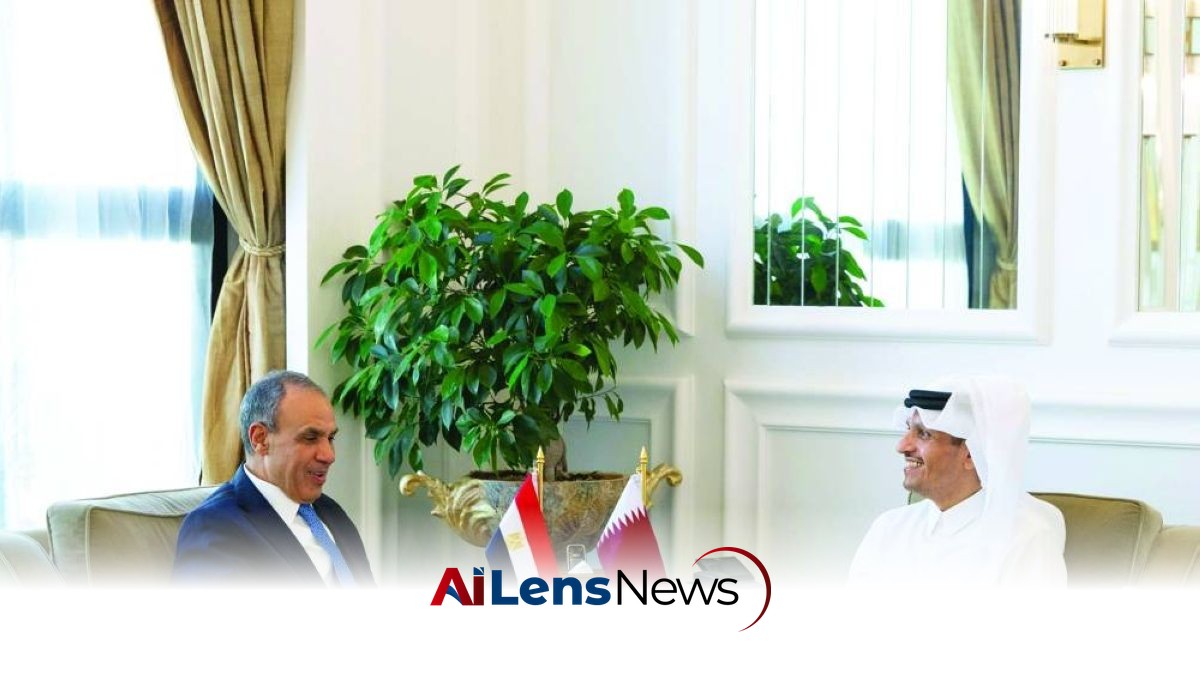


Prime Minister Sheikh Mohammed bin Abdulrahman al-Thani of Qatar met with Egypt's Foreign Minister Dr. Badr Abdelatty to discuss bilateral relations and regional stability.
Doha, Qatar Jul 26, 2026 ALN: In a significant diplomatic meeting held on Saturday, His Excellency Prime Minister and Minister of Foreign Affairs Sheikh Mohammed bin Abdulrahman bin Jassim al-Thani of Qatar welcomed Egypt's Foreign Minister Dr. Badr Abdelatty in Doha. This meeting comes at a time when both nations are looking to strengthen their diplomatic ties amidst ongoing regional tensions that have characterized the Middle East in recent years.
The discussions between the two leaders focused on enhancing bilateral relations and identifying avenues for collaboration, particularly in light of recent developments in the region. The dialogue underscored the importance of joint efforts to de-escalate tensions, which have been exacerbated by various geopolitical conflicts and the shifting alliances within the region. The Middle East has long been a crucible of complex interactions involving national interests, historical grievances, and external influences, making the need for diplomatic engagement even more pressing.
One of the critical points raised during the meeting was the necessity for all parties involved in regional disputes to commit to dialogue and diplomatic solutions. Sheikh Mohammed emphasized the importance of adhering to agreements made within the framework of the Memorandum of Understanding between the United States and Iran. This agreement is pivotal in addressing various issues, including ensuring freedom of navigation in the Strait of Hormuz, a vital waterway for global oil shipments, which has been a flashpoint in U.S.-Iran relations. The Strait of Hormuz is particularly crucial as it sees about 20% of the world's oil supply transit through its waters, making it a focal point for international energy security.
Disruptions in this region can lead to substantial fluctuations in global oil prices and have broader economic implications. Therefore, maintaining security and stability in this region is critical not only for the countries directly involved but also for the global economy. The economic interdependence of nations, particularly regarding energy resources, underscores the importance of diplomatic engagement and conflict resolution in the region.
Qatar has positioned itself as a mediator in various regional conflicts, advocating for dialogue and diplomatic engagement rather than military confrontation. The country’s foreign policy has increasingly focused on fostering relationships across the Arab world, particularly with Egypt, which has historically been a key player in Middle Eastern politics. Qatar’s unique diplomatic approach, characterized by its willingness to engage with a diverse range of actors, has allowed it to play a significant role in mediating conflicts, from the Palestinian-Israeli conflict to the ongoing crises in Libya and Yemen.
Egypt, under President Abdel Fattah el-Sisi, has also been navigating a complex political landscape, balancing its relationships with Gulf states, Iran, and Western powers. The meeting between Sheikh Mohammed and Dr. Abdelatty reflects a mutual recognition of the need for cooperation in addressing shared security concerns, particularly in the context of the ongoing conflicts in Syria, Libya, and Yemen, as well as the Israeli-Palestinian conflict. Each of these crises has far-reaching implications not only for the countries directly involved but also for regional stability and international relations.
The backdrop of this meeting is marked by a series of regional crises, including the ongoing civil war in Syria, which has drawn in various regional and international actors, and the conflict in Yemen, where a Saudi-led coalition is engaged in a protracted war against Houthi rebels. Both crises have led to significant humanitarian challenges and have strained relations among neighboring countries. The humanitarian toll in these conflicts is staggering, with millions displaced and in dire need of assistance, making diplomatic solutions all the more urgent.
Moreover, the recent normalization of relations between Israel and several Arab states, including the UAE and Bahrain, has altered the dynamics in the region, prompting countries like Qatar and Egypt to reassess their foreign policies and alliances. The Palestinian issue remains a contentious topic, with both Qatar and Egypt advocating for a resolution that respects Palestinian rights and sovereignty. The normalization efforts have created a new landscape in which traditional alliances are being tested, and the Palestinian cause continues to resonate deeply among Arab nations, influencing their diplomatic strategies.
In this context, the meeting signifies a potential thawing of relations between Qatar and Egypt, which have experienced tensions in the past, particularly following the Arab Spring and the subsequent political upheaval in Egypt. The two countries have had differing approaches to regional issues, notably regarding the Muslim Brotherhood and its affiliates, which have influenced their diplomatic relations. The reconciliation efforts between Qatar and Egypt could pave the way for a more unified Arab stance on regional issues, fostering greater cooperation in addressing shared challenges.
Sheikh Mohammed’s reiteration of Qatar's full support for efforts aimed at defusing tensions and achieving lasting peace highlights the country's commitment to regional stability. Qatar has been involved in various mediation efforts in conflicts across the region, leveraging its unique position and relationships with multiple stakeholders, including non-state actors. This approach has allowed Qatar to maintain a degree of influence in regional affairs, despite the challenges posed by competing interests and alliances.
The implications of this meeting extend beyond bilateral relations. As Qatar and Egypt work together to navigate the complexities of regional politics, their cooperation could serve as a model for other Arab states looking to engage in constructive dialogue and conflict resolution. The emphasis on dialogue and diplomatic solutions aligns with broader trends in international relations, where multilateralism and cooperative approaches are increasingly seen as essential for addressing global challenges. The potential for collaboration between Qatar and Egypt may inspire other nations to pursue similar paths, fostering a more stable and cooperative regional environment.
As the situation in the Middle East continues to evolve, the partnership between Qatar and Egypt could play a crucial role in shaping the future of regional diplomacy. Their commitment to dialogue and collaboration may foster a more stable and secure environment, which is essential for addressing the myriad challenges facing the region today. The evolving geopolitical landscape necessitates a reassessment of strategies and alliances, and the diplomatic engagement between Qatar and Egypt could be a pivotal step towards achieving a more harmonious and cooperative Middle East.
To learn more about the latest developments in Elections, stay updated with our exclusive reports and analyses on AiLensNews.

