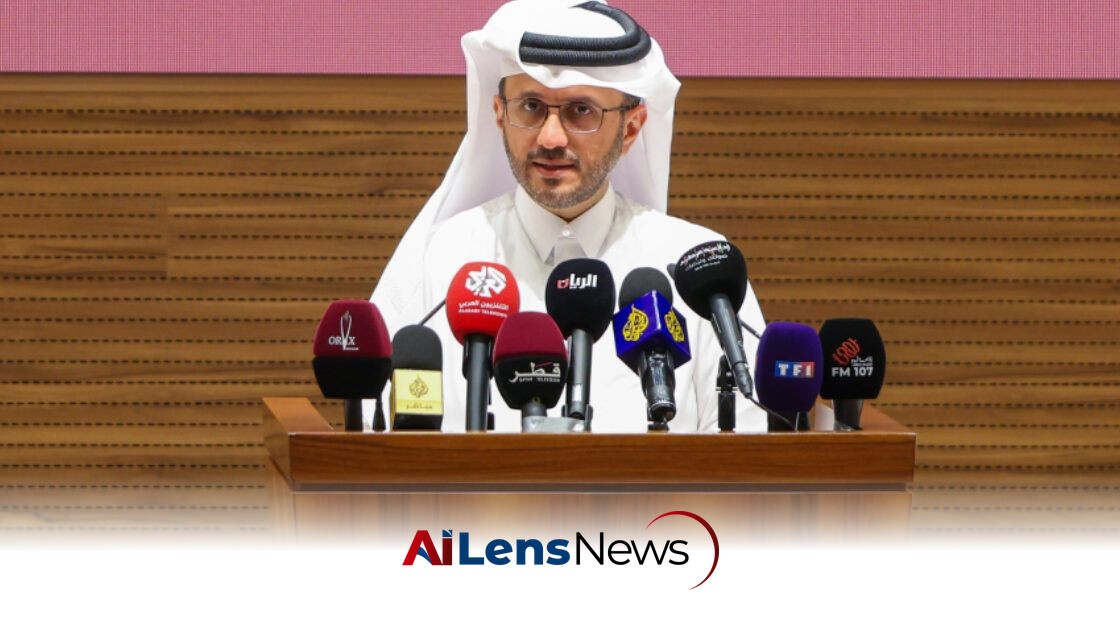



Dr. Majed Al Ansari, Qatar's MoFA spokesperson, condemns Israel's rejection of the Gaza peace plan, calling for international pressure to achieve a ceasefire.
Doha, Qatar Aug 12, 2026 ALN: In a recent statement, Dr. Majed bin Mohammed Al Ansari, the Advisor to the Prime Minister and Official Spokesperson for the Ministry of Foreign Affairs of Qatar, expressed strong disapproval of Israel's rejection of a proposed peace plan aimed at alleviating the humanitarian crisis in the Gaza Strip. This rejection, according to Dr. Al Ansari, signifies a troubling continuation of Israel's reluctance to implement previously agreed-upon measures that were intended to lead to a ceasefire. The situation in Gaza has been dire, with ongoing violence and a humanitarian crisis that has drawn international concern.
Dr. Al Ansari articulated Qatar's hope that the international community would exert significant pressure on Israel to adhere to its obligations under the peace plan, which is seen as a crucial step toward stabilizing the region. The peace plan, which has been backed by various nations and international organizations, is viewed as a pathway to not only cease hostilities but also to address the underlying issues that have fueled the conflict for decades.
During his weekly press briefing, Dr. Al Ansari highlighted a recent declaration by the Hamas movement, which he believes has opened the door for potential breakthroughs in the ongoing negotiations. He emphasized that the onus now lies with Israel to fulfill its commitments and engage constructively in the peace process. The international community's role is pivotal in this context, as it can provide the necessary diplomatic pressure to encourage compliance from all parties involved.
Qatar has positioned itself as a mediator in the Israeli-Palestinian conflict, collaborating closely with key partners, including the United States, Egypt, and Turkey. Dr. Al Ansari noted that despite the ongoing violence in Gaza and the West Bank, which has resulted in increasing casualties and attacks on civilian infrastructure, Qatar remains committed to facilitating dialogue and advancing the peace process. The escalating situation has raised alarm among humanitarian organizations, prompting calls for immediate action to protect civilians and ensure access to essential services.
Dr. Al Ansari underscored the critical need for the international community to adopt a clear and decisive stance against the actions of Israel in the region. He reiterated Qatar's dedication to working alongside its regional partners to formulate a response that is appropriate and proportional to the ongoing Israeli military actions in Gaza. This response is essential not only for the immediate situation but also for the long-term prospects of peace in the region.
In addition to addressing the immediate conflict in Gaza, Dr. Al Ansari referenced a joint statement issued by foreign ministers from several countries, including Qatar, Jordan, the United Arab Emirates, Indonesia, Pakistan, Turkey, Saudi Arabia, and Egypt. This statement condemned Israel's ongoing violations and expressed solidarity with the Palestinian people. Dr. Al Ansari indicated that practical steps to address these violations will be forthcoming, demonstrating a concerted effort among these nations to address the crisis collectively.
Furthermore, the spokesperson discussed the implications of regional diplomacy, particularly in light of recent visits by leaders such as HM Sultan Haitham bin Tarik of Oman. Dr. Al Ansari noted that Oman has been playing a significant role in mediating tensions between the United States and Iran, which could have broader implications for regional stability. He commended Oman's efforts and reaffirmed Qatar's support for initiatives aimed at de-escalation, especially in the context of the ongoing negotiations between the U.S. and Iran.
Dr. Al Ansari also highlighted the importance of ensuring freedom of navigation through the Strait of Hormuz, a critical maritime passage for global trade and energy supplies. He emphasized that restoring this freedom is essential and should align with international law. The Strait has been a flashpoint for tensions between Iran and the U.S., and any disruption could have significant repercussions for global energy markets and security.
On the topic of regional security cooperation, Dr. Al Ansari welcomed the Makkah Joint Defense Agreement between Saudi Arabia, Turkey, and Pakistan. He noted that such collaborations are vital for strengthening security and stability in the region. Qatar's strategic ties with these nations position it as a key player in fostering cooperation and addressing shared security challenges.
Dr. Al Ansari reiterated the collective responsibility of regional countries to ensure security and stability. He pointed out that Qatar actively participates in various regional platforms aimed at enhancing cooperation and coordination among neighboring states. This collaborative approach is seen as essential for addressing the multifaceted challenges facing the region.
Regarding the impact of American economic pressures on Iran, Dr. Al Ansari indicated that the current priority is to reopen the Strait of Hormuz and support ongoing negotiations. He cautioned that any delays in reaching an agreement could hinder efforts to stabilize the region. Qatar, as a mediator, is keen on facilitating dialogue and ensuring that all parties remain engaged in constructive discussions.
Dr. Al Ansari emphasized that the Gulf states share a unified stance on the need to restore the situation in the Strait of Hormuz to its pre-crisis state. He highlighted the significance of ensuring maritime navigation freedom, which is crucial for maintaining regional security. Qatar's support for regional understandings is aimed at protecting both the security of the Strait and the principles of international law.
In conclusion, Qatar's role in the regional peace process and its commitment to mediation efforts underscore its position as a key player in addressing the Israeli-Palestinian conflict and broader regional tensions. The ongoing violence in Gaza and the West Bank, coupled with the complexities of international diplomacy involving Iran and the United States, presents significant challenges. However, Qatar's proactive engagement with its regional partners and the international community reflects a commitment to pursuing peace, stability, and security in a volatile region.
To learn more about the latest developments in Elections, stay updated with our exclusive reports and analyses on AILensNews.

