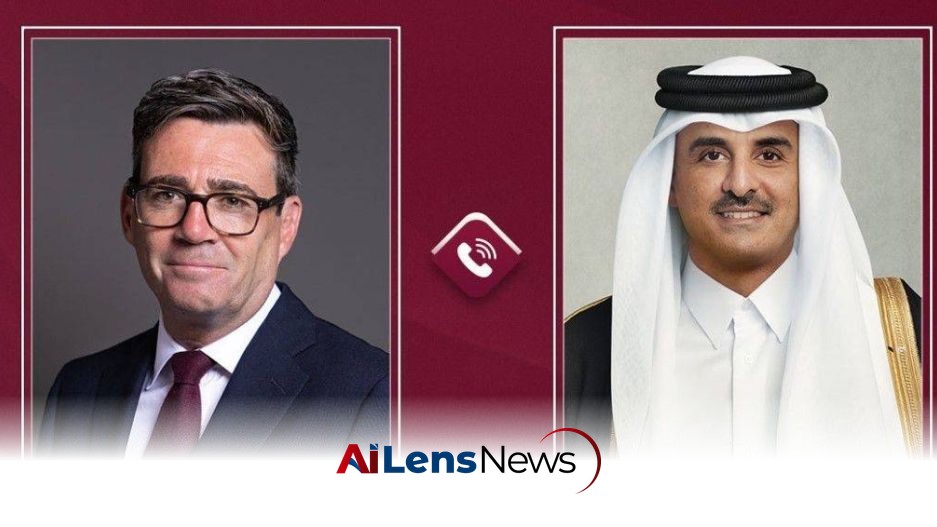


In a recent call, Qatar's Amir Sheikh Tamim bin Hamad Al Thani and UK Prime Minister Andy Burnham discussed bilateral relations, regional issues, and cooperation.
Doha, Qatar Jul 27, 2026 ALN: His Highness the Amir of the State of Qatar Sheikh Tamim bin Hamad Al Thani received a telephone call from Prime Minister of the United Kingdom HE Andy Burnham, who expressed his sincere condolences on the demise of HH the late Father Amir, Sheikh Hamad bin Khalifa Al Thani. This gesture of condolence highlights the longstanding diplomatic ties between Qatar and the United Kingdom, which have evolved significantly over the years. The relationship between the two nations is characterized by mutual respect and a shared commitment to fostering cooperation across various domains.
In turn, HH the Amir expressed his gratitude for these heartfelt sentiments and congratulated the Prime Minister on assuming his office, wishing him success and further development and growth in bilateral relations. The exchange underscores the importance both leaders place on maintaining a robust dialogue that fosters mutual respect and cooperation. This dialogue is particularly crucial given the dynamic nature of international relations and the need for countries to adapt to changing geopolitical landscapes.
Furthermore, the discussion during the call focused on strategic cooperation between the two friendly countries and ways to support and develop it across various fields. This cooperation spans multiple sectors, including trade, education, defense, and energy, reflecting the comprehensive nature of the relationship. Qatar has emerged as a significant player in the global energy market, particularly due to its vast natural gas reserves and its strategic investments in energy infrastructure. Meanwhile, the UK boasts a wealth of experience in finance and education, making collaboration beneficial for both nations. Such partnerships are not only economically advantageous but also serve to enhance cultural and social ties between the two countries.
His Highness praised the strength of these historical relations, which serve their mutual interests and enhance the existing partnership. The relationship between Qatar and the UK has deep roots, dating back to the early 20th century, when the British established a protectorate in the region. Over the decades, this partnership has evolved, with both countries benefiting from economic investments and cultural exchanges. Today, Qatar is one of the UK's largest trading partners in the Gulf region, and the two nations are committed to further strengthening these ties. This historical context is essential in understanding the current dynamics of their relationship, as it provides a foundation upon which future cooperation can be built.
The two sides also discussed the latest regional updates, particularly the developments in the Gaza Strip, as well as the diplomatic efforts to reduce escalation and consolidate security in the Middle East region. The ongoing conflict in Gaza has drawn international attention, with various nations calling for a ceasefire and humanitarian assistance for those affected. Qatar has historically played a mediating role in regional conflicts, leveraging its diplomatic relationships to promote peace and stability. This role is significant, as it positions Qatar as a crucial player in Middle Eastern diplomacy, capable of facilitating dialogue among conflicting parties.
Both sides stressed the importance of continuing dialogue and diplomatic means to address regional issues and support international efforts aimed at consolidating peace, which contributes to ensuring freedom of navigation in the Strait of Hormuz, in order to preserve the security of the region and the world. The Strait of Hormuz is a vital waterway through which a significant portion of the world's oil supply is transported. Any disruption in this area can have far-reaching implications for global energy markets and security. The strategic significance of this waterway further emphasizes the need for cooperative efforts to maintain stability in the region, as any conflict could have dire consequences not just for the immediate area but for the global economy as a whole.
The discussions between HH the Amir and Prime Minister Burnham also reflect the broader geopolitical landscape in which both countries operate. The Middle East has been a focal point of international diplomacy, with various powers vying for influence. The UK, as a traditional ally of many Gulf states, continues to navigate this complex environment while promoting its interests and values. The challenges faced in the region, including ongoing conflicts and the rise of non-state actors, necessitate a coordinated approach among allies to address security threats and promote stability.
In addition to the immediate issues surrounding Gaza and regional security, the call also highlights the necessity for collaborative approaches to address the underlying causes of conflict. Both leaders recognize that sustainable peace can only be achieved through inclusive dialogue that considers the perspectives and needs of all stakeholders involved. This understanding is crucial, as it acknowledges that lasting solutions require the participation of all parties affected by conflict, including marginalized groups and communities.
As the UK faces its own domestic challenges, including economic pressures and political changes, the relationship with Qatar may provide opportunities for mutual support. Qatar's significant investments in the UK, particularly in sectors such as real estate and infrastructure, underscore the economic interdependence that exists between the two nations. Such investments not only bolster the UK economy but also enhance Qatar's global standing and influence. The economic ties between the two countries are further reinforced by various trade agreements and collaborations that seek to enhance bilateral trade and investment flows.
Looking ahead, the conversation between HH the Amir and Prime Minister Burnham sets the stage for future engagements and collaborations. As both countries navigate the complexities of the current geopolitical landscape, their partnership may serve as a model for other nations seeking to foster stability and cooperation in a volatile region. The commitment to dialogue and cooperation can inspire similar efforts among other nations, promoting a culture of collaboration over confrontation.
In conclusion, the recent telephone call between the Amir of Qatar and the UK Prime Minister reflects a commitment to maintaining strong diplomatic ties and addressing pressing regional issues collaboratively. As both leaders continue to engage in dialogue, the potential for enhanced cooperation across various fields remains promising, with the shared goal of promoting peace and security in the Middle East and beyond. The ongoing relationship between Qatar and the UK serves as a reminder of the importance of international partnerships in addressing global challenges and fostering a more stable and prosperous world.
To learn more about the latest developments in Elections, stay updated with our exclusive reports and analyses on AiLensNews.

