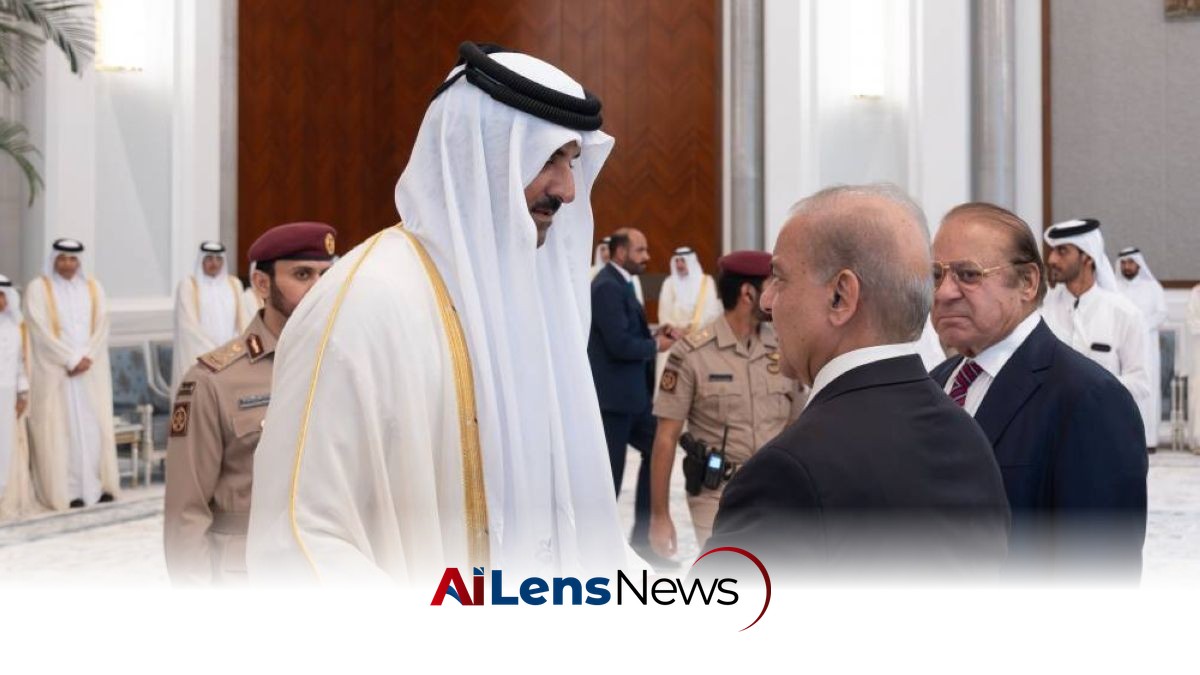


HH the Amir Sheikh Tamim bin Hamad Al-Thani met with Pakistan's Prime Minister Muhammad Shehbaz Sharif to express condolences on the passing of the late Father Amir.
Doha, Qatar Jul 14, 2026 ALN: On a significant day marked by somber reflection, His Highness (HH) the Amir Sheikh Tamim bin Hamad Al-Thani of Qatar met with the Prime Minister of Pakistan, Muhammad Shehbaz Sharif, at the Lusail Palace. This meeting took place on a Monday, a day that has become synonymous with both mourning and remembrance in Qatar, following the recent passing of HH the late Father Amir Sheikh Hamad bin Khalifa Al-Thani, the former ruler of Qatar, who was instrumental in shaping the modern state of Qatar.
HH the Amir Sheikh Tamim, who has been in power since 2013, welcomed Prime Minister Sharif to offer condolences on this poignant occasion. The meeting underscores the strong diplomatic ties between Qatar and Pakistan, which have been built over decades of cooperation in various fields including trade, defense, and cultural exchange. The presence of the Pakistani Prime Minister highlights the importance of these ties, especially during times of grief.
Sheikh Hamad bin Khalifa Al-Thani, who ruled Qatar from 1995 until his abdication in 2013, is remembered for his transformative leadership that propelled Qatar onto the global stage. His tenure saw the establishment of Qatar as a key player in international politics and economics, with a focus on diversifying the economy and investing heavily in education, health, and infrastructure. His legacy continues to influence Qatar's policies and its role in the Gulf Cooperation Council (GCC) and beyond.
During the meeting, various members of the Qatari royal family were also present, including HH the Deputy Amir Sheikh Abdullah bin Hamad Al-Thani and several other dignitaries. Their attendance signifies the collective mourning of the Al-Thani family and the wider Qatari community, as they navigate the loss of a leader who was not only a father figure to many but also a visionary who laid the groundwork for Qatar's future.
The gathering at Lusail Palace was not just a moment of condolence but also a reaffirmation of the longstanding friendship between Qatar and Pakistan. The two nations have shared a close relationship, characterized by mutual respect and cooperation. This is particularly significant considering the historical context of Pakistan's role in the region and its strategic partnerships with Gulf states.
Pakistan has been a critical ally for Qatar, especially in areas such as labor, where a substantial number of Pakistani workers contribute to Qatar's economy. The relationship has also extended to defense collaborations and cultural exchanges, which have further strengthened the bonds between the two nations. Prime Minister Sharif's visit to offer condolences can be viewed as a gesture of solidarity and support during a time of loss.
The meeting also reflects the broader regional dynamics in the Middle East, where leadership changes and transitions often influence diplomatic relations. As Qatar continues to navigate its position in a complex geopolitical landscape, maintaining strong ties with countries like Pakistan will be pivotal. The implications of such relationships extend beyond mere diplomacy; they encompass economic partnerships, security alliances, and cultural exchanges that enrich both nations.
In recent years, Qatar has emerged as a significant player in international diplomacy, often mediating conflicts and fostering dialogue among various factions in the region. The passing of HH the late Father Amir adds a layer of complexity to Qatar's diplomatic efforts, as the new generation of leadership under Sheikh Tamim takes the helm, continuing the legacy of engagement and cooperation that characterized his father's rule.
The presence of numerous dignitaries during the meeting, including members of the Shura Council and various other Sheikhs, signifies the communal aspect of mourning in Qatari culture. It highlights the importance of unity and support within the community during times of sorrow. Such gatherings are customary in the region, where expressing condolences and sharing in grief is a vital part of social and cultural norms.
As the Amir and the Prime Minister exchanged words of comfort, the meeting served as a reminder of the interconnectedness of nations, especially in moments of loss. It is a time when political differences can be set aside, and mutual respect and compassion can take center stage. The relationship between Qatar and Pakistan is likely to continue evolving, shaped by both historical ties and contemporary challenges.
In conclusion, the meeting between HH the Amir Sheikh Tamim bin Hamad Al-Thani and Prime Minister Muhammad Shehbaz Sharif is not only a reflection of personal condolences but also a reaffirmation of the diplomatic ties that bind Qatar and Pakistan. As both nations navigate their respective futures, the legacy of HH the late Father Amir will undoubtedly continue to influence their paths, fostering a spirit of cooperation and mutual benefit.
This meeting also serves as a reminder of the importance of international solidarity during times of mourning. Countries often come together to express their condolences and support one another, transcending political differences and focusing on shared human experiences. This aspect of international relations is particularly poignant in the context of the Middle East, where historical grievances and conflicts often overshadow diplomatic interactions.
For Qatar, the passing of Sheikh Hamad bin Khalifa Al-Thani marks not only the loss of a leader but also a turning point in its national narrative. The late Amir's vision for a modern, prosperous Qatar has set a benchmark for future leadership. As Sheikh Tamim navigates his role, he is expected to build upon his father's legacy while also addressing the contemporary challenges that face the nation, including economic diversification and regional stability.
Pakistan, on the other hand, continues to seek stronger ties with Gulf nations, including Qatar, to bolster its economic prospects and ensure the welfare of its citizens working abroad. The Pakistani diaspora in Qatar plays a significant role in the country’s economy, and the government is keen on maintaining favorable relations to protect the interests of its citizens.
The implications of the meeting extend beyond the immediate expressions of grief. The reaffirmation of ties between Qatar and Pakistan could lead to increased collaboration in various sectors, including trade, education, and health. As both nations work towards mutual goals, the potential for economic growth and cultural exchange remains significant.
In light of the current global economic climate, strengthening such relationships can be crucial for both nations. As they navigate the complexities of international trade and economic partnerships, the bonds formed through shared experiences, such as mourning, can serve as a foundation for future cooperation.
In summary, the meeting between HH the Amir and Prime Minister Sharif at Lusail Palace is a testament to the enduring relationship between Qatar and Pakistan. It highlights the significance of diplomatic ties, especially during difficult times, and underscores the potential for future collaboration as both nations honor the legacy of the late Father Amir while looking towards a shared future.
To learn more about the latest developments in Political History & Legacy, stay updated with our exclusive reports and analyses on AiLensNews.

