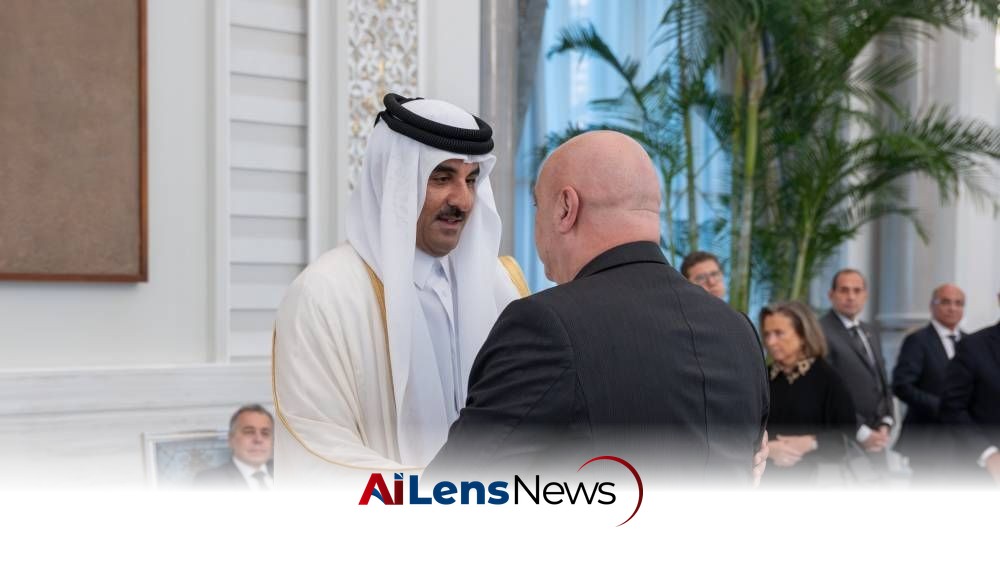


Sheikh Tamim bin Hamad Al Thani of Qatar welcomed Lebanese President Joseph Aoun, offering condolences for the late Father Amir.
Doha, Qatar Jul 14, 2026 ALN: His Highness the Amir of the State of Qatar, Sheikh Tamim bin Hamad Al Thani, received HE President of the Republic of Lebanon, HE General Joseph Aoun, along with an accompanying delegation on Tuesday at Lusail Palace. During the meeting, His Excellency expressed his condolences on the passing of the late HH the Father Amir, Sheikh Hamad bin Khalifa Al Thani.
The meeting took place in a context of ongoing political and economic challenges faced by Lebanon, as well as the broader geopolitical dynamics in the Middle East. Lebanon has been grappling with a severe economic crisis that has led to widespread poverty and instability. The Lebanese pound has lost much of its value, and basic services such as electricity and healthcare have been severely impacted, leading to increased public discontent and protests. This economic crisis has been exacerbated by a confluence of factors, including political paralysis, corruption, and the repercussions of the COVID-19 pandemic, which have all contributed to a deteriorating living situation for many Lebanese citizens.
In attendance were several dignitaries, including HH the Deputy Amir Sheikh Abdullah bin Hamad Al Thani, HE Sheikh Khalid bin Hamad Al Thani, and HH Personal Representative of the Amir, Sheikh Jassim bin Hamad Al Thani. Also present were HE Sheikh Abdulaziz bin Khalifa Al Thani, HH Sheikh Abdullah bin Khalifa Al Thani, HH Sheikh Mohammed bin Khalifa Al Thani, and HE Sheikh Jassim bin Khalifa Al Thani. The presence of these high-ranking officials highlights the importance that Qatar places on its diplomatic relations with Lebanon. Such gatherings are not only symbolic but also serve to reinforce the bonds of friendship and cooperation between the two nations.
The meeting underscored the strong ties between Qatar and Lebanon, which have been historically significant. Qatar has often played a mediating role in Lebanese politics, particularly during times of crisis. The two nations share a long-standing relationship that has been characterized by mutual support, cultural exchange, and economic cooperation. In recent years, Qatar has provided substantial humanitarian assistance to Lebanon, particularly in response to the influx of Syrian refugees and the aftermath of the Beirut port explosion in August 2020. The explosion, which devastated large parts of the capital, resulted in significant loss of life and property, and Qatar’s rapid response included financial aid and support for reconstruction efforts.
Prime Minister and Minister of Foreign Affairs HE Sheikh Mohammed bin Abdulrahman bin Jassim Al Thani was also present, along with several other dignitaries, including the sons of the late HH the Father Amir and various sheikhs. The presence of such a high-profile delegation indicates that the discussions were not only ceremonial but also substantive, focusing on ways to enhance collaboration between the two countries. This level of engagement reflects Qatar's commitment to fostering stability in Lebanon and supporting its political and economic recovery.
This visit marks a significant moment in the ongoing relationship between the two nations, reflecting a commitment to solidarity and cooperation. As Lebanon continues to navigate its complex political landscape, the support from Qatar could play a crucial role in stabilizing the situation. The discussions likely touched on various issues, including economic assistance, security cooperation, and the ongoing challenges posed by regional conflicts. The political landscape in Lebanon is particularly fragmented, with various factions vying for power, making it difficult to form a cohesive government capable of implementing necessary reforms.
In the broader context of Middle Eastern geopolitics, Qatar's relationship with Lebanon is part of its larger foreign policy strategy, which emphasizes diplomacy and humanitarian efforts. Qatar has positioned itself as a key player in regional diplomacy, often acting as a mediator in conflicts and providing support to countries in crisis. This approach has earned Qatar a reputation as a neutral ground for dialogue. In addition to its diplomatic initiatives, Qatar has also invested in development projects in Lebanon, further solidifying its role as a partner in the country’s recovery efforts.
Furthermore, the meeting comes at a time when Lebanon is facing increasing pressure from various factions within its political system. The country has been without a fully functioning government for an extended period, complicating efforts to implement necessary reforms and secure international aid. Qatar's involvement could potentially provide Lebanon with the necessary political backing to navigate these challenges. The ongoing political deadlock has hindered Lebanon's ability to negotiate with international financial institutions, which are crucial for obtaining the support needed to address the economic crisis.
In recent years, Lebanon has also been dealing with the repercussions of the Syrian civil war, which has led to a significant refugee crisis. Qatar has been actively involved in providing humanitarian assistance to Lebanese communities that are hosting Syrian refugees. This aspect of Qatar's foreign policy underscores its commitment to humanitarian principles and its desire to foster stability in the region. The presence of a large number of refugees has placed additional strain on Lebanon's already fragile infrastructure and public services, making international support even more critical.
As the meeting concluded, both leaders likely reaffirmed their commitment to strengthening bilateral relations and addressing the pressing issues facing Lebanon. The discussions may have included strategies for enhancing economic cooperation, cultural exchange, and security collaboration, all of which are vital for Lebanon's recovery and stability. The potential for increased economic collaboration could provide Lebanon with the resources needed to rebuild its economy and improve the living conditions of its citizens.
The implications of this meeting extend beyond immediate diplomatic gestures. It signals to the international community that Qatar remains a steadfast partner for Lebanon amid its ongoing crises. The support from Qatar could also encourage other nations to take a more active role in assisting Lebanon, potentially leading to a more coordinated international response to the challenges the country faces. In a region marked by instability, Qatar's proactive approach could serve as a model for other countries looking to engage with Lebanon and support its recovery efforts.
In conclusion, the meeting between Sheikh Tamim bin Hamad Al Thani and General Joseph Aoun at Lusail Palace is a testament to the enduring relationship between Qatar and Lebanon. As both nations look to the future, their collaboration will be crucial in addressing the myriad challenges that lie ahead. The commitment to solidarity and cooperation expressed during this meeting reflects a shared vision for a more stable and prosperous region. The ongoing partnership between Qatar and Lebanon is not only vital for their respective futures but also holds the potential to contribute to broader regional stability.
To learn more about the latest developments in Regional Politics, stay updated with our exclusive reports and analyses on AiLensNews.

