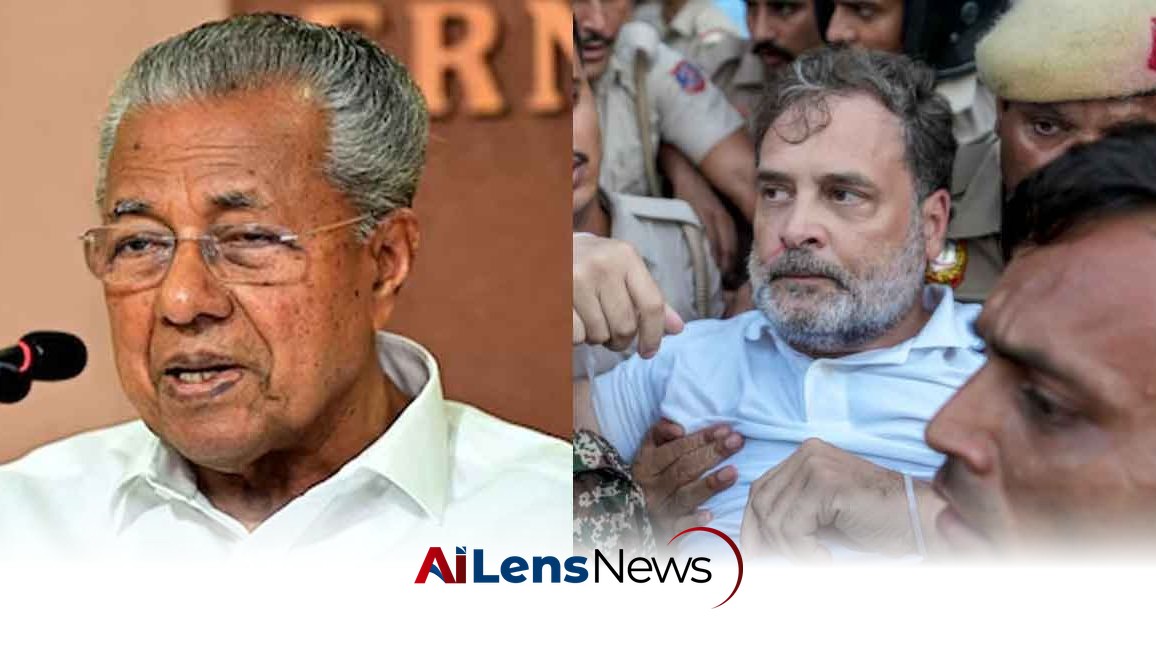


Kerala's Chief Minister Pinarayi Vijayan criticized the detention of opposition leaders during a NEET protest, while BJP's Rajeev Chandrasekhar defended police actions.
Doha, Qatar Jul 22, 2026 ALN: Thiruvananthapuram: In a significant political development, CPM leader Pinarayi Vijayan on Wednesday condemned the recent detention of Leader of the Opposition Rahul Gandhi and other opposition leaders during a protest in New Delhi. This protest was aimed at addressing alleged irregularities in the National Eligibility cum Entrance Test (NEET) examination, a crucial entrance test for medical colleges in India. The situation has sparked a heated debate about the state of democracy and the right to protest in the country.
The backdrop to this incident is the ongoing controversy surrounding the NEET examination, which has faced criticism for various reasons, including allegations of manipulation and unfair practices. The examination, which is pivotal for students aspiring to enter the medical field, has been a point of contention, especially among students and educators who argue that the process lacks transparency and fairness. As protests erupted, Rahul Gandhi, along with Congress general secretary Priyanka Gandhi Vadra, Samajwadi Party chief Akhilesh Yadav, and several opposition MPs, staged a surprise dharna near Prime Minister Narendra Modi's residence. Their demands included the Prime Minister's resignation over the alleged irregularities and a call for accountability regarding the police action against protesting students.
Pinarayi Vijayan took to social media to express his outrage, claiming that the central government was attempting to suppress legitimate protests against the NEET examination issues. He accused the police of using excessive force against demonstrators, stating, "The agitation over the alleged NEET examination irregularities has only grown stronger over the past several weeks." He noted that left student organizations had initially supported the movement, which later garnered broader backing from various opposition parties and MPs. This highlights the solidarity among opposition groups in addressing what they perceive as systemic issues within the education system.
In his statements, Pinarayi Vijayan emphasized the role of the Communist Party of India (Marxist) in forming a protective barrier around the protesters to shield them from alleged police brutality. He claimed that individuals described as "goons carrying lathis" were involved in the police's actions against the protesters, suggesting a coordinated effort to intimidate dissenters. This assertion reflects a growing concern among opposition leaders about the methods employed by law enforcement during civil protests, raising questions about the balance between maintaining order and respecting citizens' rights to assemble and express their grievances.
Pinarayi Vijayan's condemnation was echoed by Chief Minister V D Satheesan, who was also present during the march alongside Karnataka Chief Minister D K Shivakumar and other MPs from Kerala. Satheesan criticized the actions of the Delhi Police, labeling them as "anti-democratic." He described the treatment of Rahul Gandhi, stating that he was "dragged along the road" by police, while Priyanka Gandhi Vadra was reportedly restrained by male officers, raising concerns about the treatment of women in such contexts. Satheesan's remarks underscore the broader implications of police conduct during protests, particularly regarding gender sensitivity and respect for individual dignity.
The Chief Minister further articulated that the only wrongdoing by the opposition leaders was their support for the students' legitimate protest. He lamented the violence that had occurred during the protests, stating, "Yesterday, students bled on the streets of Delhi. Fascism was on display, and what happened today is its continuation." This characterization of the police's actions as fascistic indicates a deepening rift between the ruling party and opposition groups, with both sides accusing each other of undermining democratic principles.
Satheesan's comments also reflected a broader sentiment among opposition parties that the central government is attempting to intimidate dissenters. He asserted that the Congress party would not be silenced, stating, "Rahul Gandhi and those standing with him are voicing the sentiments of the country. If the government believes it can suppress that voice, it is mistaken." This assertion emphasizes the importance of political discourse and the role of opposition parties in a functioning democracy, particularly when addressing issues that resonate with the public.
On the other side of the political spectrum, BJP Kerala president Rajeev Chandrasekhar defended the police's actions, asserting that while peaceful protest is a fundamental democratic right, violence and lawlessness cannot be justified. In a post on X, he stated, "Protests are a part of democracy and are the right of every citizen. Agreed. Violent protests are not democracy. Anarchy is not democracy. Lawlessness is not democracy." Chandrasekhar's remarks highlight a critical perspective on the nature of protests, emphasizing the need for order and the rule of law in maintaining a stable society.
Chandrasekhar further stressed the importance of accountability, stating that every citizen expects the law to hold lawbreakers accountable, reinforcing the notion that while dissent is vital, it must occur within the bounds of legality. His comments reflect a common argument made by ruling parties in response to protests, which often seek to frame opposition actions as disruptive or harmful to public order.
The events leading to the detention of Rahul Gandhi and other opposition leaders unfolded when they gathered outside the Prime Minister's residence to demand discussions on the alleged NEET examination irregularities, as well as accountability for the police's actions against students. The protest was not merely a response to the examination issues but also a broader critique of the government's handling of dissent and civil rights. Following their detention, the opposition leaders were taken to various police facilities across Delhi before being released, indicating a swift response from law enforcement to quell the protest.
This incident has significant implications for the political landscape in India, particularly as it relates to the ongoing discourse surrounding education, governance, and civil rights. The NEET examination, often viewed as a gateway for aspiring medical students, has become a focal point for larger discussions about educational equity and access. As protests continue and opposition parties rally around the cause, the central government may face increasing pressure to address the concerns raised by students and opposition leaders alike.
In conclusion, the detention of Rahul Gandhi and other opposition leaders during the NEET protests has ignited a fierce debate on the state of democracy in India, the right to protest, and the accountability of law enforcement. As the situation unfolds, it remains to be seen how the government will respond to the mounting criticism and whether meaningful dialogue will emerge to address the pressing concerns surrounding the NEET examination and broader issues of civil rights and governance.
To learn more about the latest developments in Political Controversies, stay updated with our exclusive reports and analyses on AiLensNews.

