

More
Checking your session
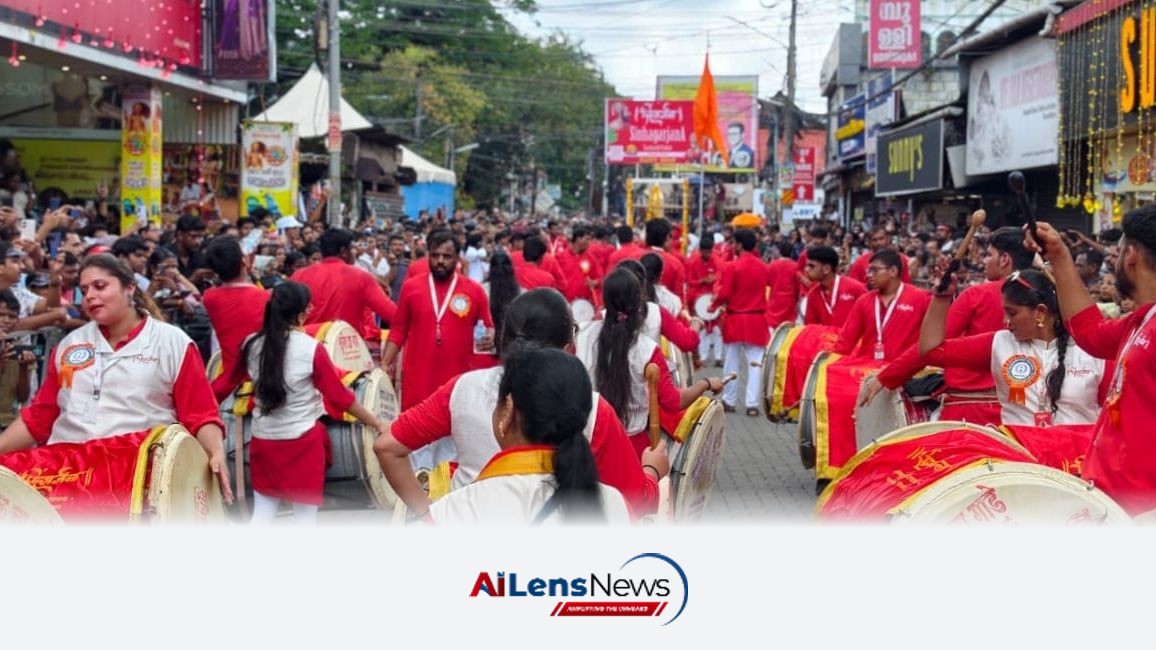



The inclusion of a Nashik Dhol troupe in Thripunithura's Athachamayam procession has sparked allegations of saffronisation, with political parties accusing the BJP-led council of undermining the festival's secular character.
Doha, Qatar Aug 25, 2026 ALN: Kochi: Allegations of “saffronisation” have cast a political shadow over Thripunithura’s historic Athachamayam procession, with the Congress and the CPM accusing the BJP-led municipal council of allowing political and ideological symbolism into a festival traditionally celebrated as a symbol of cultural diversity and communal harmony.
The controversy was triggered by the inclusion of a Nashik Dhol troupe from Pune, whose performers waved large saffron flags during the procession. This act has raised eyebrows and intensified scrutiny over the political affiliations of the performers and the intentions behind their participation. The inclusion of such elements in a cultural event has led to a broader discussion about the intersection of politics and cultural celebrations in contemporary India.
Additionally, a separate controversy over a competition float featuring vulgar and sexually suggestive content further embarrassed the organizers and raised questions over the screening of entries. This incident underscores the challenges faced by event organizers in balancing artistic expression with community standards and expectations.
Held on the Atham star in Chingam, Athachamayam traditionally marks the beginning of Kerala’s 10-day Onam celebrations. The procession showcases Kerala’s folk and classical arts and has long carried a secular character, with representatives of Hindu, Christian, and Muslim communities traditionally participating in the ceremonies. This inclusive nature has been integral to the festival’s identity, emphasizing unity and cultural richness in a state known for its diverse population.
Senior Congress leader and former Thripunithura MLA K Babu alleged that Bajrang Dal workers were part of the troupe and that the Celebration Committee was aware of their participation. His claims suggest a deeper concern about the politicization of cultural events and the potential for such actions to disrupt communal harmony, which is particularly sensitive in the context of Kerala's historical social fabric.
“The Bajrang Dal workers came carrying their flag, wearing the official badge of the Celebration Committee, and dressed in their organizational uniform. Therefore, there is absolutely no doubt that this happened with the full knowledge of the Celebration Committee officials. That is precisely the reason for our strong protest. Also, the committee has paid ₹4 lakh for this program from the official committee’s fund. This will destroy the atmosphere of peace and harmony in our society. Hence, we demand that the Municipal Chairman and the Convenor who are responsible for this provide a clear answer, or quit their offices,” Babu stated. His remarks reflect a growing anxiety among opposition parties regarding the perceived encroachment of political ideologies into spaces that have historically been apolitical.
Congress Parliamentary Party Leader CA Shaji expressed that political ensembles had earlier been kept out of the procession regardless of which party proposed them in previous editions. This historical context is significant as it highlights a precedent of maintaining a neutral stance in cultural events, which many believe should remain free from political influence.
“Years ago, when Congress suggested bringing the Seva Dal band, CPM opposed it, and we dropped it. When the DYFI or CPM proposed their band set, Congress opposed it, and they didn’t bring it either. But this was brought without informing anyone. Had we blocked it on the street once the procession officially started, it would have created a major scene and ruined an event with so much heritage. If they had told us beforehand, we would never have permitted it,” Shaji said. His comments suggest a desire for transparency and collaboration among political parties in organizing such events, emphasizing the need for mutual respect and adherence to established norms.
‘Deliberate plan’ to communalise festival
ES Rakesh Pai, General Convener of the Atham Celebration Committee and a CPM leader, alleged that the BJP-led Procession Sub-Committee had acted unilaterally. His accusations point to concerns about the governance of cultural events and the potential for political factions to exploit these occasions for their own agendas.
“I had clarified right from the beginning that ₹4 lakh would not be sanctioned from the Atham fund for the Nashik Dhol. Bringing them from Pune under the guise of sponsorship and lining up people around them wearing badges distributed through RSS Shakhas was a deliberate plan executed solely by the Procession Committee Convener and the Chairman to communalise the event. We had strictly averted political interference elsewhere—barring political guests and employing official Civil Defence and Team Kerala volunteers. But the Procession Committee concealed which floats and art forms were participating,” he said. This statement raises questions about the accountability of the organizing committee and the implications of their decisions on community relations.
Municipality rejects saffronisation charge
Municipal Chairperson P L Babu stated that the Nashik Dhol was invited as a cultural attraction after organizers saw the troupe’s performances on YouTube. He also mentioned that it was done only after the committee’s approval. This defense suggests an emphasis on cultural representation and entertainment value over political connotations, yet it does not fully address the concerns raised by opposition parties regarding the potential for communal tensions.
The unfolding situation in Thripunithura serves as a microcosm of larger trends in Indian society, where cultural events are increasingly becoming battlegrounds for political ideologies. The Athachamayam procession, with its rich history and significance, now finds itself at the center of a debate on how cultural expressions can be influenced by political agendas. As the festival continues to evolve, the implications of this controversy may resonate beyond Thripunithura, prompting broader discussions about the role of politics in cultural celebrations across India.
To learn more about the latest developments in Political Controversies, stay updated with our exclusive reports and analyses on AILensNews.
Qatar has welcomed the U.S. decision to remove Syria from its list of State Spon…
Dr. Syed Naseer Hussain, AICC General Secretary for Jammu & Kashmir, states that…

As tensions rise over parade routes in Portadown, the focus shifts to the younge…
In a recent meeting in Tripoli, Libyan Presidential Council Chairman Dr. Mohamed…

A senior UAE diplomat discusses the complexities of resuming trade ties with Ira…