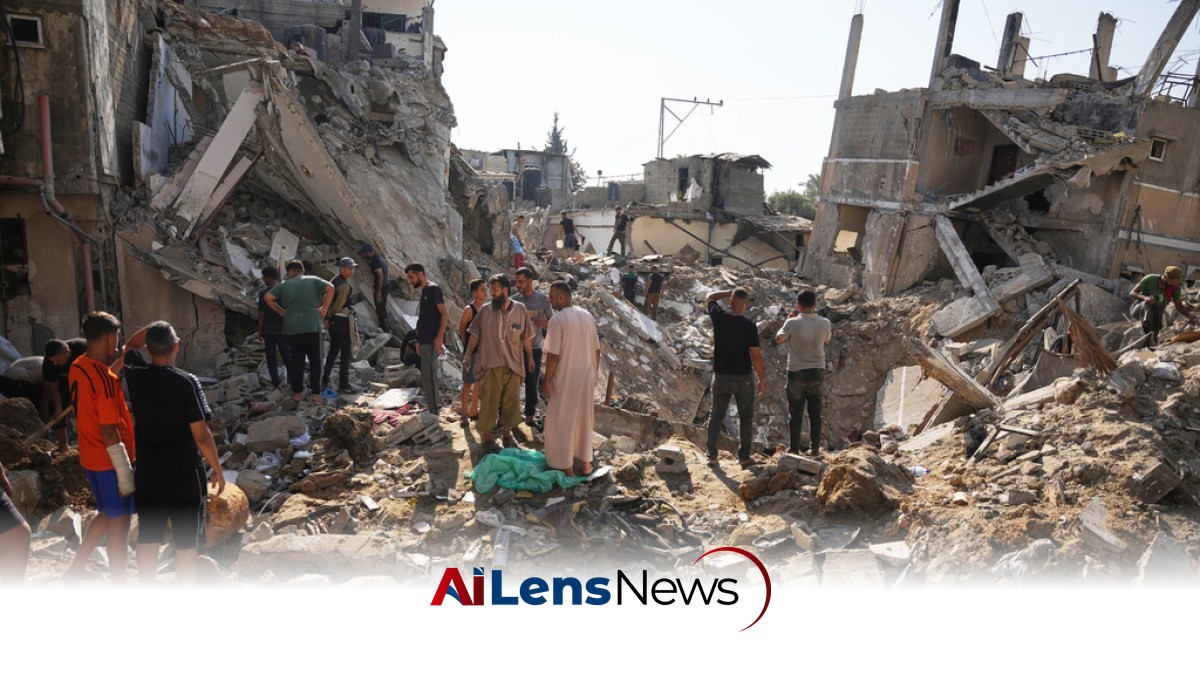


Jared Kushner emphasizes that the U.S. will not support Gaza's rebuilding until Hamas relinquishes its weapons, amid ongoing Israeli strikes.
Doha, Qatar Aug 18, 2026 ALN: United States envoy Jared Kushner has stressed that the administration of President Donald Trump will not allow reconstruction in the devastated Gaza Strip until Hamas gives up its weapons. This stance reflects a broader U.S. policy aimed at addressing the complex and longstanding conflict between Israel and the Palestinian territories, particularly in the context of the ongoing humanitarian crisis in Gaza.
Kushner, who is also Trump’s son-in-law, held talks with Israeli Prime Minister Benjamin Netanyahu on Monday. However, the meeting did not produce a breakthrough to implement a roadmap for Gaza that Hamas had already agreed to. The lack of progress in these discussions underscores the challenges that have historically plagued peace negotiations in the region, where trust between the parties is often in short supply.
“We have a plan to rebuild Gaza, but we will not allow Gaza to be rebuilt until the demilitarization occurs,” Kushner told Fox News in an interview. This statement highlights a key aspect of U.S. policy: the insistence on the disarmament of Hamas as a precondition for any financial or logistical support for reconstruction efforts. Kushner articulated a common sentiment among Israeli and U.S. officials, stating, “Nobody wants to put more money into a place that’s gone on for so long if it’s just going to be taken over by terrorists or blown up again.”
The issue of Hamas's disarmament has been a contentious topic in international diplomacy. Hamas, which has governed Gaza since 2007, is considered a terrorist organization by Israel and the United States. The group had previously agreed to disarm as part of a U.S.-backed process that would include Israeli withdrawal from certain areas and an end to the ongoing attacks on Palestinian territories. However, Israel rejected the proposal earlier this month, stating that it would not make any concessions until Gaza is fully demilitarized.
In the interview with Fox News, Kushner – whose family has deep personal ties to Netanyahu – appeared to adopt the Israeli viewpoint in emphasizing the full demilitarization of Hamas before any Israeli withdrawal. This alignment with Israeli perspectives on security issues is indicative of the Trump administration's overall approach to the Israeli-Palestinian conflict, which has often favored Israeli interests. Kushner stated, “We’re also not going to restrict Israel’s right to defend itself if there are any imminent threats.” This statement reflects the administration's commitment to ensuring Israel's security, even as it navigates the complexities of the peace process.
Israel has been launching near-daily attacks on Gaza, resulting in significant casualties. Reports indicate that at least 1,265 people in the enclave have died since a ceasefire came into effect last year. The ongoing military operations have raised serious humanitarian concerns, with critics arguing that the cycle of violence exacerbates the already dire conditions in Gaza.
Overall, Israel’s ongoing military operations have resulted in the deaths of 73,399 Palestinians since October 2023. The scale of these casualties has drawn international condemnation, with humanitarian organizations calling for an immediate ceasefire and for both sides to engage in meaningful dialogue. Earlier on Monday, Trump called for an end to the Israeli strikes, stating, “Israelis should not be striking in Gaza. Hamas agreed to lay down their weapons.” This statement reflects a growing concern within the U.S. administration regarding the humanitarian impact of the conflict on civilians.
Over the past three years, the U.S. has provided Israel with approximately $25 billion in military aid, reinforcing the strategic partnership between the two nations. The U.S. has also defended the Netanyahu government at international forums, including by imposing sanctions on International Criminal Court officials investigating the atrocities in Gaza. This support has been a source of contention, with critics arguing that it undermines the U.S.'s ability to act as an impartial mediator in the peace process.
Kushner emphasized that the Gaza deal benefits Israel. He stated, “For Israel, we think this is a win-win situation, because if Hamas actually gives over the weapons and the tunnels willingly over the next 60 to 90 days, that obviously would be the elimination of a huge security threat for Israel, almost an unthinkable achievement.” This perspective suggests that the U.S. sees disarmament as a critical step toward achieving long-term stability in the region.
However, Kushner also warned that if Hamas fails to follow through on its commitment to disarm, it could lead to increased support for Israel to take further military action. “If they don’t follow through now on their commitment, everyone will see that they’re not genuine about peace, and then Israel will have a lot more support from the U.S. and others to go and finish the job in the appropriate way,” he said. This statement reflects a belief that military action could be justified if diplomatic efforts fail, raising concerns about the potential for escalation.
Kushner held a rare meeting with Hamas officials on Sunday as the U.S. pushes for an end to the conflict. The U.S. envoy described the talks as “very cordial” but stated that Washington would judge Hamas based on the group’s actions. “They said all the right things, but obviously, it’s very, very hard to trust a terrorist organization that committed these terrible atrocities,” Kushner concluded. This skepticism towards Hamas's intentions underscores the complexities of negotiating peace in a region fraught with deep-seated animosities and historical grievances.
The implications of Kushner's statements and the U.S. position on Gaza reconstruction are significant. The insistence on disarmament as a precondition for reconstruction may prolong the humanitarian crisis in Gaza, as the region struggles with inadequate infrastructure and resources. Furthermore, the ongoing violence and military operations could hinder any prospects for a lasting peace agreement, as mutual distrust continues to fuel the cycle of conflict. The situation remains fluid, and the international community's response will be crucial in shaping the future of Gaza and its inhabitants.
To learn more about the latest developments in Political Controversies, stay updated with our exclusive reports and analyses on AiLensNews.

