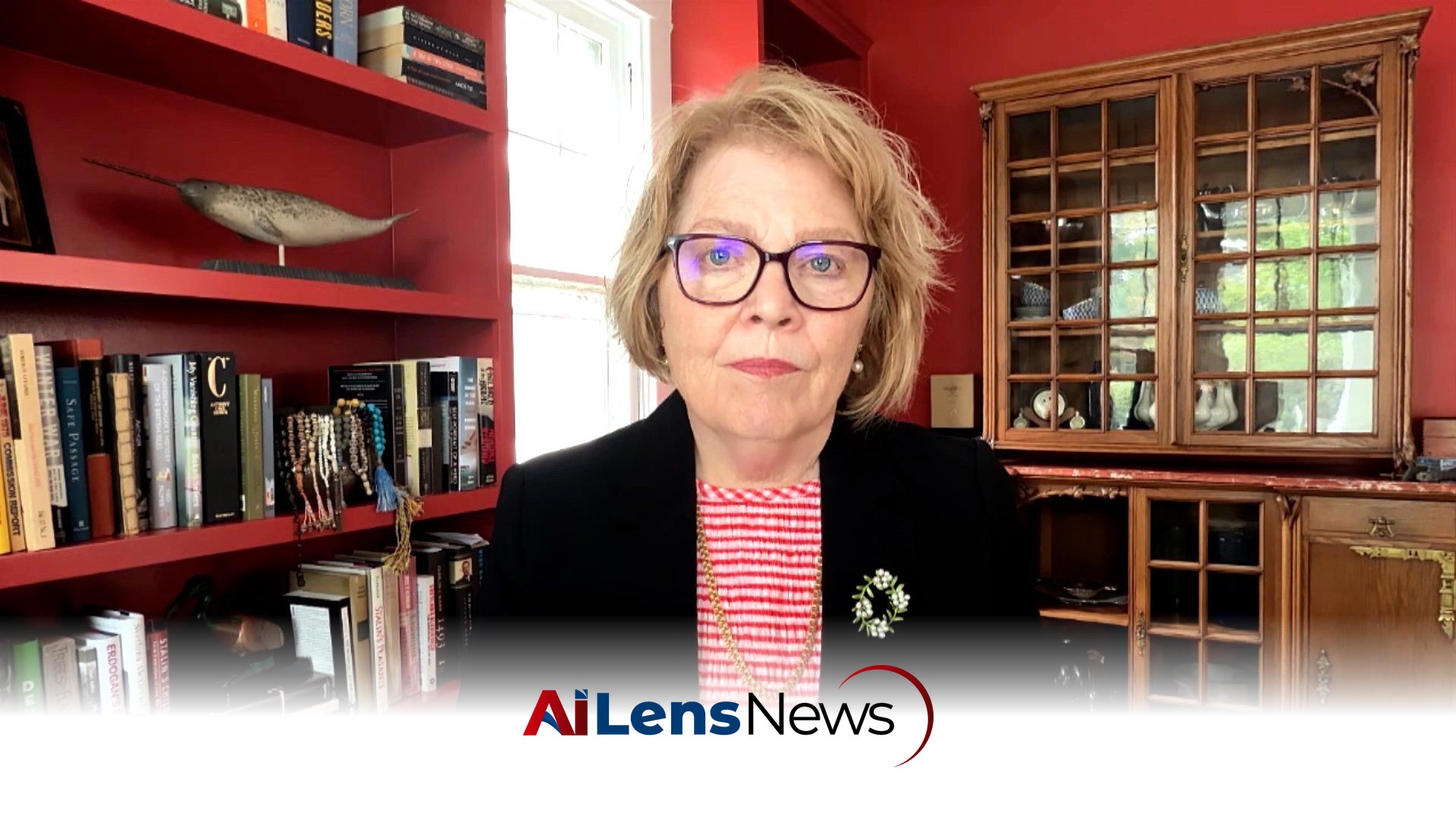


Barbara Leaf, former US Ambassador to the UAE, warns that escalating tensions with Iran are unproductive and advocates for direct negotiations.
Doha, Qatar Jul 31, 2026 ALN: As tensions between the United States and Iran continue to rise, former US Ambassador to the UAE, Barbara Leaf, has voiced her concerns regarding the current escalation. In an interview with Al Jazeera, Leaf described the ongoing confrontations as 'fairly pointless' and emphasized that they do not lead to any decisive victories. This perspective comes at a time when both nations have engaged in a series of confrontational actions, including military maneuvers and rhetorical exchanges that have heightened fears of a potential conflict.
Leaf highlighted that the only viable path forward is through de-escalation and direct negotiations. She warned that failing to pursue dialogue could result in a wider regional conflict, which would have dire consequences not only for the involved nations but also for global stability. The implications of such a conflict could extend beyond the immediate region, affecting global oil markets, international trade routes, and the geopolitical landscape in ways that could be detrimental to many countries.
In her remarks, Leaf pointed out that the cycle of escalation often leads to increased hostility and mistrust, making diplomatic solutions even more challenging. She urged the US government to reconsider its approach and prioritize diplomatic channels to address the underlying issues at play. The historical context of US-Iran relations is fraught with tension, dating back to the 1979 Iranian Revolution and the subsequent hostage crisis, which have left lingering animosities that complicate current diplomatic efforts.
Over the years, the US has implemented a series of sanctions aimed at curtailing Iran's nuclear ambitions and its influence in the region. These sanctions have not only strained the Iranian economy but have also fueled resentment among the Iranian populace, who often view them as acts of aggression rather than efforts to promote stability. Leaf's call for dialogue is particularly relevant in this context, as it suggests a shift away from punitive measures toward a more constructive engagement that could foster mutual understanding.
The international community watches closely as the situation develops, hoping for a resolution that can prevent further escalation and promote peace in the region. Various stakeholders, including European nations, Russia, and China, have expressed interest in mediating discussions between the US and Iran. The Joint Comprehensive Plan of Action (JCPOA), established in 2015 to limit Iran's nuclear program in exchange for sanctions relief, serves as a potential framework for renewed negotiations. However, the US withdrawal from the agreement in 2018 under the Trump administration complicated these efforts, leading to increased tensions and further provocations from Iran.
Moreover, the strategic interests of regional players such as Saudi Arabia and Israel add another layer of complexity to the situation. These nations view Iran's influence with suspicion and have often advocated for a hardline approach to counter what they perceive as a threat to their national security. This regional dynamic complicates any potential dialogue, as the US must navigate not only its relationship with Iran but also the interests of its allies in the region.
Leaf's insights serve as a reminder of the importance of diplomacy in international relations, particularly in volatile regions like the Middle East. The historical precedence of military interventions in the region has often led to unintended consequences, further entrenching divisions rather than resolving them. Diplomatic efforts, on the other hand, have the potential to build bridges and foster a more stable environment conducive to peace.
In light of the current situation, it is essential for policymakers to recognize that the path to de-escalation is not merely about avoiding conflict but also about addressing the root causes of tensions. This includes acknowledging Iran's security concerns, regional ambitions, and the impact of external pressures on its domestic politics. A comprehensive approach that takes into account the perspectives of all parties involved may pave the way for a more sustainable resolution.
Furthermore, the role of public opinion cannot be overlooked. In both the US and Iran, citizens are increasingly aware of the costs associated with prolonged conflict. In the US, there is a growing skepticism about military interventions, particularly after two decades of involvement in the Middle East. Similarly, in Iran, the population has expressed frustration over the economic hardships exacerbated by sanctions and the lack of opportunities for dialogue with the West. Engaging with these sentiments can create a conducive environment for negotiations, as both governments may feel pressure to pursue peace rather than conflict.
Ultimately, the situation between the US and Iran is a complex interplay of historical grievances, national interests, and regional dynamics. As tensions mount, the urgency for diplomatic engagement becomes increasingly apparent. Leaf's call for de-escalation and negotiation resonates with many who advocate for a more peaceful approach to international relations. The stakes are high, and the consequences of inaction could reverberate far beyond the borders of the two nations involved.
In considering the broader implications of US-Iran relations, it is important to recognize the historical context that has shaped their interactions. The 1979 Iranian Revolution marked a significant turning point in US-Iran relations, leading to the severing of diplomatic ties and the imposition of sanctions that have persisted for decades. The hostage crisis that ensued, where American diplomats were held for 444 days, solidified a narrative of mutual distrust that has been difficult to overcome.
The US's subsequent military interventions in the region, particularly in Iraq and Afghanistan, have further complicated relations. The perception of the US as an imperial power seeking to exert control over the Middle East has fueled anti-American sentiments in Iran and has been used by the Iranian government to justify its own regional ambitions. This historical backdrop is critical to understanding the current dynamics at play and the challenges that lie ahead for any diplomatic efforts.
Moreover, the role of non-state actors and proxies in the region, such as Hezbollah in Lebanon and various militia groups in Iraq, adds another layer of complexity to the US-Iran relationship. These groups often operate independently of state control and can act in ways that escalate tensions without direct involvement from either the US or Iranian governments. This complicates the landscape for diplomacy, as any agreement must consider the influence of these groups and the potential for violence to undermine peace efforts.
Additionally, the economic sanctions imposed on Iran have had profound effects on its economy and society. While the US government argues that these sanctions are necessary to curb Iran's nuclear ambitions and support for terrorism, many Iranians suffer from the economic fallout. Inflation, unemployment, and a lack of basic goods have led to widespread discontent among the population, which can sometimes manifest in protests against the government. This internal pressure can complicate Iran's ability to engage in negotiations, as hardliners may resist any concessions that could be perceived as weakness.
In conclusion, Barbara Leaf's call for de-escalation and dialogue is a crucial reminder of the importance of diplomacy in addressing complex international issues. As the US and Iran navigate their fraught relationship, it is essential to prioritize dialogue over confrontation. The historical context, regional dynamics, and the perspectives of the populations in both countries must be considered in any efforts to foster peace. The potential consequences of continued escalation are significant, and the international community has a vested interest in supporting diplomatic solutions that promote stability and prevent conflict.
To learn more about the latest developments in Elections, stay updated with our exclusive reports and analyses on AiLensNews.

