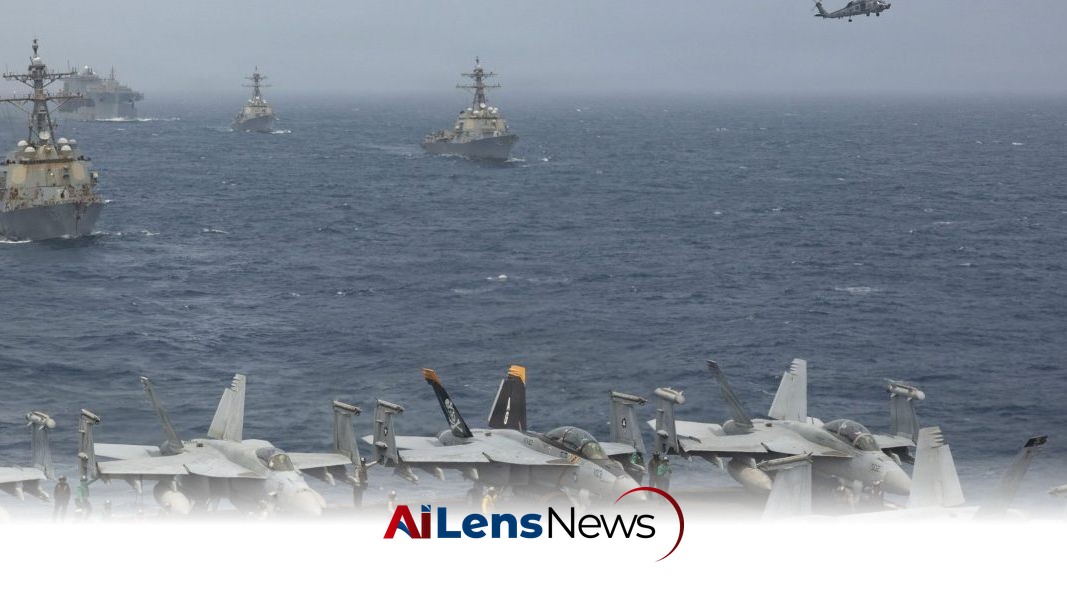


Oman has proposed a dual-route traffic management plan for the Strait of Hormuz amid ongoing tensions between the U.S. and Iran over maritime control.
Washington DC, United States Jul 12, 2026 ALN: The Strait of Hormuz, a strategically significant waterway, has become a focal point of tension between the United States and Iran in recent months. This narrow passage, connecting the Persian Gulf to the Gulf of Oman, is crucial for global oil transportation, with approximately 20% of the world's oil supply passing through it. The ongoing conflict and negotiations surrounding the strait are emblematic of the broader geopolitical struggles in the region, reflecting deep-seated historical grievances, economic pressures, and military posturing.
In the wake of a ceasefire agreement between the U.S. and Iran, hostilities have continued sporadically, with both nations attempting to assert their dominance over the strait. Iran's position is clear: it insists that all maritime traffic must gain its approval before traversing the strait. This insistence has led to aggressive actions, including attacks on vessels that stray from designated routes along the Iranian coast. Such actions underscore Iran's strategy to maintain control over this vital maritime corridor, which it views as essential to its national security and regional influence.
In response to Iran's assertiveness, the United States has taken military action, targeting Iranian sites believed to be involved in drone and missile operations. The U.S. has also adapted its maritime strategy by guiding commercial ships along an alternate route that hugs the coast of Oman, thereby minimizing the risk of Iranian attacks. This shift in naval strategy illustrates the U.S. commitment to ensuring the safety of maritime navigation in the region, despite the challenges posed by Iran's military capabilities.
Top U.S. officials have called for a public declaration from Tehran affirming that the Strait of Hormuz is open for navigation and that ships will not be attacked. Such a statement would not only ease tensions but also signal Iran's willingness to engage in diplomatic solutions. However, the ability to threaten the closure of the strait serves as Iran's primary leverage in negotiations, making it unlikely that Tehran will relinquish this power without significant concessions.
The ongoing military confrontations have resulted in a stalemate, with the U.S. steadfastly pursuing the restoration of free navigation while Iran remains resolute in asserting its authority over the strait. The situation is further complicated by the economic implications of potential disruptions to oil shipments. A sustained closure or significant conflict in the strait could lead to a dramatic increase in oil prices globally, impacting economies far beyond the immediate region.
In an effort to find a diplomatic solution, Oman has proposed a plan to manage traffic in the strait. This proposal suggests establishing two separate corridors: a southern corridor through Omani territorial waters that would allow for free navigation under prewar conditions and a northern corridor through Iranian waters that would require prior approval from Tehran. While this plan has not yet been finalized, it represents a potential compromise that could ease tensions and facilitate safe passage for commercial vessels.
The discussions between Iranian and Omani officials highlight the role of regional players in mediating conflicts between the U.S. and Iran. Oman has historically acted as a neutral party in the region, leveraging its diplomatic relationships to foster dialogue. However, the effectiveness of any proposed corridor will ultimately depend on the willingness of shipping companies and their insurers to deem the routes safe for navigation, irrespective of any official agreements.
The U.S. military's responsibility for defending the Omani route has allowed it to maintain a level of control over maritime security in the region. However, despite these efforts, Iranian attacks have still managed to penetrate the defenses, raising concerns about the reliability of the alternate route. The ongoing threat of drone and missile strikes from Iran necessitates a robust military presence, which could further escalate tensions between the two nations.
As the status quo continues under the fragile ceasefire, the potential for renewed conflict looms. Both the U.S. and Iran have shown a reluctance to engage in full-scale warfare, yet the possibility of skirmishes remains ever-present. Analysts suggest that the U.S. may consider using military force to open the strait or reimpose a naval blockade as a means of exerting pressure on Iran. Such actions would likely exacerbate tensions and could lead to a broader military confrontation in the region.
Dan Alamariu, a chief geopolitical strategist, has noted that the current military operations by the U.S. suggest a positioning for potential escalation. He posits that the U.S. could seek to economically weaken Iran by reimposing a naval blockade, which he describes as the "path of least resistance" unless a new memorandum of understanding is reached. Alamariu emphasizes the urgency for both sides to reach a deal, given their respective domestic vulnerabilities. The U.S. faces upcoming midterm elections, while Iran grapples with significant economic and political challenges.
Alamariu's analysis indicates that a new agreement may be necessary in the near future, potentially within one to two months. However, the timing and nature of any escalatory actions remain uncertain. The ongoing strikes and counter-strikes between the U.S. and Iran can be seen as bargaining tactics, as both parties attempt to establish greater leverage in negotiations.
The implications of the current situation in the Strait of Hormuz extend beyond the immediate conflict between the U.S. and Iran. The strait's significance as a critical chokepoint for global oil transportation means that any disruptions could have far-reaching effects on the global economy. Countries that rely heavily on oil imports from the Persian Gulf may find themselves facing increased prices and supply shortages, leading to potential economic instability.
Furthermore, the geopolitical dynamics in the region are influenced by the interests of other nations, including those of European countries, China, and Russia. Each of these nations has a vested interest in maintaining stability in the region, as disruptions to oil supplies could have broader implications for global energy markets and international relations.
In conclusion, the ongoing tensions between the U.S. and Iran over the Strait of Hormuz reflect a complex interplay of military, economic, and diplomatic factors. While efforts to establish safe passage through the strait are underway, the situation remains precarious. As both sides navigate their respective interests, the potential for conflict persists, underscoring the need for continued dialogue and negotiation to prevent further escalation.
To learn more about the latest developments in Government & Governance, stay updated with our exclusive reports and analyses on AiLensNews.

