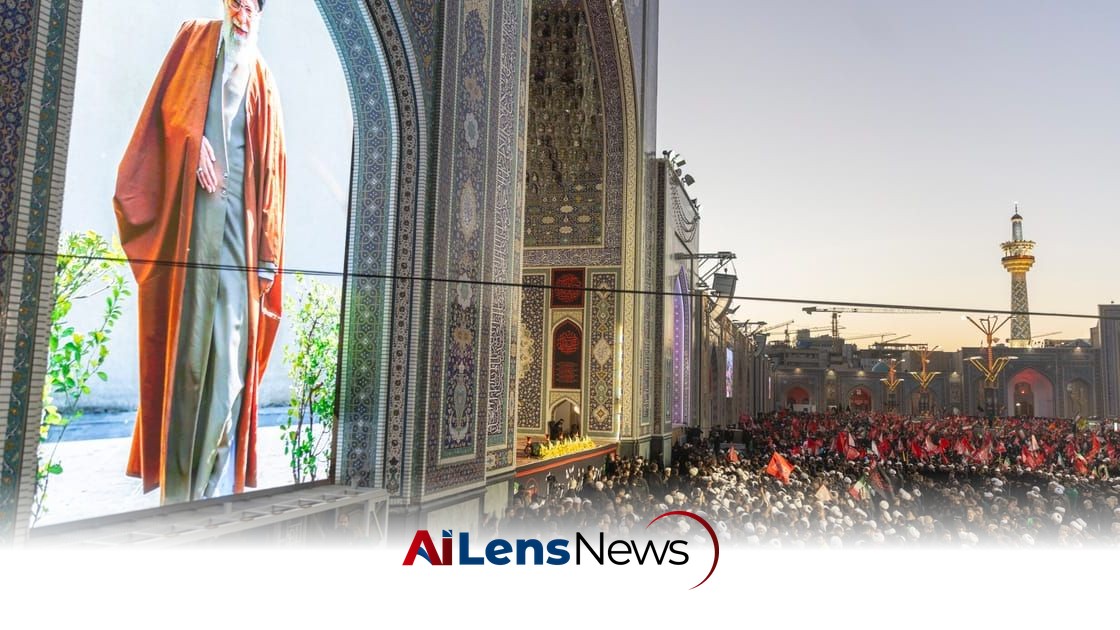


Mojtaba Khamenei pledges vengeance for his father, former Supreme Leader Ali Khamenei, following recent U.S. airstrikes amid escalating tensions.
London, United Kingdom Jul 11, 2026 ALN: Ayatollah Mojtaba Khamenei, the newly appointed Supreme Leader of Iran, has made a powerful declaration regarding the death of his father, the former Supreme Leader Ali Khamenei, who was killed in a recent Israeli airstrike. In a fervent speech delivered on Saturday, he vowed that Iran would seek vengeance for his father’s death, stating, “We pledge to avenge your pure blood and the blood of all the martyrs.” These words have sent ripples through the international community, signaling a potential escalation in the already tense relationship between Iran and its adversaries.
Ali Khamenei served as the Supreme Leader of Iran from 1989 until his death in February of this year. His leadership was characterized by a strict adherence to the principles of the Islamic Revolution, which emphasized the importance of Islamic governance and resistance against Western influence, particularly from the United States and Israel. Under his rule, Iran faced numerous challenges, including economic sanctions, internal dissent, and regional conflicts. His death marks a significant turning point in Iran’s political landscape, with his son now at the helm, tasked with navigating a complex web of domestic and international issues.
Mojtaba Khamenei, who has taken over the leadership following his father’s death, is seen as a figure who is likely to continue his father’s hardline stance against perceived enemies of the state. His vow for vengeance reflects not only a personal loss but also a rallying cry for national unity in the face of foreign aggression. He stated, “This vengeance is what our nation is demanding, and this must definitely be done,” indicating a commitment to uphold the legacy of his father while also responding to the expectations of the Iranian populace.
The timing of Khamenei's vow comes amid escalating tensions between Iran and the United States, particularly following the breakdown of a ceasefire agreement. The U.S. has recently intensified military actions against Iran, launching strikes in retaliation for Iranian attacks on shipping routes in the strategically vital Strait of Hormuz. This waterway is crucial for global oil shipments, and any disruption can have far-reaching implications for the global economy, including rising oil prices and potential supply shortages.
The U.S. has issued an ultimatum to Iran, demanding that it cease its aggressive actions in the Strait of Hormuz by a specified deadline. This ultimatum adds to the already fraught atmosphere, as both nations have been engaged in a tit-for-tat exchange of military actions and threats. In response to these tensions, Iranian Foreign Minister Abbas Araghchi has traveled to Oman to engage in diplomatic discussions aimed at mediating the dispute. Oman has historically played a neutral role in Middle Eastern conflicts and may serve as a conduit for dialogue between the two nations, potentially helping to avert further escalation.
Simultaneously, U.S. President Donald Trump has also issued stark warnings, threatening to “completely decimate and destroy all areas of Iran” should any attempts be made on his life. This rhetoric underscores the high stakes involved in the ongoing conflict, as both nations appear to be on a collision course that could have dire consequences for regional stability. The threats from both sides reflect a broader pattern of hostility that has characterized U.S.-Iran relations since the 1979 Iranian Revolution, which saw the overthrow of the U.S.-backed Shah and the establishment of the Islamic Republic.
In the backdrop of these escalating threats, there have been concerns regarding the health and well-being of Mojtaba Khamenei. Reports suggest that he has not been seen in public for months, leading to speculation about his physical condition following injuries sustained in the airstrike that killed his father. Some rumors indicate that he may have been left disfigured, which could impact his ability to lead effectively in a time of crisis. The transition of leadership during such a turbulent period adds another layer of complexity to Iran's political dynamics, as the new Supreme Leader must assert his authority while managing both external pressures and internal expectations.
The implications of Khamenei's vow for vengeance extend beyond Iran's borders. It raises questions about the potential for further military confrontations in the region and the possibility of a broader conflict involving other nations. The Iranian regime has a history of responding to perceived threats with military action, and the current rhetoric suggests that they may be preparing for a more aggressive stance in the coming weeks. This could involve direct military responses to U.S. actions, proxy warfare through regional allies, or increased cyber operations targeting U.S. interests.
Furthermore, the Iranian public's reaction to these developments will be critical. The leadership's call for vengeance may resonate with segments of the population who view the U.S. and Israel as existential threats. However, it could also exacerbate internal dissent among those who are weary of ongoing conflict and the economic hardships that accompany it, particularly in light of the sanctions that have crippled Iran's economy. The Iranian economy has been under severe strain due to long-standing sanctions, which have led to high inflation rates, unemployment, and a declining standard of living for many citizens. This economic distress may lead to increased public scrutiny of the government's aggressive foreign policy.
Internationally, the situation is being closely monitored by various stakeholders, including neighboring countries and global powers. The potential for miscalculation or escalation is significant, and diplomatic efforts will be essential in preventing further violence. The role of intermediaries, such as Oman, will be crucial in facilitating dialogue and de-escalating tensions. Countries such as Saudi Arabia and Israel, which have historically viewed Iran as a threat, will also be watching closely, as any increase in hostilities could lead to wider regional instability and conflict.
As the world watches, the actions taken by both Iran and the U.S. in the coming days and weeks will be pivotal in shaping the future of relations in the region. The stakes are high, and the potential for conflict looms large as both sides navigate this perilous landscape. The international community faces a critical moment, as the choices made by leaders in Tehran and Washington could either lead to a path of de-escalation or spiral into a broader military confrontation.
In summary, Ayatollah Mojtaba Khamenei's vow for vengeance following the death of his father is a significant development in Iranian politics and international relations. It underscores the complexities of leadership transitions in authoritarian regimes and highlights the potential for escalating conflicts in a volatile region. The coming days will be critical in determining whether diplomatic solutions can be found or if the cycle of violence will continue to spiral out of control. The implications of this situation will reverberate not only within Iran but also across the Middle East and beyond, as nations grapple with the consequences of a potentially resurgent Iranian military posture and the response of global powers to any acts of aggression.
To learn more about the latest developments in Leaders & Politicians, stay updated with our exclusive reports and analyses on AiLensNews.

