

Recent satellite images indicate potential repairs at Iran's nuclear and missile sites, raising concerns about compliance with US agreements.
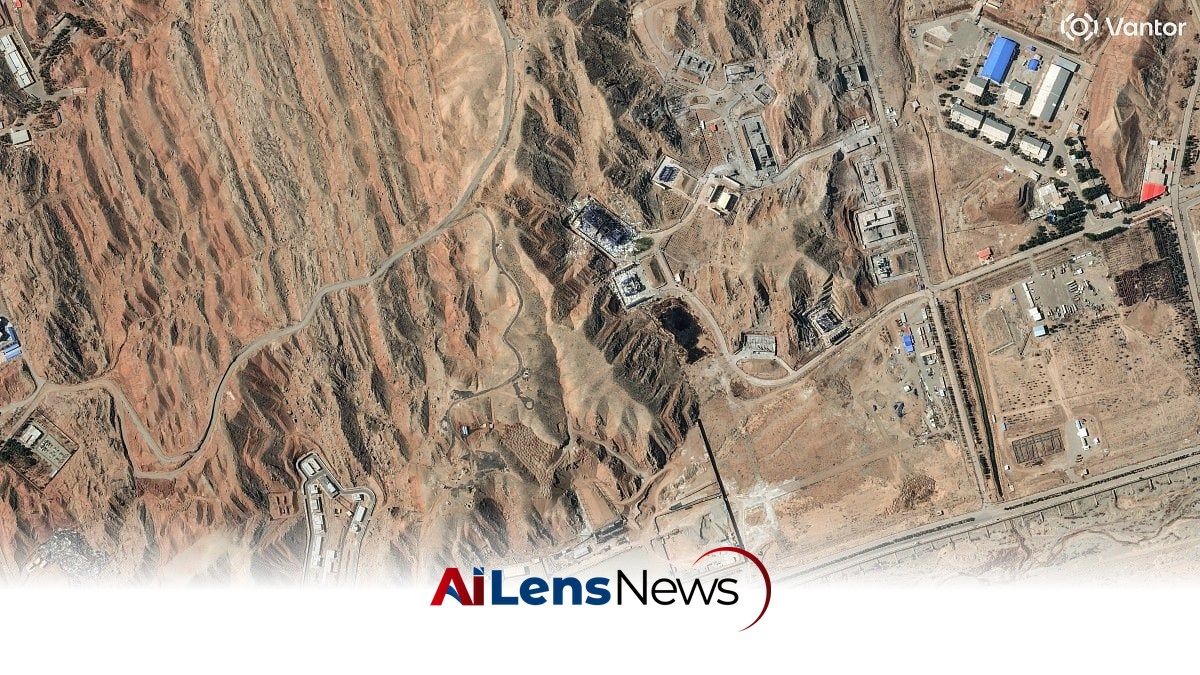
Abu Dhabi, United Arab Emirates Jul 11, 2026 ALN: The emergence of satellite imagery indicating potential activity at Iran's nuclear sites has reignited concerns about the country's nuclear ambitions and its compliance with international agreements. The images, captured on June 21, show a notable presence of vehicles, including trucks, entering and exiting tunnels at Pickaxe Mountain, a location widely believed to house an underground nuclear facility near the city of Isfahan. This recent observation raises alarms regarding Iran's nuclear infrastructure, suggesting possible repairs or enhancements that could further its nuclear capabilities.
Pickaxe Mountain has long been a focal point for international scrutiny due to its suspected role in Iran's nuclear program. The facility's underground nature makes it particularly challenging to monitor, as it is designed to be shielded from aerial surveillance and potential military strikes. The recent satellite images have prompted analysts to consider the implications of this activity, particularly in the context of Iran's nuclear ambitions and its historical pursuit of missile technology.
In addition to the activity at Pickaxe Mountain, the report highlights construction signs at several missile-related sites across Iran. These developments have intensified fears that Iran is not only continuing its nuclear program but may also be advancing its missile capabilities. Such advancements could pose a significant threat to regional stability and heighten tensions between Iran and other nations, particularly Israel and the United States.
The findings from the satellite imagery have raised serious doubts about Iran's adherence to the commitments outlined in the US-Iran memorandum of understanding, often referred to as the Iran nuclear deal or the Joint Comprehensive Plan of Action (JCPOA). Established in 2015, the JCPOA aimed to limit Iran's nuclear program in exchange for relief from economic sanctions. However, the deal has faced significant challenges, especially following the United States' withdrawal from the agreement in 2018 under the Trump administration, which reinstated sanctions and escalated tensions between the two countries.
Since the US withdrawal, Iran has gradually scaled back its compliance with the JCPOA, enriching uranium beyond the agreed limits and expanding its nuclear research activities. The recent satellite findings suggest that Iran may be pursuing a path that could lead to the development of nuclear weapons, a scenario that has drawn strong opposition from the international community.
The assessment of the satellite imagery was conducted in collaboration with experts from the Institute for Science and International Security (ISIS), an organization known for its rigorous monitoring of Iran's nuclear capabilities. The involvement of such experts lends credence to the analysis, as they have a track record of providing insights into Iran's nuclear activities and their implications for global security.
As the international community grapples with these revelations, the implications of Iran's potential nuclear advancements are far-reaching. Countries in the Middle East, particularly Israel, view a nuclear-capable Iran as an existential threat. Israel has previously indicated that it would take military action to prevent Iran from developing nuclear weapons, and the latest satellite images may prompt a reassessment of its defense strategies.
Furthermore, the United States and its allies may face increased pressure to respond to Iran's activities. Diplomatic efforts to revive the JCPOA have stalled, and the prospect of renewed negotiations appears dim. The Biden administration has expressed a desire to return to the agreement, but the recent developments complicate this objective, as they may undermine Iran's credibility as a negotiating partner.
In light of the findings, there may be calls for a more robust international response, including the possibility of new sanctions or other measures aimed at curtailing Iran's nuclear activities. The situation remains fluid, and the dynamics surrounding Iran's nuclear program are likely to evolve as more information becomes available and as geopolitical considerations shift.
As the world watches closely, the implications of these developments extend beyond Iran's borders. The potential for a nuclear arms race in the Middle East looms large, as neighboring countries may feel compelled to enhance their own military capabilities in response to Iran's advancements. The delicate balance of power in the region is at stake, and the international community must navigate these complex dynamics with caution.
In summary, the recent satellite imagery indicating activity at Iran's nuclear sites has raised significant concerns about the country's nuclear ambitions and its compliance with international agreements. The findings have implications not only for Iran but also for regional stability and international security. As the situation unfolds, the responses from global powers and the potential consequences of Iran's actions will be closely monitored.
To understand the broader context, it is essential to consider the history of Iran's nuclear program, which has been a point of contention since the early 2000s. Initially framed as a peaceful nuclear energy initiative, Iran's nuclear activities have been met with skepticism from the international community, particularly due to the lack of transparency and the potential for dual-use technology that could lead to weaponization.
The JCPOA was hailed as a significant diplomatic achievement, providing a framework for monitoring Iran's nuclear activities through inspections by the International Atomic Energy Agency (IAEA). The agreement imposed restrictions on uranium enrichment levels and the number of centrifuges in operation, while also allowing for the gradual lifting of economic sanctions. However, the unraveling of the JCPOA following the US withdrawal has led to increased tensions and a cycle of escalation, with Iran gradually inching closer to nuclear threshold capabilities.
The geopolitical implications of a nuclear-capable Iran are profound. For Israel, which perceives Iran as a direct threat to its national security, the prospect of a nuclear-armed adversary is particularly alarming. Israel has historically maintained a policy of ambiguity regarding its own nuclear capabilities, but it has not shied away from taking preemptive military actions against perceived threats in the region. The potential for a military confrontation looms, especially if diplomatic avenues continue to stall.
Moreover, the situation is compounded by Iran's regional activities, including its support for proxy groups across the Middle East, which further complicates the security landscape. Countries such as Saudi Arabia and the United Arab Emirates may feel compelled to bolster their own military capabilities or pursue their own nuclear programs in response, potentially igniting a regional arms race. This scenario poses significant risks not only for the Middle East but for global security as well.
In conclusion, the satellite imagery suggesting possible activity at Iran's nuclear sites has far-reaching implications that extend well beyond the immediate concerns of nuclear proliferation. The international community faces a complex challenge in addressing Iran's nuclear ambitions while navigating the intricate web of regional politics and security dynamics. As stakeholders from various countries assess their responses, the need for a coordinated approach that balances diplomatic efforts with security considerations has never been more critical.
To learn more about the latest developments in Government & Governance, stay updated with our exclusive reports and analyses on AiLensNews.

